
Bolivia's Economic Reforms Face Pressure Amid Protests and Political Unrest
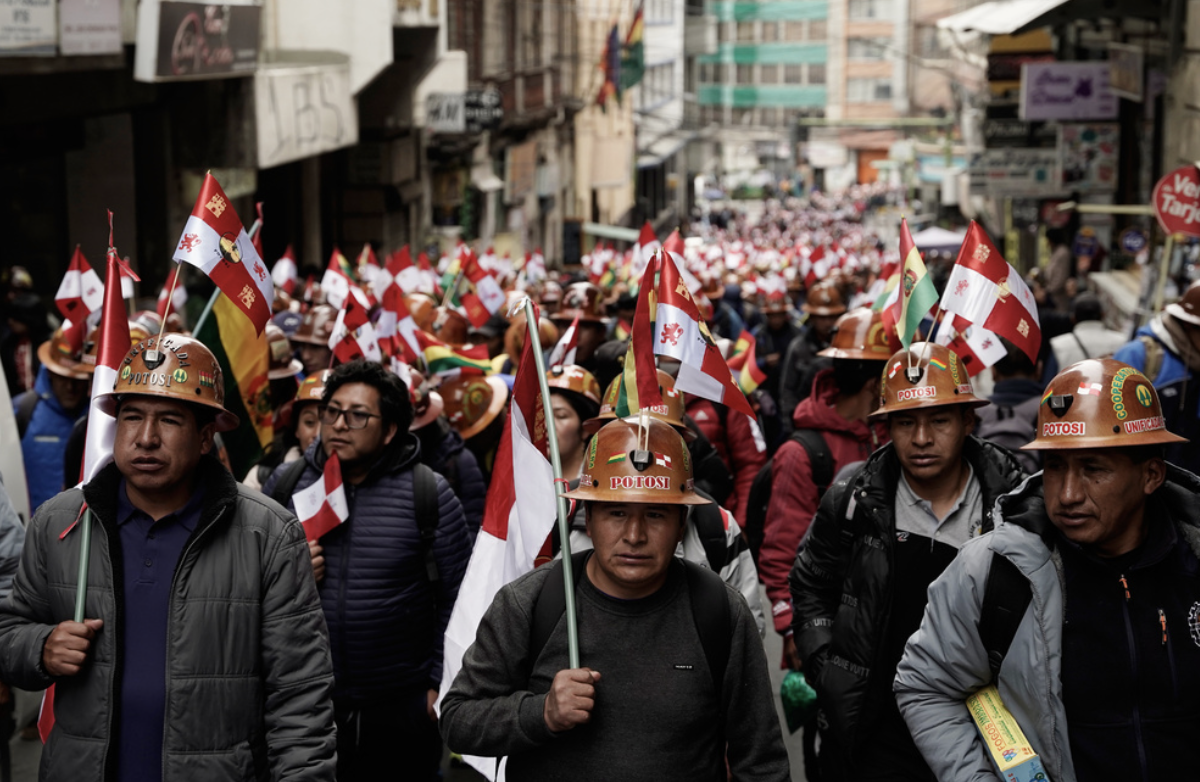
Miners march to protest President Rodrigo Paz's decision to remove fuel subsidies in La Paz, Bolivia, Monday, Dec. 22, 2025. (AP Photo/Freddy Barragan)
On Oct. 19, 2025, Bolivian presidential candidate Rodrigo Paz defeated President Jorge Quiroga in an electoral runoff, marking a major shift in Bolivian politics as the government transitions away from socialist governance for the first time in decades. The election of Paz also represented a new era for Bolivia's economy. President Paz endorsed an end to Bolivia's fixed exchange rate, the cutting of fuel subsidies, and the reduction of public investment in attempts to reconstruct Bolivia's economy.
Bolivia's economy has faced a continuous downturn; however, in 2023, the economy and civil unrest worsened with a major recession that exacerbated inflation, fuel shortages, and plummeting foreign exchange rates.
Under President Evo Morales, the government transitioned from a neoliberal, free market economy to a mixed economy where state-owned industry became predominant. Morales adopted a state-led growth model that blocked private investment and continued to boost funding for national industries, ultimately impeding competition and causing industrial underdevelopment with drastic impacts on production.
In 2014, gas production and exports began to decline. Despite the drastic decline in revenue from exports, Morales maintained high public spending, which included almost 9 percent of total government expenditures on gas subsidies. To fund these efforts, Morales depleted international currency reserves while relying heavily on international loans.
Under the presidency of Morales, national debt rose from 31 percent in 2014 to 84 percent in 2025. Morales' prioritization of public spending and reduced gas exports plunged Bolivia into extreme debt and fueled high inflation, leaving President Paz with an economy in severe decline.
The hope Paz offered for an economic upturn was short-lived when, in May 2026, civil unrest spread across the country because of the continued effects of inflation and unaffordability. Bolivian workers declared mass strikes, held demonstrations, and blocked supply routes to protest the rising cost of living and demand President Paz’s resignation over subsidy cuts and “politically costly reforms”. Throughout the 40-day protest, the movement erected over 90 blockades across the country, blocking off highways, roads, and major transport routes.
The protests' blockades of supply routes led to critical shortages of essential supplies such as medicine, food, and fuel. In some cases, the protests became extremely violent, resulting in seven deaths and numerous injuries. Subsequently, President Paz responded by calling a state of emergency in multiple regions across the country and began negotiations with protesters.
The blockades began to die out towards the middle of June, although the disruptions worsened the economic state of Bolivia by thwarting tourism and blocking trade. As a result of the damages and reduced revenue from exports, losses totaled around $2.3 billion over the 40-day movement. The disruptions also affected thousands of companies and hundreds of thousands of workers, leading to a significant decline in foreign investments. The blockades dealt a severe economic blow, making President Paz’s economic revitalization plan increasingly difficult.
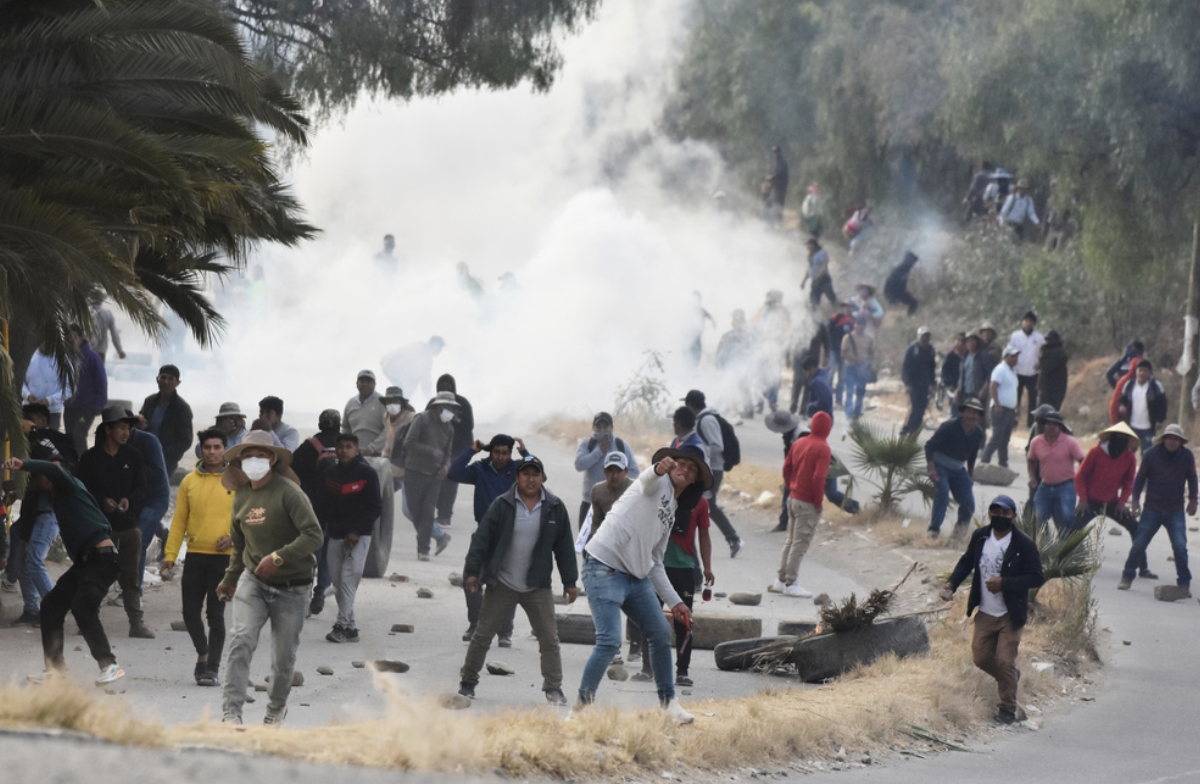
Anti-government protesters blocking a highway sling stones at military police during clashes in Vinto, Bolivia, Monday, June 8, 2026. (AP Photo/Dico Soliz)
The aftermath of the protests sparked even greater political tension as Bolivian Prosecutor Brayan Melgar issued an arrest warrant for Evo Morales on charges of sedition and terrorism for his alleged role in the protest movements. Morales aligned with various labor organizations to protest the election results and call for roadblocks to dismantle Paz's new government.
To date, the warrant remains unenforced as Morales stays at his residence in the Cochabamba Tropics, guarded by supporters. Supporters of Morales deny any claims of his wrongdoing and have even threatened to incite more disruptive protests if the arrest warrant is executed, meaning a formal investigation remains on pause until the arrest can be made.
In response to economic disruption, President Paz, in conjunction with the Departmental Government of La Paz and the Chambers of Industry and Commerce, proposed an economic recovery plan. The plan aimed to ease supply-chain shortages in regions heavily affected by the blockade. The plan also allocated more power to federal institutions working to alleviate the effects of the national economic crisis.
Paz also opened the country to more private and foreign investment and began integrating Bolivia into the international community. Investments in hydrocarbons, mining, telecommunications, and infrastructure greatly aided Bolivia's economic revitalization. Paz has also prioritized strengthening ties with the U.S. and neighboring nations. In a joint effort with the U.S. State Department, Bolivia joined the Shield of the Americas to combat drug trafficking. Additionally, Paz has recently discussed efforts to move Bolivia from a BRICS partner country into a full member in order to access funding for social and development projects.
To further integrate Bolivia into the international community and boost exports, Paz has focused on building relations with China and the EU due to their demand for Bolivia's lithium and rare natural resources, and Panama due to its role as the export epicenter of Central America. To support sustainable development and grow exports, Paz secured a $3.1 billion loan from the Development Bank of Latin America and the Caribbean.
Bolivia's growing international relations, coupled with international loans, have driven economic development and increased international trade. After frequent talks with Panama and acquiring the loan in Nov. 2025, Bolivian exports rose from $978 million in November to $1.25 billion in Feb. 2026. With the exception of May and June this year due to supply chain disruptions and heightened civil unrest, exports have continued to increase, providing hope for greater economic stability in Bolivia.
In Oct. 2025, the month Paz was elected, the annual inflation was reported at 22.23 percent. As of Sept. 2026, the annual inflation had reduced to 5.7 percent, the lowest rate since Sept. 2024. Although inflation has declined, the national debt continues to rise. From 2025 to 2026, the national debt-to-GDP ratio rose by about 18 percent. Despite this increase, Paz has focused on sustained growth and development in order to prevent another economic decline of this magnitude.