
Brazil Presidential Runoff Puts Indigenous Land Rights at Stake
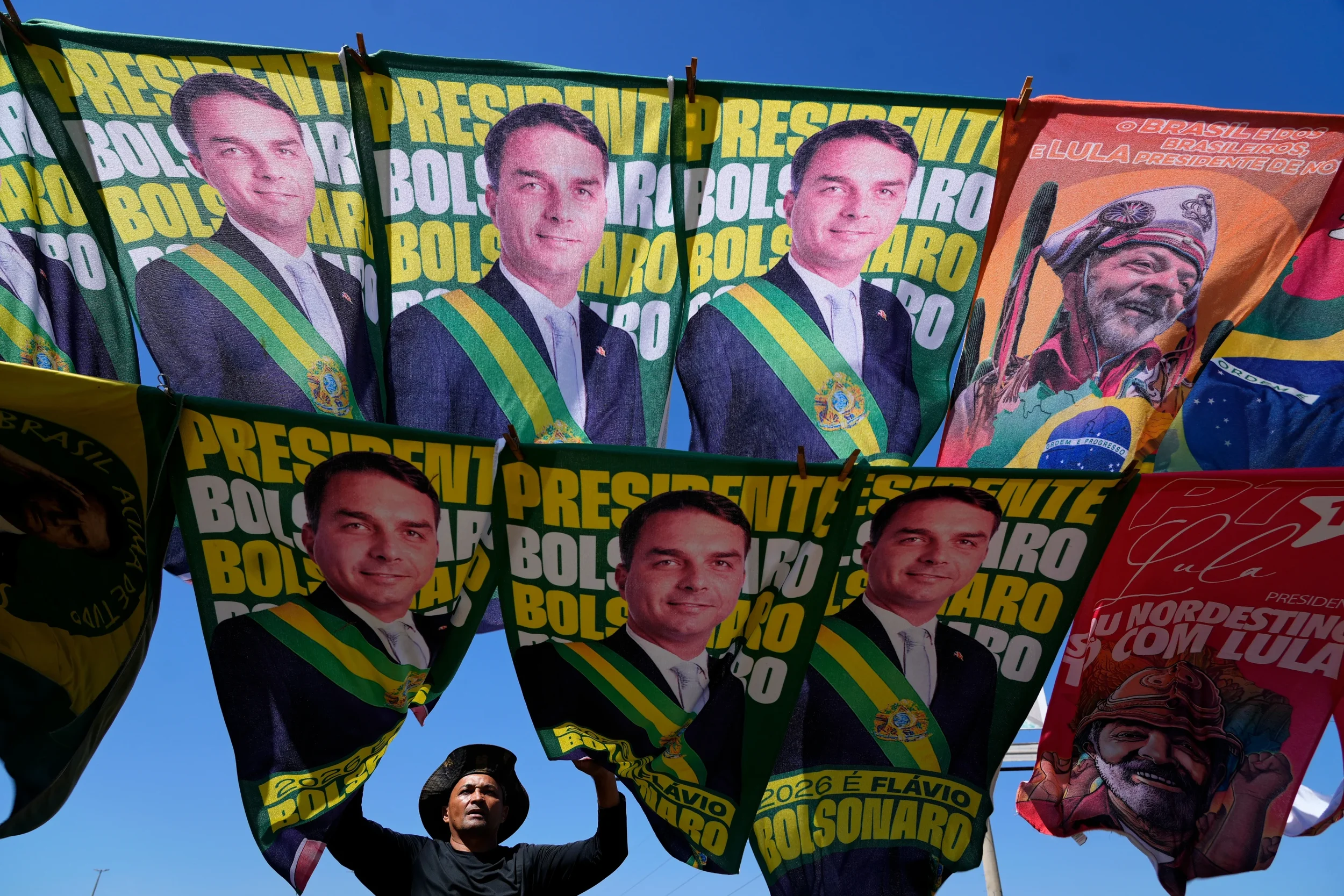
From Future of Amazon rainforest policies at stake in Brazilian presidential election, by The Associated Press, 2026, AP News Photo credit: [Eraldo Peres]/Associated Press.
Brazil’s presidential runoff on Oct. 25 will decide more than just who governs. For the country's Indigenous population of 1.7m it may establish whether or not Indigenous land rights are protected in the future. In the first round of the election, Senator Flávio Bolsonaro won about 47% of the vote and his opponent, President Luiz Inacio Lula da Silva, won 45%. The vote determines who controls the pace of demarcation, and so who is protected from mining and deforestation. Bolsonaro’s Liberal Party (PL) also won the most seats in both chambers of Congress and will hold 28 of the 81 Senate seats. Land rights are already in the Constitution, but this election decides whether or not they are enforced.
In Sept. 2023, nine of the Supreme Court’s 11 Justices rejected the marco temporal, The main idea being that only lands occupied on Oct. 5 1988 can be demarcated. The Senate approved a bill officially codifying this thesis that same month. President Lula da Silva signed Law 14.701 with vetoes reaching 24 of its 33 articles, only for Congress to override them that Dec. 2025, the Court again held the time frame as unconstitutional but left most of the law in force regardless.
Socio-Environmental Institute (ISA), an advocacy group, argues that the law and the 2025 ruling together make demarcation harder. Landowners with good faith titles can be paid for the land and keep possession until they are paid. The Court set a one year deadline for communities to claim land and a ten year deadline for demarcation without ordering funding. In response to these circumstances Indigenous people in Brazil have started performing “retakings”. Retakings are a physical reoccupation of ancestral territories by indigenous peoples who were displaced or whose demarcations have been stalled. Communities that perform land retakings are discounted from the claim. International Work Group for Indigenous Affairs (IWGIA) calls the 2025 ruling a fragile victory because unfinished demarcation leaves communities exposed. It adds that a proposed constitutional amendment, Proposta de Emenda à Constituição ,PEC 48/ 2023, advanced in 2025 to narrow recognition. That year the government approved seven Indigenous lands, yet the Articulation of Indigenous Peoples of Brazil (AIPB) counted 107 lands ready for demarcation.
On April 22, Bolsonaro said in Sinop, Mato Grosso, that no Indigenous reserve in the state would be demarcated under his government because its “vocation is production.” He cited Funai requests covering roughly two million hectares. He reaffirmed his support for the marco temporal and, at an April 10 event, said Indigenous communities should be able to raise cattle and mine on their territories. The Constitution requires congressional authorization for mining on Indigenous lands. The proposal’s success would therefore depend on legislative action and the political gains made by his party.
President Lula’s record is also contested. Chief Raoni Metuktire told AFP in April that he would back the president’s reelection because President Lula “has already demarcated some Indigenous lands,” despite having criticized a controversial devastation bill. AFP reported that Indigenous movements lean largely toward President Lula. That support is conditional. IWGIA reports that Indigenous organizations welcomed the 2025 demarcation but called them insufficient given pending claims.
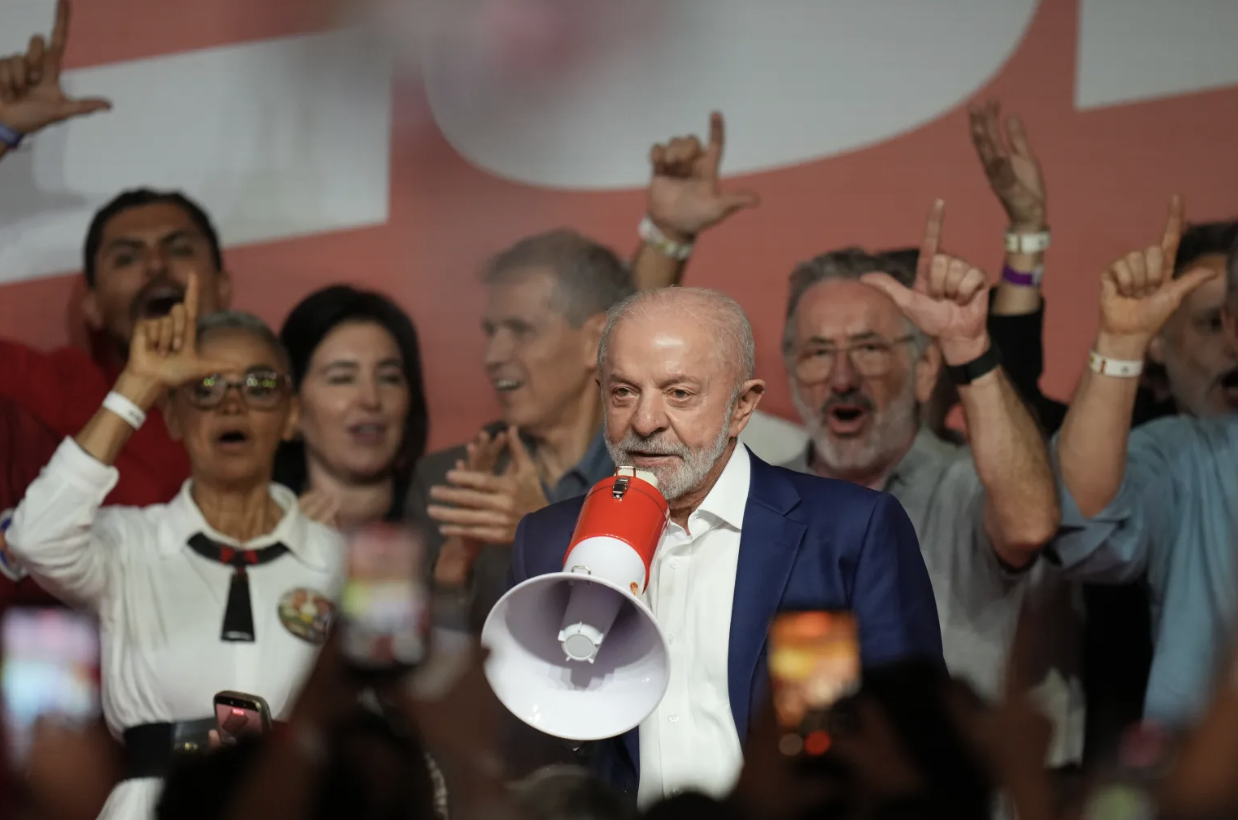
From Indigenous, environmental groups warn far-right gains in Brazil’s Congress threaten protections, by [Andre Penner], 2026, The Associated Press
The runoff pits a president who approved seven Indigenous lands in 2025 against a challenger who supports the marco temporal and has pledged to halt demarcation in one major agricultural state. For Indigenous communities, the institution around the presidency like congress or the Supreme court, may count as much as the winner. The Supreme Court has twice rejected the time frame thesis, yet it left most of Law 14.701 in force. The Senate that either president will face now has a right-wing majority, while only three Indigenous legislators were elected. Indigenous leaders and observers expect pressure on their rights, including over mining, to continue whoever wins. Whether any president can turn recognition into protected territory against a legislature that keeps reopening the question may prove the larger test.