
International Force Deploys in Haiti as Gang Violence Crisis Reaches Critical Point
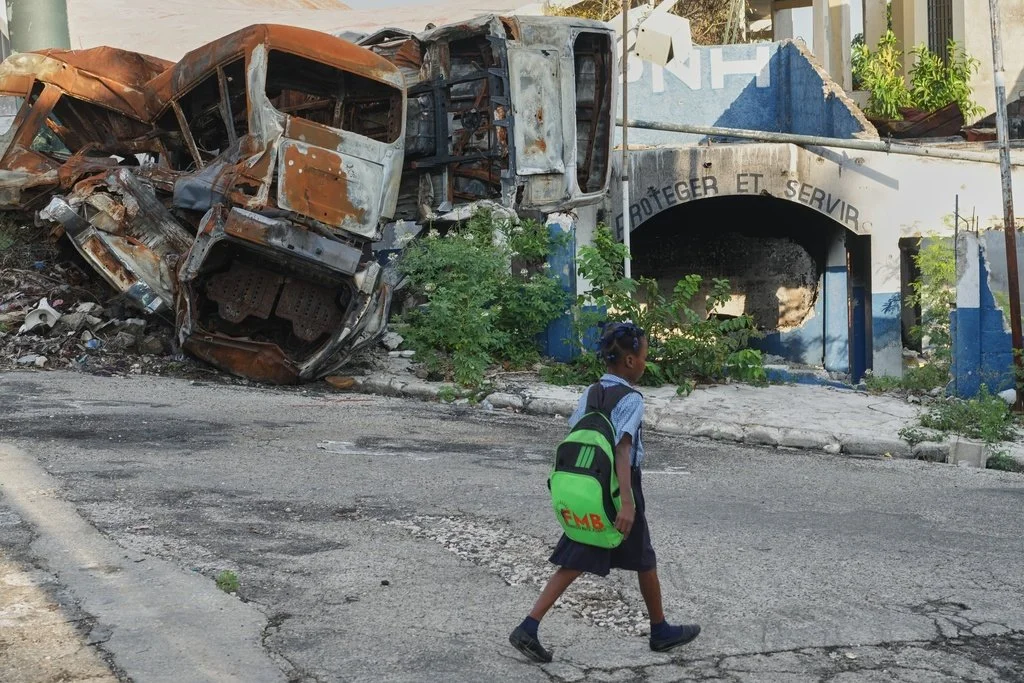
A student walks past a police station that was set on fire by armed gangs in the Carrefour Aeoport area of the Delmas neighborhood of Port-au-Prince, Haiti, Tuesday, Feb. 24, 2026. (AP Photo/Odelyn Joseph)
A US-supported international security force is beginning to deploy in Haiti as the country faces a deepening crisis in which armed gangs control up to 90 percent of the capital, Port-au-Prince. United Nations officials say that the coming months will be critical in determining whether the mission can curb violence and restore the nation's stability.
This deployment marks a new phase in international efforts to address Haiti’s worsening insecurity, which has intensified since the 2021 assassination of President Jovenel Moïse. According to experts, the established gangs have expanded their reach across both urban and rural areas, carrying out kidnappings, sexual violence, and looting while overwhelming local law enforcement.
William O’Neill, the UN’s designated human rights expert on Haiti, said the situation presents both urgency and opportunity. “We’re in a place now where the next few months are going to be crucial”, he told reporters, expressing cautious optimism that the country could begin to reverse the trajectory of violence.
The new force builds on a Kenyan-led mission first deployed in 2024 but expands its original mandate significantly. Unlike earlier efforts, the updated mission, backed in part by the United States, is expected to operate as a “gang suppression force”, with the authority to arrest suspected gang members and disrupt organized criminal networks.
Initial elements of the mission are already on the ground, with the first major troop deployments expected in early April and the full force projected to be in place by September. The expanded mission could include up to 5,500 personnel, with contributions from multiple countries, including El Salvador, Guatemala, and Jamaica.
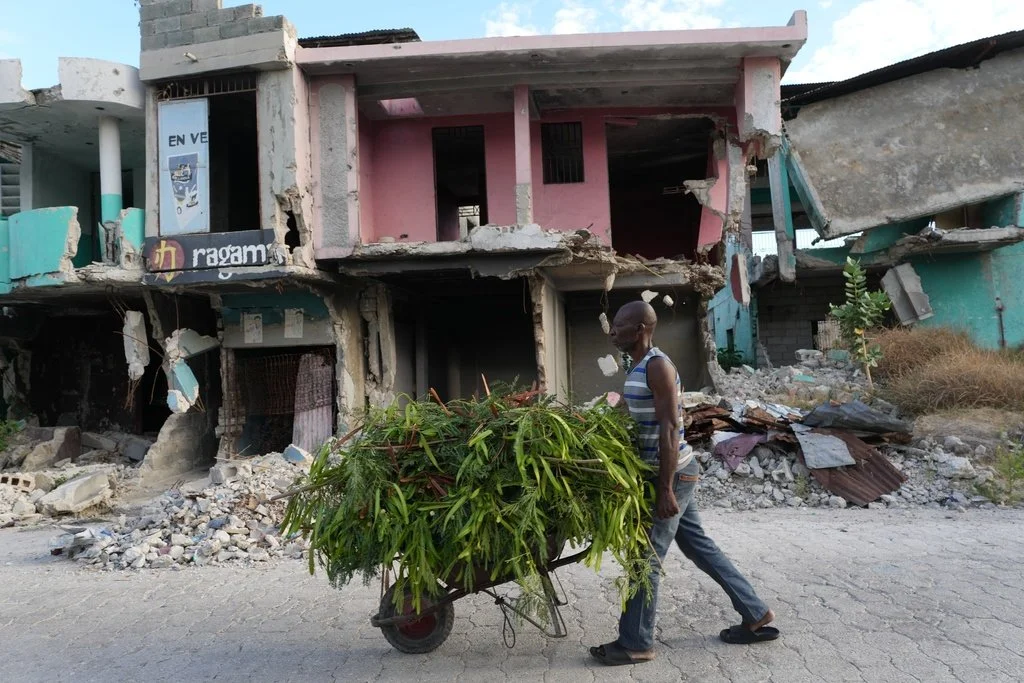
A man pushes a wheelbarrow past a house damaged by gang violence in the Solino neighborhood of Port-au-Prince, Haiti, Thursday, March 12, 2026. (AP Photo/Odelyn Joseph)
Despite these developments, the scale of the crisis remains severe. According to the United Nations Office for the Coordination of Humanitarian Affairs and UN reporting, at least 1.4 million people have been displaced by violence, creating what officials describe as an “unprecedented level of internal displacement”. Entire communities remain trapped in areas controlled by gangs, where access to food, healthcare, and basic services is severely limited.
Gangs have become deeply embedded in Haiti’s social and economic landscape, particularly amongst young people. O’Neill noted that many adolescents are drawn into gang activity by the promise of income and status, while efforts to exit these networks are often met with violence. In one recent incident, a gang leader was filmed beating young boys suspected of attempting to leave a gang-controlled area.
Humanitarian organizations, including the International Rescue Committee, warn us that the crisis is compounded by poverty, political instability, and weak state institutions. Haiti has not had a functioning elected president since 2021, and the ongoing governance challenges have limited the government’s ability to respond effectively to both security and humanitarian needs.
The deployment of the international force has generated optimism among officials, but also a renewed debate over the role of foreign intervention in fragile states such as Haiti. Previous international missions in Haiti have faced criticism for failing to produce lasting stability, raising concerns about whether the current effort will achieve different results.
Analysts note that while increased security capacity may help reduce immediate violence, long-term progress will depend on addressing the underlying structural issues, including corruption, economic inequality, and limited opportunities for young people. O’Neill emphasized that reducing the flow of weapons will also be critical in weakening gang power.
As the mission begins to deploy, Haiti stands at what UN officials describe as a “difficult yet promising moment.” Whether the international force can restore order will not only shape Haiti’s immediate future but also influence broader debates about how the international community responds to state collapse, humanitarian crises, and security threats in fragile regions.