
UN Reports Persistent Human Rights Abuses in Venezuela Despite Leadership Change
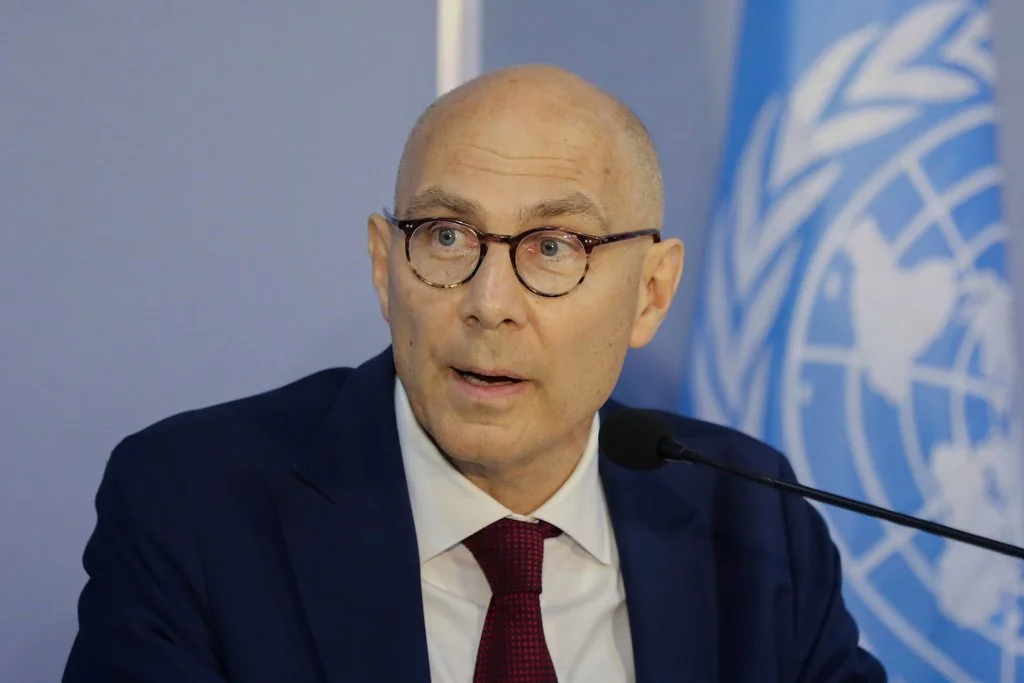
U.N. High Commissioner for Human Rights, Volker Turk, speaks during a press conference, in Colombo, Sri Lanka, on June 26, 2025. (AP Photo, File)
Reports presented to the United Nations Human Rights Council on March 16 indicate that allegations of torture and arbitrary detention in Venezuela have continued despite the removal of President Nicolas Maduro earlier this year. UN High Commissioner for Human Rights, Volker Türk, warned that “structural and systemic human rights concerns have persisted” under the interim government led by former Vice-President Delcy Rodriguez, even after the passage of a new amnesty law intended to address past abuses.
Maduro was removed from power in January following a United States military operation, after which Rodriguez assumed leadership and oversaw the adoption of an amnesty measure. Venezuelan authorities claim that more than 7,000 individuals have been granted “full freedom” under the law, including those previously held in prison and others under restrictions such as house arrest or parole. However, UN officials and independent organizations have raised concerns about discrepancies in those figures. The Office of the High Commissioner for Human Rights has confirmed the release of fewer than 1,000 detainees, while the Venezuelan NGO Foro Penal reports that more than 500 individuals remain imprisoned for political reasons.
Türk told the Human Rights Council that many Venezuelans continue to be held in “arbitrary detention”, including at least one child, despite the government’s claims of large-scale releases. He also stated that his office had received information regarding “the continued torture and mistreatment of detainees”, particularly in detention centers such as Rodeo 1 and Fuerte Guaicaipuro. Requests by UN officials for access to these facilities and for an official list of released detainees have so far gone unanswered, prompting calls for greater transparency from Venezuelan authorities.
These concerns were reinforced by findings from the Independent International Fact-Finding Mission on Venezuela, which reported that it continues to receive testimony and documentation of human rights violations committed after Maduro’s removal in January. The mission has previously documented cases involving torture, sexual violence, and other forms of cruel and degrading treatment in detention centers, and warned that the legal and institutional structures enabling such abuses remain largely intact.
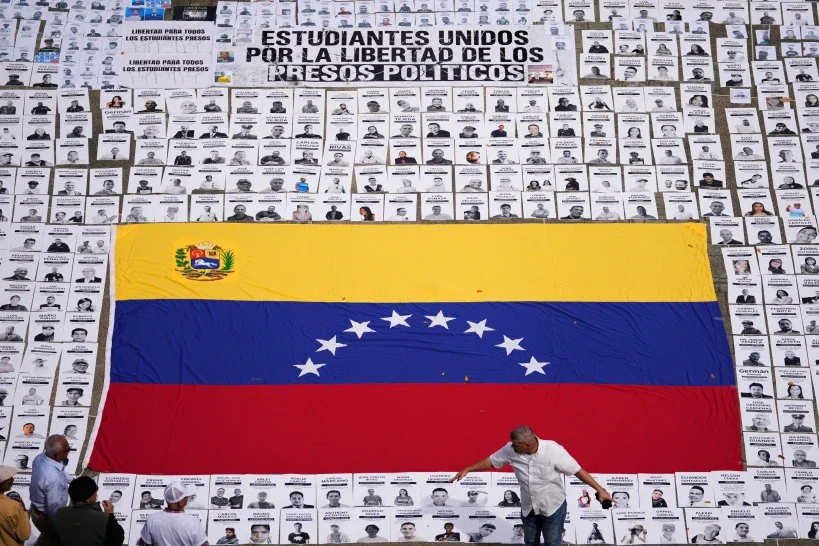
Students lay out photos of people they consider political prisoners at the Central University of Venezuela in Caracas, Venezuela, Tuesday, Jan. 13, 2026. (AP Photo/Matias Delacroix)
Venezuelan officials have rejected these allegations, with Foreign Minister Yvan Gil describing them as “unfounded” and accusing the UN of promoting a biased narrative aligned with political opponents of the government. Authorities have also defended the amnesty law as evidence of progress, arguing that it reflects efforts to correct past injustices. Türk acknowledged that the measure represents a step forward but noted that it was adopted without broad societal consultation and has not addressed the underlying conditions that enable ongoing abuses.
The situation has also been shaped by the broader security environment following Maduro’s removal. Türk warned that a state of emergency declared after the January operation has allowed security forces and armed civilian groups to carry out intrusive measures, contributing to what he described as a “climate of fear” among the population. He urged Venezuelan authorities to reassess the decree to ensure that it remains necessary and proportionate.