
Op-ed: Foreign Refugee Displacement in Iran: A Growing Humanitarian and International Crisis
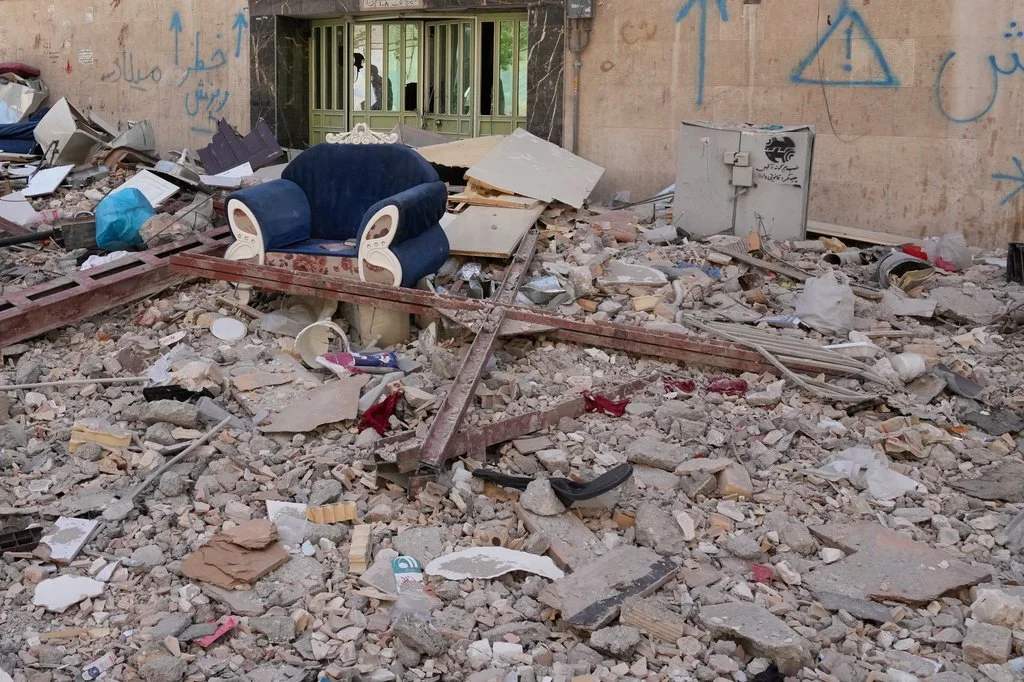
Debris of a residential building are scattered, which according to the authorities, was damaged on March 4 during the U.S.-Israeli military campaign, in southeastern Tehran, Iran, Tuesday, April 14, 2026. (AP Photo/Vahid Salemi)
Current reports of peace negotiations and declarations of ceasefire between United States President, Donald Trump, and Supreme Leader of Iran, Mojtaba Khamenei, may signify a lull in active militant violence, but do not compensate for previously inflicted irreparable damage on civil populations in the Middle East. Nor do they represent the resounding devastation faced by these groups.
A reality that may not be portrayed through mass media coverage is that civilian populations have been hit hardest by the war in Iran. Dating back to one of the earliest incidents of warfare and proclaimed violations of humanitarian law – the US-issued strike on a primary school in Minab, Iran, killing over 175 people, Iranian civilians have since endured countless attacks. They have borne the implications of violent and tumultuous war conditions through acts of state-enforced displacement and the decimation of precious environmental, agricultural, and intellectual infrastructure. However, the effects of this destruction have echoed beyond Iran’s civilian population, placing unique means of strain on surrounding Middle Eastern countries.
Over the past few months, Iran has seen unprecedented numbers of internal displacement. As of mid-March 2026, the UNHCR reported that between 600,000 and 1 million Iranian households have been internally displaced, representing up to 3.2 million people. Most of them have reportedly been fleeing from major cities and urban areas, such as Tehran, towards safer northern rurality. However, for an outstanding portion of the population – foreign nationals, the migration process is much more complicated.
As of early 2026, estimates suggest that 4-6 million residents of Iran’s total population are Afghan immigrants specifically. Afghans, accounting for almost 90% of Iran’s foreign national population, have been a proliferating citizenry over the past few decades. Due to its geographical proximity, shared language, and cultural ties, Iran has been a key destination for Afghans who have sought refuge from persistent civil war, persecution, and state collapse. In recent years, migration rates have multiplied following the Taliban’s violent return to power in 2021, imposing repressive, anti-women policies and neglecting basic services.
Prior to the 1990s, the Iranian government had been largely welcoming of Afghan refugees. However, the migration influx in recent times due to the rise of the Taliban, and their enforced civilian removal policies, has overwhelmed Iran – exacerbating economic instability, international sanctions, and rising inflation. As a result, Iran has tightened their migration policies. Mechanisms such as the Amayesh card system and the Conditional Protection Preparation Process offer limited legal protection to Afghans, but also impose significant restrictions on refugee involvement in the public sphere.
Prior to the beginning of the war, Iran had been in a state of economic and political instability. Faced with a fragile economy due to the severe economic crisis of late 2025 – driving inflation rates above 50%, this resulted in currency weakening and the failure of the banking system. Aside from economic strain, Iran had been facing a weakening of their “Axis of Resistance” – with faltering support from allies such as Hezbollah and Hamas. Ultimately, Iran’s compromised national condition contributed to an insecure foundation for managing damage and accommodating humanitarian needs.
The war has also directly affected Iran’s main sources of export revenue. Physical damage to industrial infrastructure – namely, petrochemical and metal facilities, has compromised a 25-30 billion-dollar engrossing export industry. Such conditions have intensified economic strain, calling for stricter on-the-ground measures to manage scarce resources and attempt to restore national stability. As a result, Iran has cracked down on aggressive foreign refugee expulsion policies – including arrests, forced deportation, and anti-refugee sentiments.
As a result of these policies, many Afghan refugees have been purged out of Iran, the majority of whom have attempted to journey back to their home country. Afghanistan, however, is in no position to receive them. With already 64% of the population living in multidimensional poverty following the recent takeover of the Taliban, Afghanistan is considered one of the poorest countries in the world, and simply does not possess the resources necessary to support a torrent of exhausted refugees. According to the United Nations Children’s Fund (UNICEF) representative, Dr. Tajudeen Oyewale, “families returning through Islam Qala will move onwards to communities where basic services are already under pressure,” spoken at a press briefing on March 10; “Any significant increase in returns would place additional strain on health, nutrition, water and child protection services that children and families rely on.”
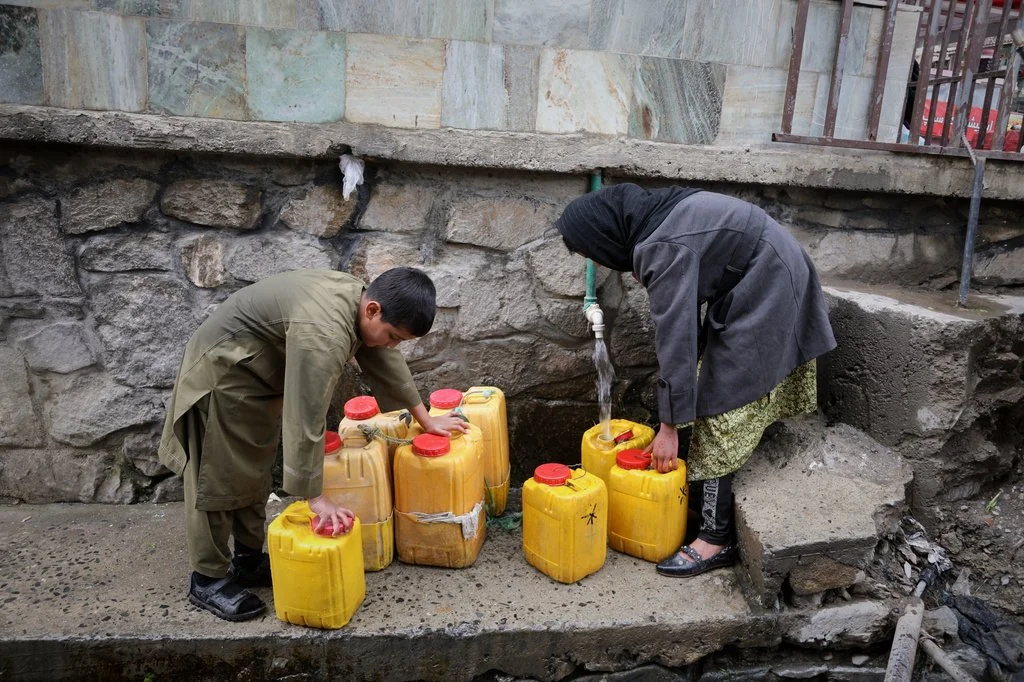
A boy and a girl collect water from a hose connected to a well at a mosque in Deh Mazang, Kabul, Afghanistan, Thursday, April 2, 2026. (AP Photo/Siddiqullah Alizai)
While Afghanistan continues to reluctantly accept its nationals, other countries do not. Countries such as Turkey and Pakistan are actively taking precautionary measures, such as the prohibition of open-door immigration policies and border sealing processes, to avoid widespread resource depletion that has been seen to cause national strain. Absorbing a massive wave of refugees is already costly; however, considering President Trump’s recent humanitarian aid cuts, along with war-related pressures, countries can only rely on their own current resources and state of infrastructure to provide for the return of their nationals.
With a lack of international funding and the persistent state of warfare in the Middle East, nations who still hold open door policies are becoming more reluctant to provide humanitarian services for their own nationals, let alone foreign immigrants who have been barred entry elsewhere. These countries simply do not have an adequate inflow of foundational resources to provide the demanded humanitarian assistance, and prolonged strain on them may catalyze a long-term crisis that reflects more severe consequences than temporary displacement complications. Disproportionate population rates as a result of growing migration influx have the potential to offset national development, threatening the stability and dynamics of entire international systems.