
Op-Ed: The Politicization of a Genocide?
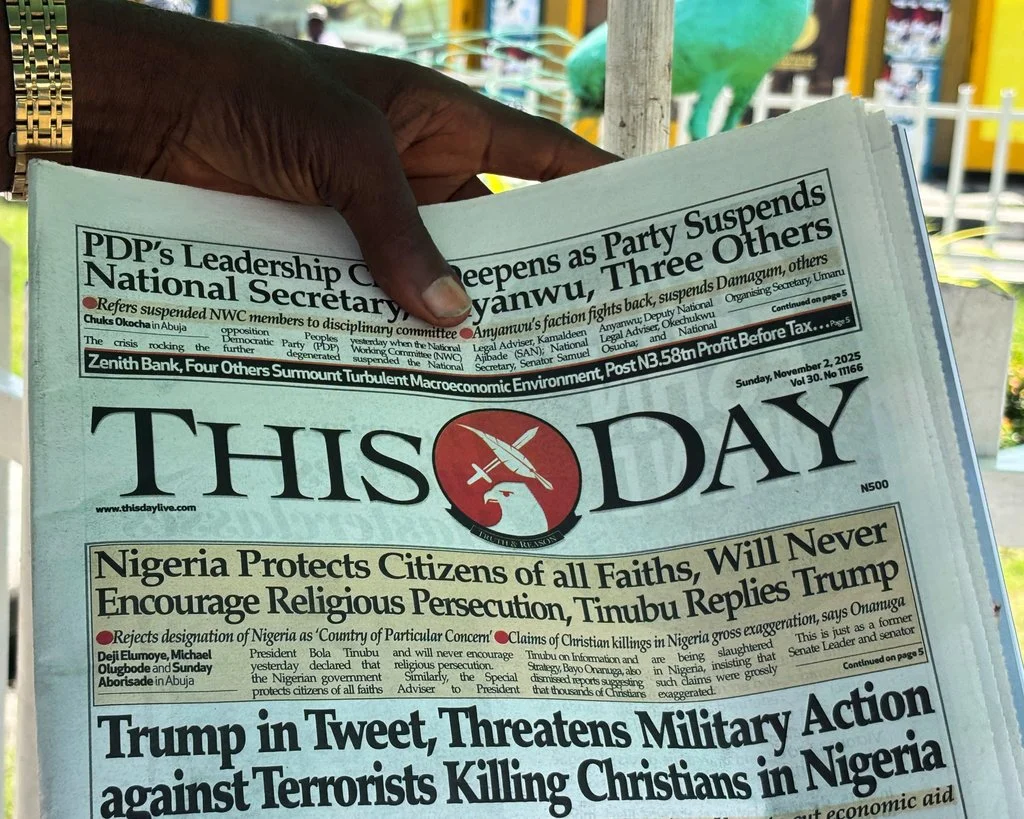
A vendor sells local newspapers with headlines referring to US President Donald Trump's comments about Nigeria, on the street of Lagos, Nigeria, Sunday, Nov. 2, 2025. (AP Photo/Sunday Alamba)
Over Easter weekend, approximately 26 people were slain in three separate attacks across the northern Nigeria region. In one isolated occurrence, residents estimated 17 people were killed on Saturday when armed men attacked the Mbalom community in the Gwer West area of Nigeria’s north-central Benue state. Another seven people were killed at an Easter service in Ariko, Kaduna state. The Nigerian military reports that during this raid, they were able to rescue 31 civilian hostages. However, the president of the Ariko community association, Joseph Ariko, says the hostages are still unaccounted for. He told the BBC, "Nobody has been rescued… If they are rescued, where did they take them to?"
The attacks follow a continuous pattern of violence terrorizing communities across Nigeria, especially in the northwestern regions. On Palm Sunday, 12 people were killed after a gunman assailed a neighborhood in the mostly Christian city of Jos. On Feb. 6, at least 170 were left dead after gunmen summarily executed civilians in the community of Woro. Yet, as the spillage of blood persists on the streets, the narratives encircling these killings are vigorously flattened into sensational political talking points.
Figures like Israeli Prime Minister Benjamin Netanyahu have vehemently condemned these attacks as Christian persecutions. In a message posted on X (formerly known as Twitter), Netanyahu wrote: “To our Christian friends in Israel, the United States and around the world, we wish you a blessed and joyful Easter. Christians are persecuted across the Middle East, in Syria, Lebanon, Nigeria, Turkey and beyond.” He added that Israel remains “unwavering” in safeguarding life and liberty and ensuring that “every believer can pray in peace.”
Likewise, in the US, President Donald Trump, Republican Senator Ted Cruz, and television personality Bill Maher have labeled the violence a “Christian genocide,” accusing the Islamic State (IS) group in Nigeria of “targeting and viciously killing, primarily, innocent Christians.”
Referring to the Boko Haram extremist group, Maher cited 100,000 Christian deaths and the burning of 18,000 churches since 2009. Senator Cruz has also emphasized similar figures, writing on X that "since 2009, over 50,000 Christians in Nigeria have been massacred, and over 18,000 churches and 2,000 Christian schools have been destroyed.” These claims trace back to a 2023 report by the International Society for Civil Liberties and Rule of Law, which monitors human rights abuses across Nigeria. However, the BBC has found discrepancies between the figures provided by the organization and the summary statistics they mentioned. Pressured by these inflated figures and escalating allegations, President Trump subsequently ordered airstrikes on Islamic State militants in northwest Nigeria on Christmas 2025.
Against this backdrop of volatile political rhetoric is a reductive and detrimental framing that distorts a complex, deeply rooted conflict into a singular narrative that serves political ends rather than aiding the suffering.
Violence in Nigeria, particularly in regions like Benue and Plateau states, is nuanced and cannot be understood through a single lens. While many extremist groups, such as Boko Haram, do operate in the country and target Christian populations, many of these attacks in the Middle Belt stem from prolonged quarrels over land, grazing rights, and environmental pressures between Muslim Fulani cattle herders and largely Christian farming communities. The Nigerian government also refutes claims of a genocide, explaining that members of all faiths have suffered amid the clashes in which competition over resources morphs into deadly conflict. The government is doing its best to tackle jihadists in the country, with some officials even welcoming the prospect of the US helping fight the insurgents, so long as it is not done unilaterally.
To call the ongoing violence in Nigeria a “genocide” against Christians overlooks the looming realities and imposes a false clarity on a situation defined by ambiguity. More critically, it inflames religious divisions both within Nigeria and internationally. In a country as diverse and complex as Nigeria, this is a dangerous path that could exacerbate the ongoing crisis.
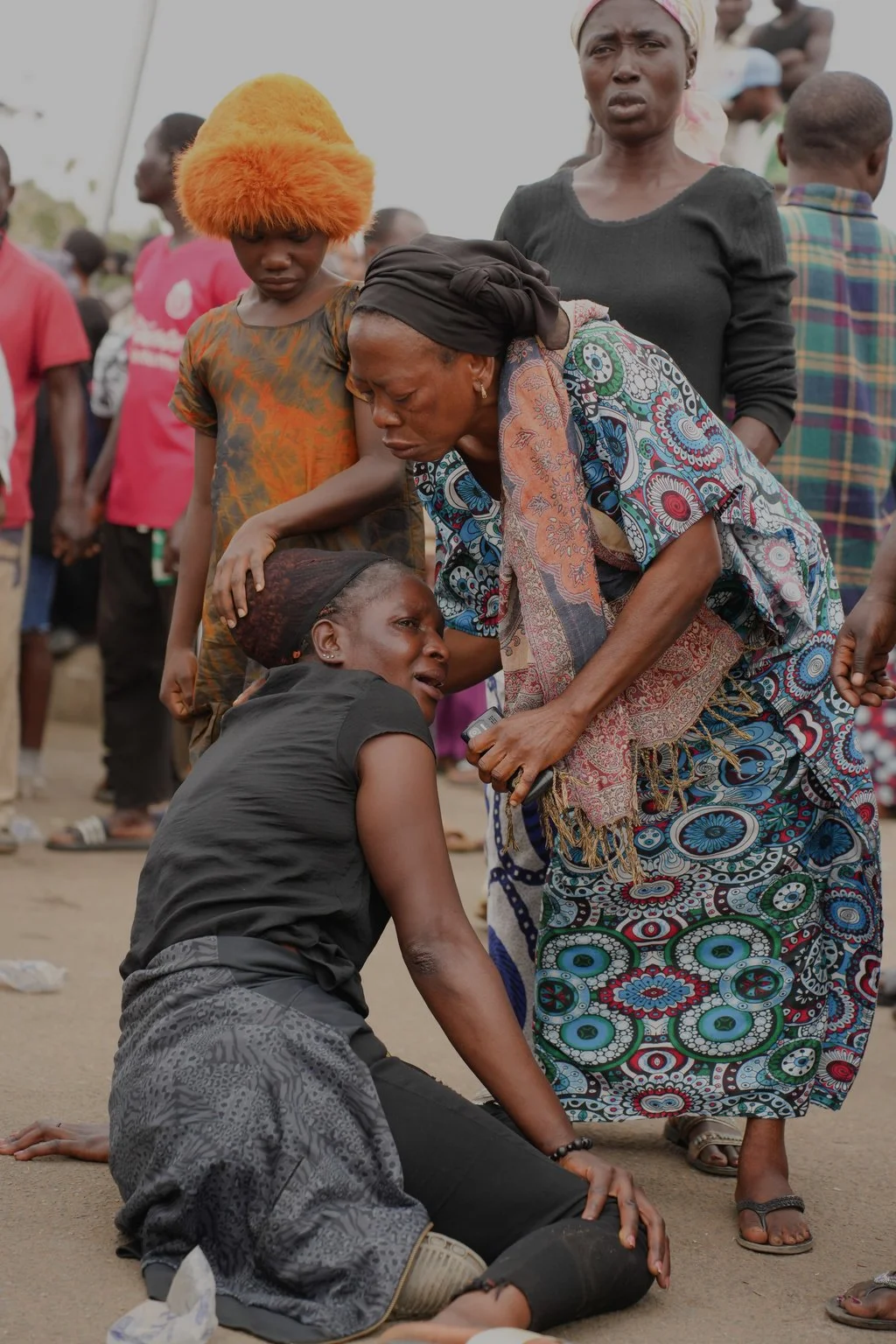
FILE - Women mourn the death of a family member following an attack by gunmen in Gari Ya Waye community in Jos North Nigeria, March 30, 2026. (AP Photo/Samson Omale, File)
When US politicians frame the violence in strictly religious terms, they fail to offer solutions and instead export a culture war. The effect manifests in the erasure of the very people they claim to defend. Lost in this politicization are mothers, fathers, and children whose lives were cut short in acts of brutal violence. It becomes a trend in which murdered humans with dreams, aspirations, and goals are turned into content and abstractions instead of being fully recognized as the tragedies they truly are.
Both President Trump and Prime Minister Netanyahu could mobilize meaningful international support, humanitarian aid, conflict resolution initiatives, or diplomatic pressure. Both could advocate and help implement local peacebuilding initiatives, investment in sustainable agriculture, and efforts to strengthen Nigeria’s governance; instead, they rely on the feeble nature of headlines and tweets that promote false narratives amongst their cronies.
But this is not new. The tendency to instrumentalize African suffering for political gain follows a long-heralded Western tradition that exploits and rapes African lands, peoples, and essences. Trading in overt campaigns of colonization for the speed and scale of social media and the 24-hour news cycle, this exploitation has become even more unprecedented and unquestioned.
Consequently, when we allow human suffering to be reduced to political rhetoric, we become complicit in its perpetuation. The blood is no longer just on the hands of those who pulled the trigger; it stains all of our hands: yours, mine, and everyone who consumes these narratives without questioning them. It stains the hands of the politicians who choose expediency over truth. It is in the hands of the media that prioritize clicks over context. And it is in the hands of the global community, which repeatedly fails to act in meaningful ways.
Nigeria is not a stage for our own political dramas, but a place characterized by unique histories, challenges, and people whose lives matter beyond their utility in someone else’s narrative. They deserve more than to be reduced to symbols. They deserve respect, recognition, dignity, and justice. They deserve a response grounded in reality, not rhetoric.
Until we confront the complexity of these conflicts and our own role in shaping their narratives, we will continue to fail them. People will die, communities will be destroyed, and futures will be erased.
The blood will be on our hands.