
Minab School Strike Highlights Growing Scrutiny of Civilian Harm in Modern Warfare
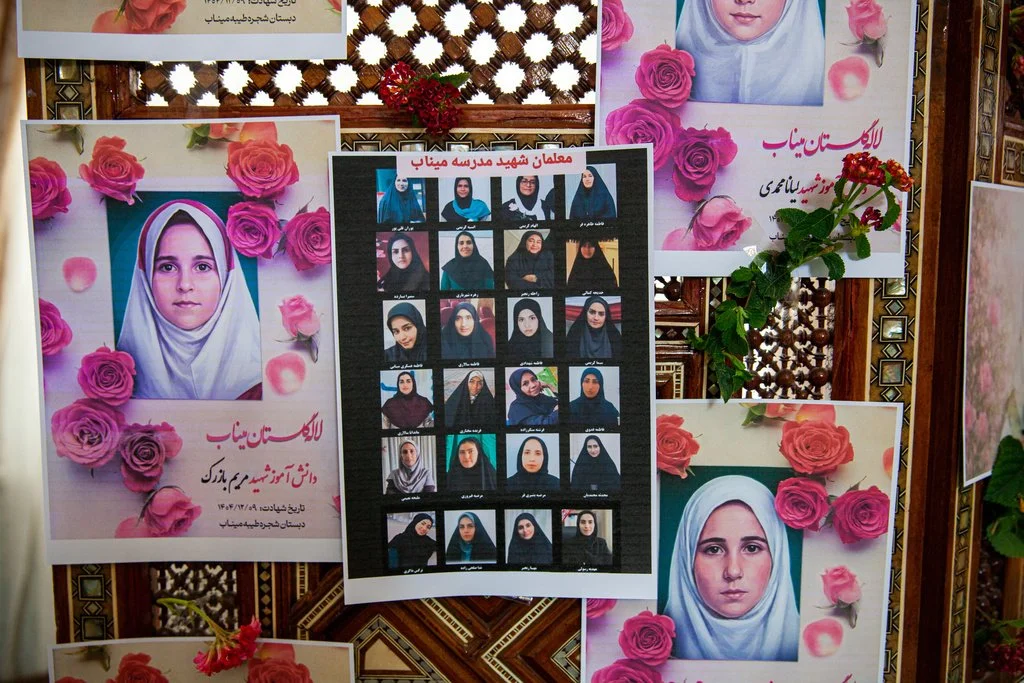
Portraits of school children from the Shajarah Tayyebeh Elementary School in Minab, who were killed in a U.S strike are displayed during a press conference by Iranian Ambassador to Tunisia Massoud Hosseinian, in Tunis, Tunisia, Thursday, March 12, 2026. (AP Photo/Ons Abid)
On the morning of Saturday, February 28, 2026, US and Israeli forces struck Shajareh Tayyebeh, a girls’ primary school in the town of Minab, within the Hormozgan province of Southern Iran. The strike left an estimated 175 people dead, most of whom were students attending the primary school. This attack has not only left Iranian communities devastated but has prompted international human rights organizations to voice their concerns and stress regarding the legitimacy of modern warfare tactics and tolerance for international humanitarian law (IHL) violations.
This incident marked one of the first attacks of the international conflict that has captured the world’s attention over the past few weeks. On February 28, 2026, the US and Israel launched salvos, taking out the heart of the Iranian regime and Supreme Leader Ali Khamenei. Since these initial attacks, the war in Iran has not subsided. In fact, violent attacks have surged throughout the Middle East, causing civilian displacement and casualties in nations from Iran to Lebanon.
The attack on Shajareh Tayyebeh has raised concerns from many human rights organizations, who have scrutinized the validity of militant attacks by the US and Israel in Iran as the international conflict persists. In addition to targeting Minab, over the past few weeks, both forces have launched attacks affecting Iranian civilian infrastructure, including medical facilities, residential areas, a water desalination plant, and other educational facilities. Given the prevalence of such attacks, organizations such as the Human Rights Watch and the United Nations Educational, Scientific, and Cultural Organization have outwardly conveyed their condemnation of strikes on civilian grounds. They have deemed these strikes as war crimes and demand that the responsible parties take ownership of their actions through means of prosecution.
IHL prohibits attacks if the anticipated harm to civilians and civilian objects is disproportionate to the expected military gain from the attack. Throughout President Donald J. Trump’s tenure, the US has been criticized by UN experts for international excessive and unlawful use of lethal extraterrestrial force. This year US militant operations in Venezuela and the Middle East have been flagged as flagrant violations of IHL, due to their violations of domestic rights, breaches of sovereignty, and rampant hostility towards civilian property.
On March 11, 2026, The New York Times reported that an ongoing US military investigation determined that the US was responsible for launching the Tomahawk missile strike on Shajareh Tayyebeh. The US has since claimed that the attack was a mistake, occurring due to outdated targeting data. The US claims that their intended target was a facility owned by the Islamic Revolutionary Guard Corps (IRGC), a key Iranian military branch. This facility existed to patrol the Strait of Hormuz, one of the world’s most important oil chokepoints that averaged an oil flow accounting for approximately 20 percent of global petroleum liquids consumption in 2024.
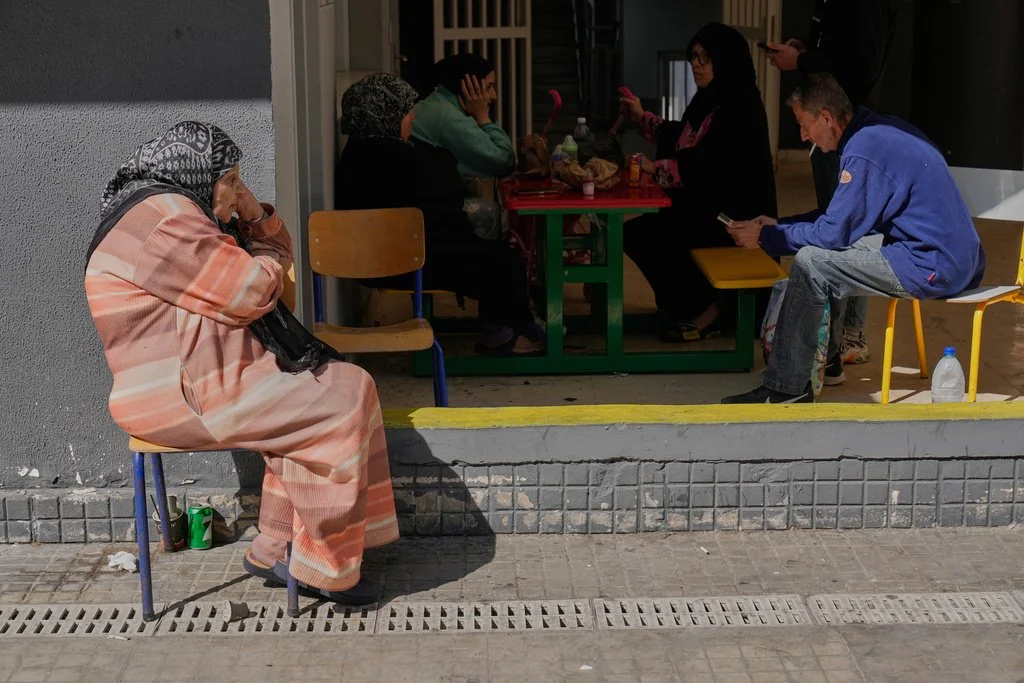
Displaced people who fled Israeli strikes in southern Lebanon sit in the playground of a school that turned into a shelter in Beirut, Lebanon, Tuesday, March 10, 2026. (AP Photo/Hussein Malla)
Despite this not being the first violation of IHL by the US in 2026, experts have regarded it to be the most severe. Compared to the violations that took place during the military operation in Venezuela in January 2026, which resulted in 100 civilian casualties, the war in Iran has caused 10,000 civilian injuries, 3.2 million displacements, and civilian death counts exceeding 1,200. The casualties of children in Minab make up 15 percent of this figure. Soaring rates of crimes against humanity in Iran have taken on an unprecedented medium of violence, against children. Appalled by the egregiousness in the Middle East, many humanitarian rights activists have publicly reprimanded the US’s oversight, sparking widespread conversation about the need for reform and accountability from the US military to prevent future instances of civilian harm.
According to Sarah Yager, a director at the Human Rights Watch, “The findings of the US military investigation into the Minab school show a violation of laws of war that cannot be boiled down to a blameless mistake.” United Nations Messenger of Peace and Nobel Peace laureate Malala Yousafzai recently conveyed her appalment for the bombing of the school, stating that “All states and parties must uphold their obligations under IHL to protect civilians and safeguard schools…Every child deserves to live and learn in peace.”
As military presence remains steady and acts of violence sweep the Middle East, conversation among IHL leaders and a captivated global audience continues to buzz. The stark severity of war crimes in Iran, particularly the egregious harm inflicted on children, has intensified calls for greater scrutiny of military operations by global powers such as the US.