
Power & Protection: The Age of AI

President Donald Trump speaks during a Cabinet meeting at the White House, Thursday, March 26, 2026, in Washington. (AP Photo/Alex Brandon)
From the Trump administration's perspective, the framework is designed to build public trust and confidence through “strong Federal leadership” as this advanced technology becomes more integrated in daily life. The proposal released by the administration begins with an emphasis on protecting children and empowering parents with access to privacy controls and tools to safeguard against harmful content. It then shifts to strengthening communities through economic growth and protection from AI threats, while at the same time addressing intellectual property concerns by balancing the creative works and innovation of the American people. The framework further highlights the importance of protecting free speech by “preventing AI systems from being used to silence or censor lawful political expression or dissent”. It also proposes removing obstacles to technological progress, with the aim of strengthening the US position in the global development of artificial intelligence and preparing citizens for an AI-powered future.
“The White House’s framework would promote corporate interests over the public interest”, said Executive Director and President Alan Butler of advocacy group Electronic Privacy Information Center (EPIC). While the administration underlines the significance of innovation and public trust, advocacy groups clarify how “it is light on protection and heavy on promotion of dangerous AI systems,” citing concerns over how focused the government is on human rights as technologically related challenges evolve. EPIC experts warn that AI systems can affect people in ways that the administration has not fully addressed. According to the United Nations Office of the High Commissioner for Human Rights, artificial intelligence can produce significant privacy risks; models are trained on data sets taken from the internet, likely including sensitive information of people who have no idea that their “data is collected, used, or stored for AI training”.
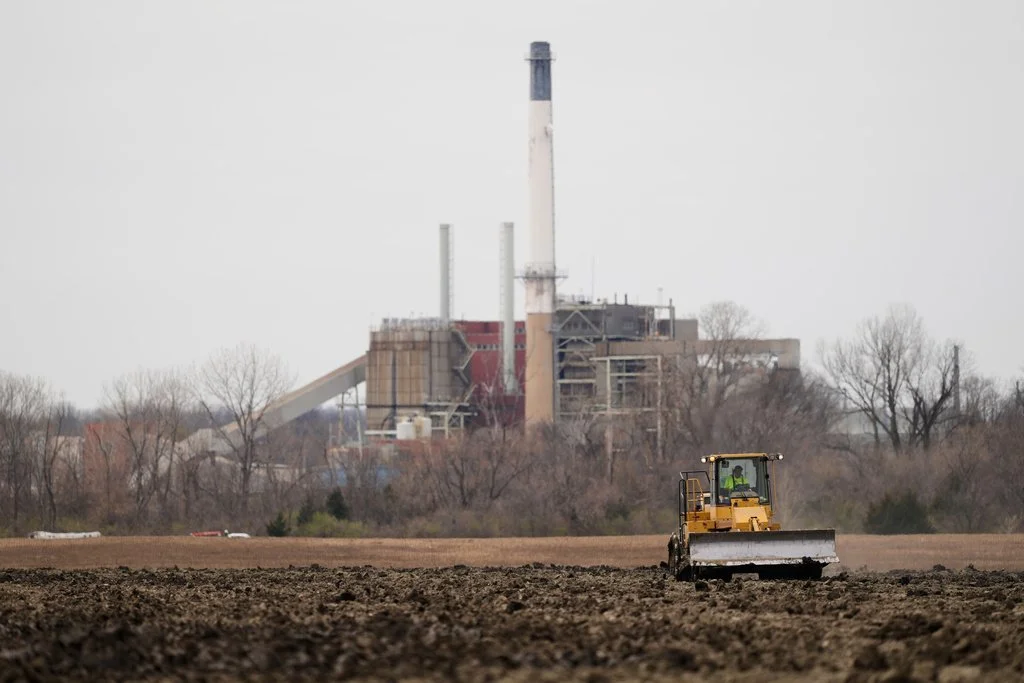
A worker prepares a plot of land for an AI data center a retired power plant being refurbished to provide electricity for the facility rises in the distance Tuesday, March 24, 2026, in Independence, Mo. (AP Photo/Charlie Riedel)
Beyond privacy, experts warn that AI can reinforce existing inequalities and discriminatory practices. This is done through predictive policing that can amplify historical injustice and harm minorities. The UN notes, “the key challenge with AI is transparency” since individuals cannot challenge decisions made using their personal data if they are unaware that those determinations are being made. Advocacy group EPIC argues that human rights concerns are not properly addressed as the legislation “fails to address the full scope of ways AI harms people”. They also highlight how the recommendations to protect children are unclear and not strong enough to be effective. It further argues that the framework tells Congress to let the courts handle disputes over copyrights while simultaneously permitting the use of copyright material to train AI.
Backers of the Trump administration initiative say that it aims to establish a consistent federal approach to AI regulation. In December, President Donald Trump said he would withhold federal broadband funding from states whose AI regulations are “judged by his administration to be holding back American dominance in the technology”. House Majority Leader Steve Scalise and Speaker Mike Johnson said that the policy is intended to provide a framework that supports innovation and, at the same time, addresses consumer protections—especially for children. Supporters observe that a consistent national policy is necessary to uphold US advancement in technology, preventing miscommunication between state governments, companies, and users.
Ultimately, the release of the national AI legislative framework highlights a growing tension between innovation and accountability that extends far beyond the United States. While the administration frames its approach as one towards technological development and global leadership, critics warn that without stronger safeguards, this empowering technology can erode fundamental human rights. Artificial intelligence has begun to evolve at an even faster pace than policy can keep up with, its impacts are shown to be immediate. The challenge for the fast-coming future is not to simply regulate AI, but to ensure its progress doesn't come at the expense of the people its meant to serve.