
Germany and Russia Reopen Diplomatic Channels After Four Years of Silence
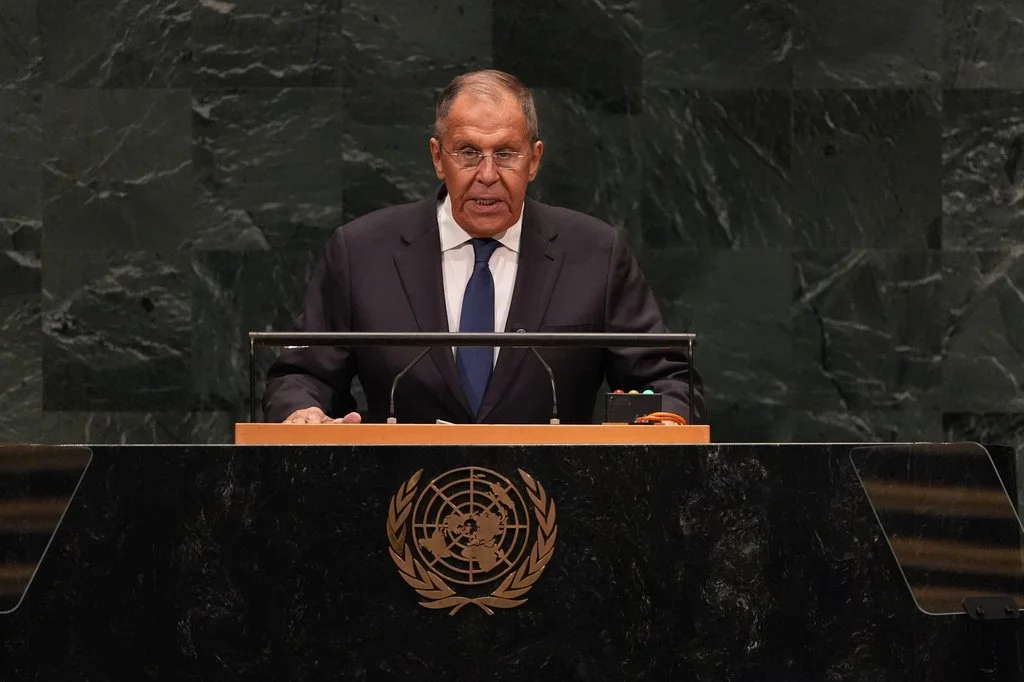
Foreign Minister Sergey Lavrov of Russia speaks during the 81st session of the United Nations General Assembly at United Nations headquarters, Saturday, Sept. 26, 2026. (AP Photo/Heather Khalifa)
German and Russian foreign ministers, Sergey Lavrov and Johann Wadephul, met for the first time since Russia’s 2022 attacks on Ukraine at the UN General Assembly in New York on September 26. The relationship between Germany and Russia, both diplomatically and economically, had previously been halted due to the ongoing Russia-Ukraine war.
The brief talk was primarily centered around Germany’s interest in a ceasefire between the two countries, as well as the possibility of an agreement that would allow Russian and Ukrainian grain and energy exports via the Black Sea to resume. The Black Sea is a major trade route connecting Europe, Russia, and the Middle East, and is especially important for Ukraine because its ports facilitate major agricultural exports, including wheat and corn, to global markets. Germany had previously supported the EU measures restricting transactions with major Russian energy firms such as Rosneft and Gazprom Neft, limiting their ability to access European markets and financial systems. Wadephul emphasized that Germany’s position on Russia’s invasion had not changed, while arguing that diplomatic channels remain necessary to address security concerns and issues such as food and energy exports.
While the German government has continued to emphasize its support for Ukraine at the UN General Assembly, Germany's decision to reduce dependence on Russian energy has come with high economic costs. A 2022 IMF analysis estimated that a complete disruption of Russian gas supplies might reduce Germany's GDP by 1.5 percent in 2022 and 2.7 percent in 2023, while raising inflation through higher energy prices.
The loss of access to relatively cheap Russian energy has also affected Germany's industrial competitiveness. In particular, the Bundesbank, or the German Federal Bank, noted that the 2022 energy crisis created major challenges for Germany's industrial economy, particularly felt in the automotive industry where higher natural gas prices raised production and supply chain costs.
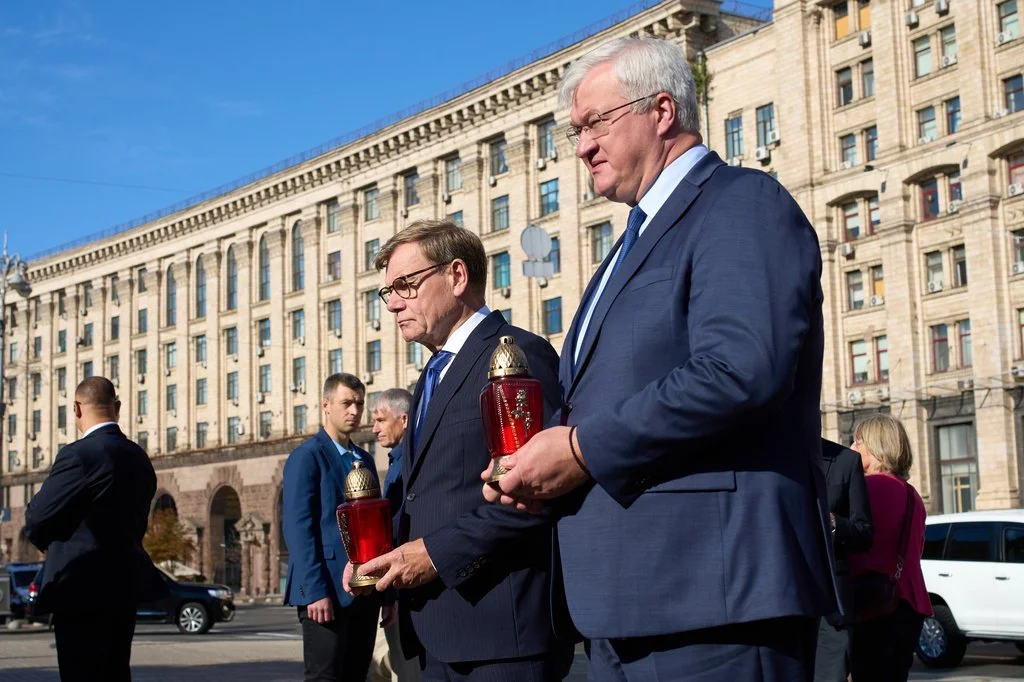
Ukrainian Foreign Minister Andrii Sybiha (right) and German Foreign Minister Johann Wadephul observe a nationwide minute of silence in memory of soldiers killed in the war with Russia, in central Kyiv, Saturday, Aug. 22, 2026. (AP Photo/Francisco Seco)
Recent German election results also highlight growing political support for parties that have challenged the government’s approach to Russia and the economic consequences of the war. The “far-right” party AfD (Alternative für Deutschland) made significant gains in state elections in two eastern German states, Saxony-Anhalt and Mecklenburg-Vorpommern, while the “far-left” Die Linke experienced a major resurgence in Berlin. Although neither party's electoral success can be attributed solely to their positions on Russia, both have openly criticized aspects of Germany’s sanctions policy and emphasized the domestic economic costs associated with the war and energy crisis, while visibly gaining increasing support from the general public.
Subsequently, the EU has also made the recent decision to remove sanctions from two Russian billionaires, Alisher Usmanov and Mikhail Fridman, following demands from France and Luxembourg. On September 22, 2026, the EU removed both men from its sanctions list, ending the asset freezes and travel restrictions imposed on them. However, this decision did not represent a broader removal of sanctions against Russia, as the EU simultaneously extended sanctions against more than 3,000 other individuals and entities. Nevertheless, the decision demonstrates that some European governments are becoming more willing to reconsider individual sanctions while maintaining broader economic pressure on Russia.