
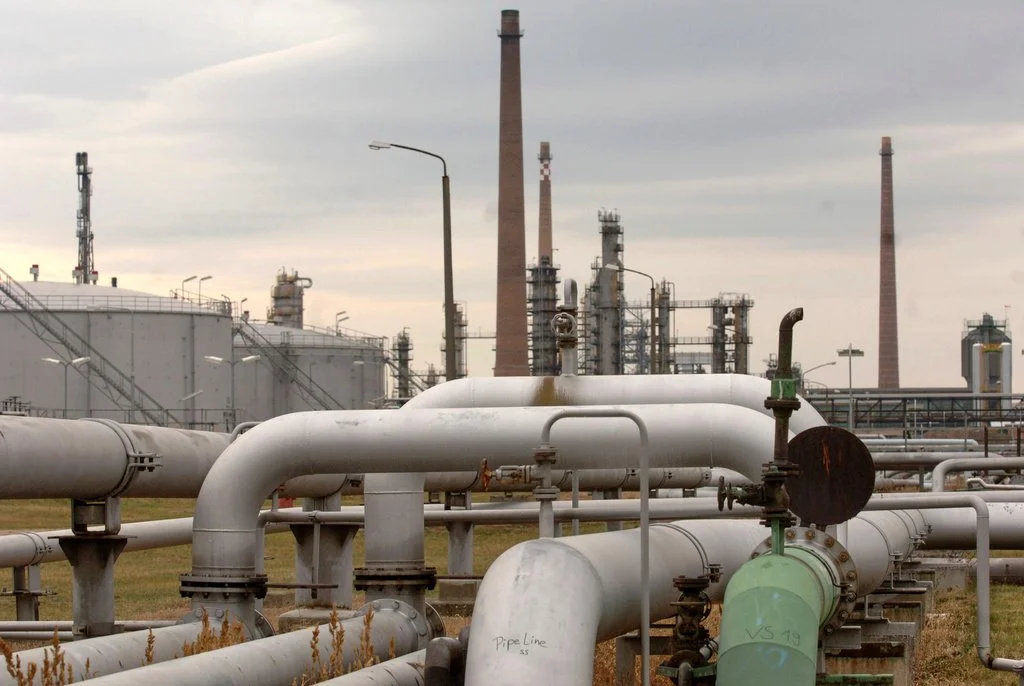
A general view of a pumping station at the end of the Druzhba oil pipeline in the east German refinery PCK in Schwedt, Wednesday, Jan. 10, 2007. (AP Photo/Sven Kaestner, File)
The Druzhba pipeline, often called the “friendship pipeline”, is one of the largest oil pipelines in the world, transporting over 1 million barrels of oil from western Siberia through Ukraine and into Central Europe. Since January 27th, however, significant disruptions have catalyzed new geopolitical tensions between Ukraine, Hungary, and Slovakia. Several European countries depend on Russian oil flowing through this pipeline, and ongoing flow disruptions due to the war between Russia and Ukraine have now lasted for over four weeks, making this one of the longest periods of disruption in recent history.
The pipeline itself runs through active warzones in Ukraine, and while exact details on damage to infrastructure are limited, Ukrainian officials say that the disruptions are related to Russian drone strikes. However, leaders in Hungary and Slovakia are claiming that the disruptions are a strategic political decision by Kyiv. Both countries are beginning to stir up adverse opinions towards Ukraine, opinions that mark them as outliers in the general pro-Ukrainian European bloc.
This retaliation from Slovakia and Hungary can be better understood in the context of major dependence on Russian oil. While several EU countries have moved away from Russian oil imports, such as Germany and Poland, Slovakia and Hungary continue to rely heavily on them. In 2022, Slovakia, Hungary, and the Czech Republic were granted exemptions to an embargo on Russian oil imports. Since then, the Czech government has been steadily working to decrease Russian dependence, while Slovakia and Hungary have maintained their reliance on the Druzbha pipeline.
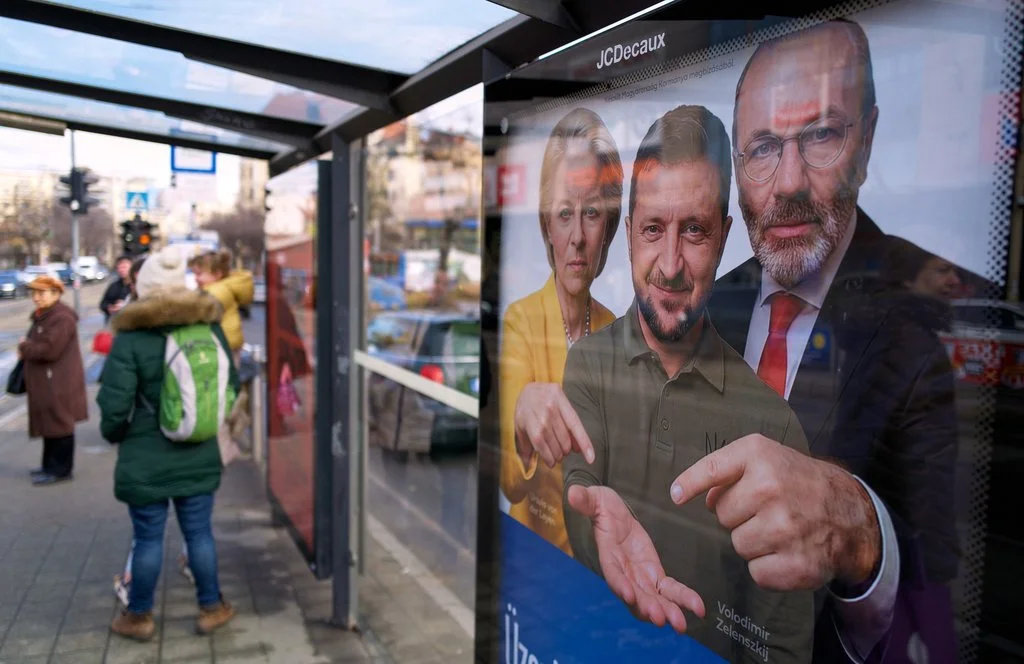
A billboard showing an AI-generated image of Ukrainian President Volodymyr Zelenskyy, center, flanked by European officials is displayed at a bus stop in Budapest, Hungary, Monday, Feb. 23, 2026. (AP Photo/Bela Szandelszky)
Hungarian Prime Minister Viktor Orban has publicly accused Ukraine of attempting a political "oil blockade". Additionally, the dispute has affected broader EU decision-making regarding the war. During a recent EU vote on the new 20th sanctions package against Russia, Hungary and Slovakia vetoed the proposal, drawing public criticism from other member states, including the Polish and German Foreign Ministers.
Beyond this, the two governments are also attempting to block an EU proposal that would provide a $90 billion loan package to Ukraine. Meanwhile, Slovakian Prime Minister Robert Fico said his government is unwilling to provide any emergency energy support to Ukraine amidst the pipeline crisis. "From today, if the Ukrainian side turns to Slovakia with a request for assistance in stabilizing the Ukrainian energy network, it will not receive such assistance," Fico said, according to Reuters.
Tensions are unlikely to ease soon, especially until the pipeline is repaired, but Ukrainian President Volodymyr Zelenskyy says that the repairs will take time as Russia continues to strike Ukraine’s energy sector. Ukrainian officials said on March 4th that the oil flows will not resume in the coming days due to the continued need for repairs. With ongoing Russian strikes on infrastructure, it remains unclear how long it will take for the pipeline to be restored.