
European Union Announces Tightened Restrictions on Russian Visas
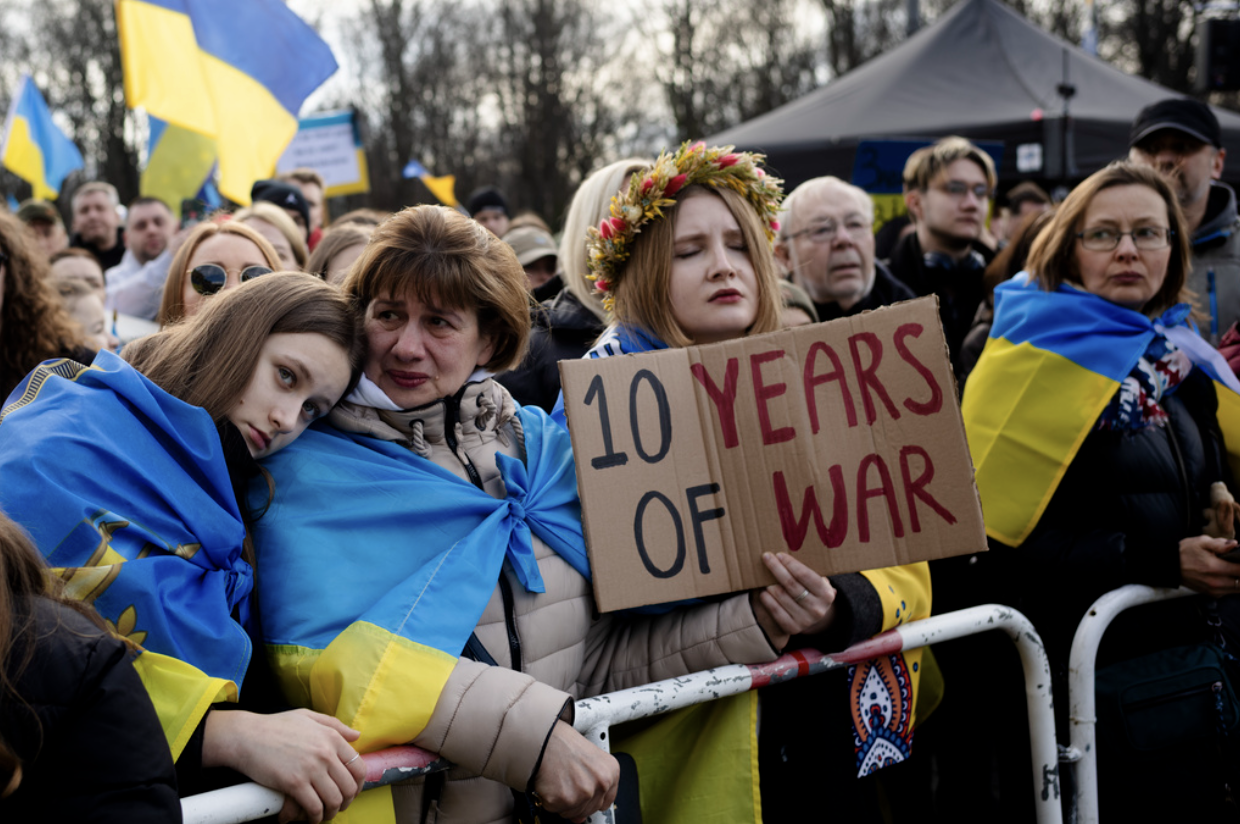
A tearful woman holds a sign reading “10 Years of War” as she attends a protest against the Russian War in Ukraine in front of the Russian Embassy in Berlin, Saturday, Feb. 24, 2024. (Photo: AP Photo/Markus Schreiber)
On Friday, Nov. 7, the European Union issued a statement announcing tightened restrictions on visa issuance to Russian nationals, making it more difficult for them to enter Europe’s ID-check-free travel area. The restriction comes amid Russia’s relentless war on Ukraine, increasing acts of sabotage linked to Moscow, and the potential misuse of visas.
The European Commission, the EU’s executive branch, will only be issuing single-entry visitor visas. Russian nationals will no longer be allowed multiple-entry visas into the Schengen area, a free-movement zone encompassing 25 of the 27 member nations as well as Liechtenstein, Iceland, Norway, and Switzerland. Instead, they will have to apply for a new visa each time they travel outside of Russia. The Commission has said the aim of this measure is to protect public policy and security. The decision will not apply to Russians who also hold EU citizenship
The statement released by the Commission has cited the reasoning for this restriction as due to Russia’s unwavering acts of aggression, stating that “Russia’s unprovoked and unjustified war of aggression against Ukraine has profoundly altered the migratory and security risk linked to Russian visa applicants.” The letter also references Russia’s acts of sabotage in member states’ territory and in the Baltic Sea, weaponisation of migration, and espionage threats as considerations in their assessment of the matter.
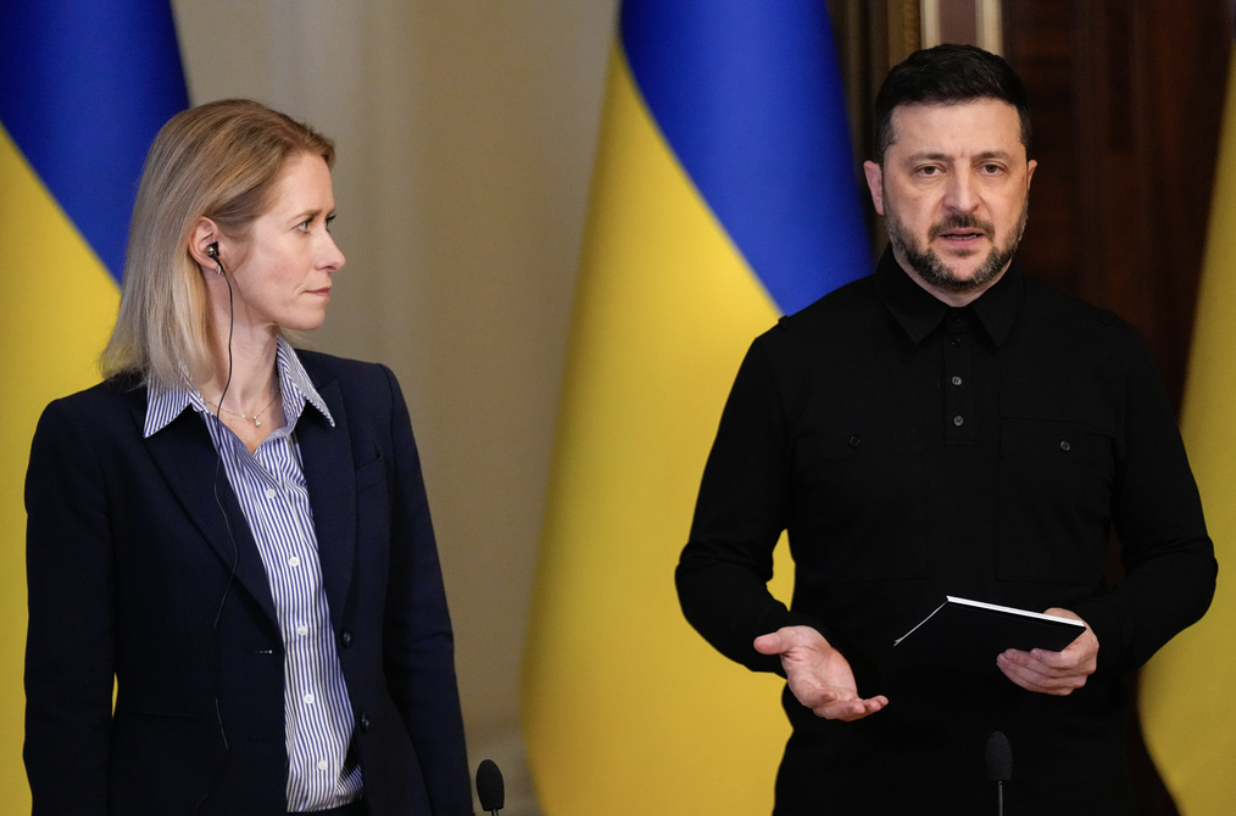
President Volodymyr Zelenskyy of Ukraine speaks during a news conference in Kyiv with High Representative of the European Union for Foreign Affairs and Security Policy Kaja Kallas, Monday, Oct. 13, 2025. (Photo: AP Photo/Julia Demaree Nikhinson)
There will be exceptions made for those whose “reliability and integrity is without a doubt,” according to the statement. This includes dissidents, independent journalists, and human rights defenders. There will also be exceptions made for close family members of Russians living in the EU and for family members of EU citizens living in Russia. Transport workers may also obtain multiple-entry visas for up to nine months.
The EU had previously suspended its Visa Facilitation Agreement with Russia after the country’s full-scale invasion of Ukraine in 2022, deciding to “deprioritize” the granting of visas to Russian nationals and making it more difficult and time-consuming for Russians to obtain a visa. As a result, the number of visas issued to Russians dropped from over 4 million in 2019 to around 500,000 in 2023. The Commission also stated that Russian travel documents in Russian-occupied territories in Ukraine would not be accepted into the Schengen area either.
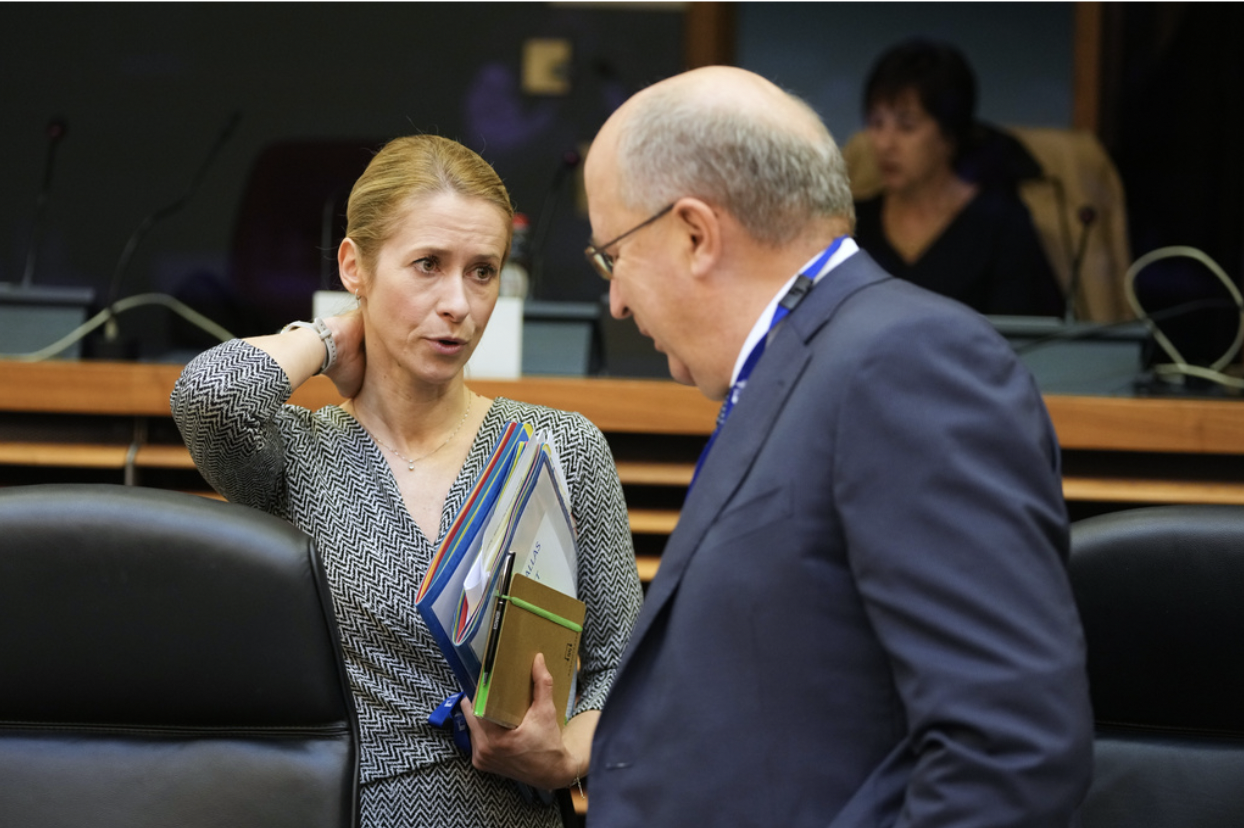
Kaja Kallas, left, the European Union foreign policy chief, speaks with European Commissioner for Defense and Space Andrius Kubilius during a weekly College of Commissioners at the EU headquarters in Brussels, Tuesday, Nov. 4, 2025. (Photo: AP Photo/Virginia Mayo)
Specific nations in Europe were addressed in the decision as well. The statement declares that Denmark is bound by international law to adhere to the decision; however, Ireland will not be taking part in adopting the decision and is not bound to it, as it does not “constitute a development of the provisions of the Schengen acquis in which Ireland takes part.” Lithuania, Latvia, and Estonia have completely restricted the entry of Russian citizens into their territories. Hungary, France, Spain, and Italy continue to grant tourist visas to Russian nationals.