
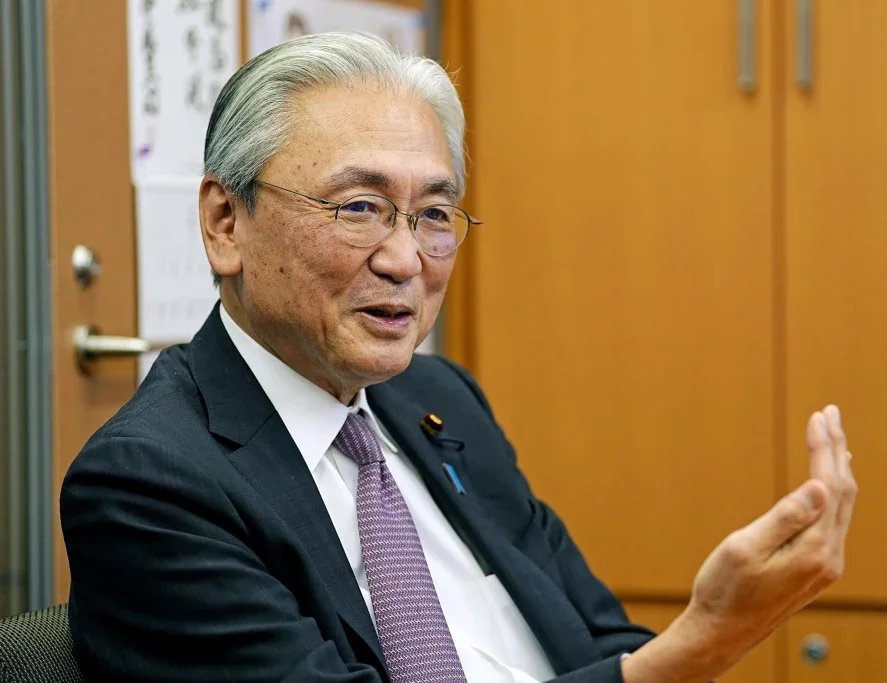
Japanese lawmaker Keiji Furuya is interviewed at the parliament in Tokyo, on March 18, 2026. (Ren Onuma/Kyodo News via AP)
China has sanctioned Japanese lawmaker Keiji Furuya over his ties and opinion to Taiwan, in a move that adds new tension to an already strained relationship between Beijing and Tokyo. Chinese officials accused Furuya of supporting “Taiwan independence” forces and interfering in China’s internal affairs after he made repeated visits to Taiwan and met with Taiwanese leaders.
Sanctions prohibit Furuya from traveling to mainland China as well as Hong Kong or Macau. Also prohibited are any business activities with citizens of China or businesses within China. Additionally, all of Furuya's assets in China will be frozen according to the Chinese government. The actions were announced by the foreign ministry and state-run news media in China on March 30.
He does not lead just any typical backbenchers. Furuya heads a bipartisan group of Japanese legislators who advocate for better relations with Taiwan. As such, he has been known to develop and promote closer ties between Japan and Taiwan. In recent weeks, he traveled to Taipei, where he met with Taiwanese President Lai Ching-te. This visit may have further angered Beijing since it is highly interested in monitoring external political support for Taiwan right now.
China defended the sanctions by saying the Taiwan question is a “red line” that cannot be crossed. At a regular press conference, Chinese Foreign Ministry spokesperson Mao Ning said Furuya had continued to collaborate with “Taiwan independence” separatist forces and had taken provocative actions that violated China’s sovereignty and core interests. That language shows that Beijing does not see the dispute as a narrow diplomatic complaint, but as part of a larger struggle over Taiwan’s international space.
Japan reacted angrily. AP reported that Tokyo called the sanctions “unacceptable” and “extremely regrettable,” and demanded that China withdraw them. Furuya himself appeared unfazed, saying the sanctions would have little practical effect because he has not visited China in decades and does not hold assets there. Still, the symbolic message was clear: China is willing to punish foreign politicians it sees as crossing its lines on Taiwan.
This matter is important because it demonstrates that the Taiwan dispute is now as much an East Asian multilateral issue among China, Japan, South Korea, the United States and others. In addition to its implications for cross-Strait relations between Beijing and Taipei, China's increasing assertiveness regarding Taiwan has also affected its relations with other nations in the region. Specifically, the U.S., South Korea, Vietnam and Japan have all expressed concerns over China's military build-up and/or aggressive rhetoric against Taiwan.
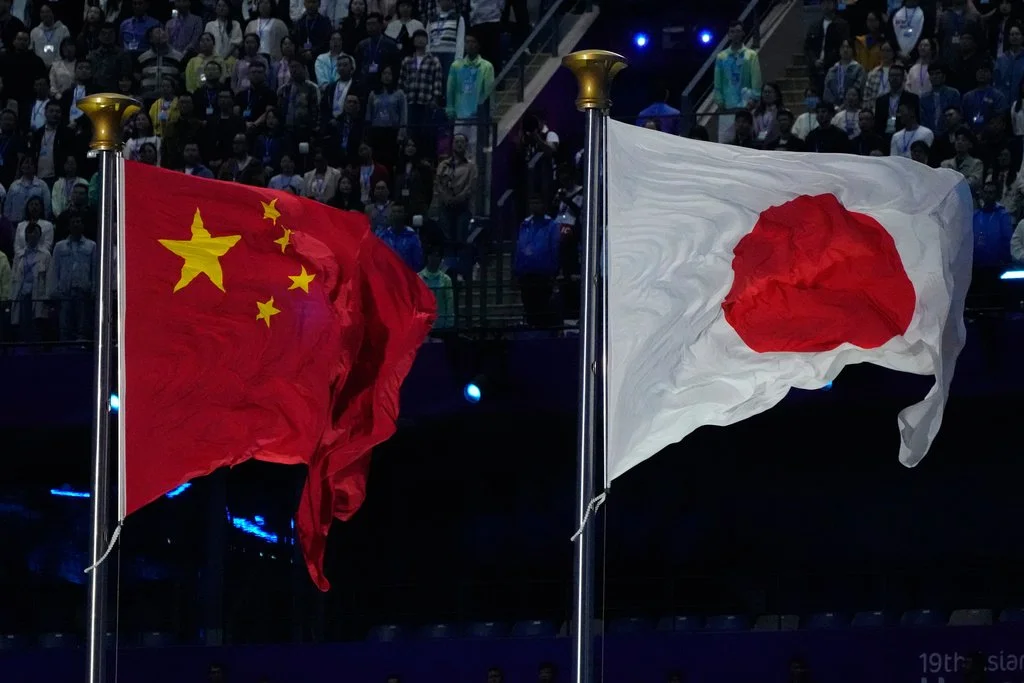
The flags of China and Japan are flown at the during the handover ceremony from China to Japan the next host of the Asian Games at the closing ceremony of the 19th Asian Games in Hangzhou, China, Sunday, Oct. 8, 2023. (AP Photo/Eugene Hoshiko, File)
This also comes at a sensitive moment for East Asia. Japan and China are major economic partners, but they remain divided by security concerns, territorial disputes, and sharply different views on Taiwan. By targeting a well-known Japanese lawmaker, Beijing may have intended to send a warning not only to Tokyo, but also to other foreign politicians considering higher-profile engagement with Taiwan. That could make already difficult China-Japan ties even harder to stabilize. This is an inference based on China’s stated justification for the sanctions and the timing of the move.
For now, the sanctions are unlikely to change Furuya’s position. But they may deepen distrust between China and Japan and add to the sense that Taiwan is becoming the central fault line in East Asian politics. As Beijing tries to isolate Taiwan diplomatically and Tokyo pays closer attention to cross-Strait security, even the actions of one lawmaker can carry regional consequences.