
Press Freedom Under Scrutiny After Hong Kong Journalist Tang Ho-wing’s Arrest
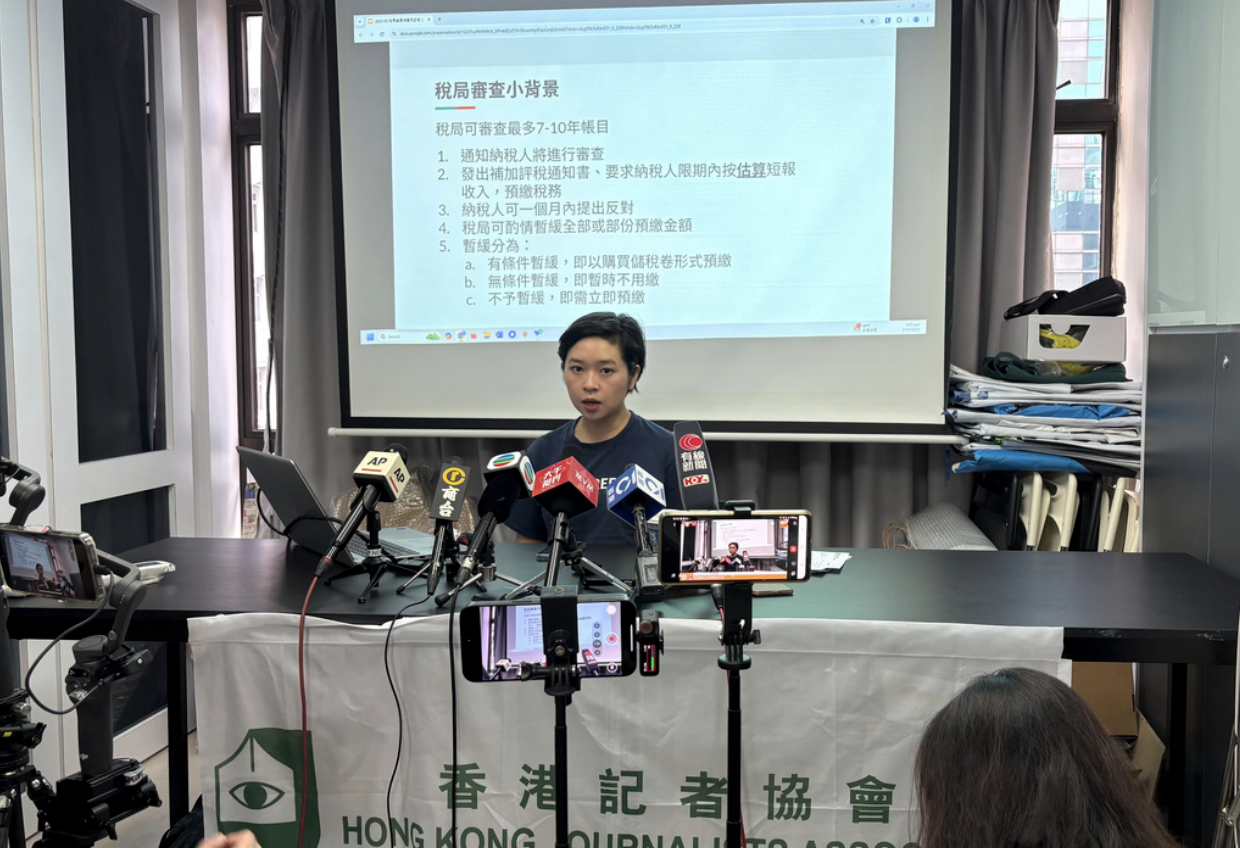
Hong Kong Journalists Association chairperson Selina Cheng holds a press conference on journalists and their families being targeted by tax audits without sufficient evidence in Wan Chai, Hong Kong, Wednesday, May 21, 2025. Photo: AP News
On Oct. 7, 2026, Hong Kong independent journalist and the founder of Boom News, Tang Ho-wing, was arrested by Hong Kong’s national security police. Journalists have raised concerns that this city, once a safe space for free expression, has shrunk after the first national security law was passed by Beijing in 2020, followed by the national security law passed and enforced by the Government of the Hong Kong Special Administrative Region in 2024. Civil liberties are being slowly stripped away, and journalists are being forced to be more mindful of their language when reporting.
According to the Hong Kong Journalists Association, Tang Ho-wing was the first journalist arrested for sedition under the National Security Law. His arrest was related to his coverage of a gathering that marked the storming of MTR Prince Edward station during a mass protest to defend democracy that happened seven years ago on Aug. 31. Later, Hong Kong police stated that they arrested eight other people between the ages of33 and 79 who were suspected of spreading false information about the Hong Kong Special Administration Region. According to the national security law, anyone who imports a publication that has seditious intent commits an offense and is liable on conviction on indictment to imprisonment for seven years. In addition, if a person colludes with an external force to do the following with a seditious intention, they could face imprisonment for ten years. The Hong Kong Journalists Association urgently requested the Hong Kong Police to publicly explain the exact actions of Tang Ho-wing that violated the national security law, and whether the arrest is related to his interviewing and reporting job.
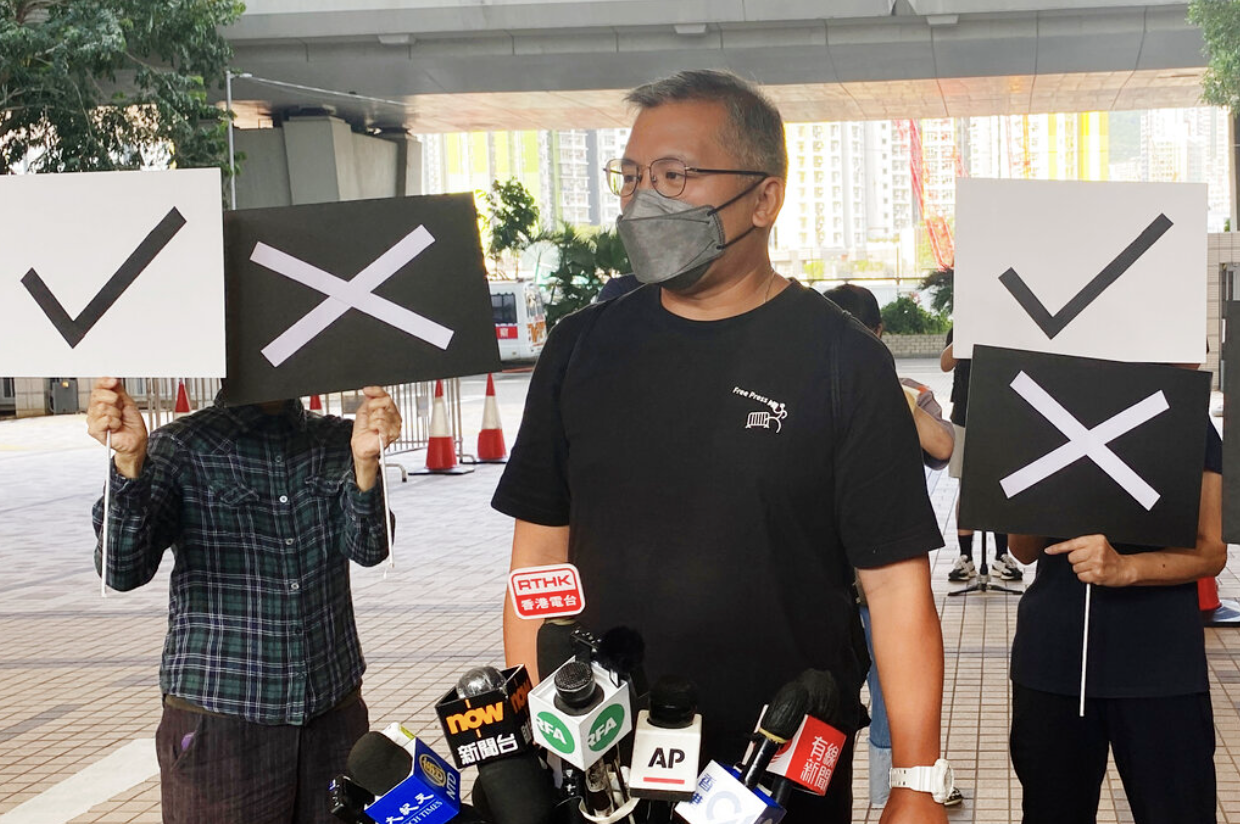
Ronson Chan, who chairs the Hong Kong Journalists Association, speaks with a few supporters before the media after court appearance in Hong Kong, Thursday, Sept. 22, 2022. The head of Hong Kong’s largest journalist group was granted bail Thursday and allowed to leave the city for an overseas fellowship two weeks after he was arrested for allegedly obstructing police officers while reporting. (AP Photo/Alice Fung)
Tang Ho-wing’s arrest raised concerns about press freedom and national security in Hong Kong. In addition, the Inland Revenue Department targeted at least twenty people, including current or former leaders of media organizations and their families; they faced obstruction by police officers and harassment via anonymous messages. Many journalists have concerns that they will be arrested or targeted for live broadcasts that truthfully report the situation that occurred on site, as that is the basic standard of being a journalist. Hong Kong Journalists Association chairperson Selina Cheng said the moves added stress to journalists and media organizations and affected their daily operations. It has a negative effect on Hong Kong’s press freedom.
Hong Kong was handed back to China from Britain in 1997 under the Basic Law. The Basic Law aims to protect the city’s autonomy as a special administration within China; specifically, Article 27 in the Basic Law protects the right to freedom of speech and assembly. In 2019, China proposed a bill allowingHong Kong suspects to be tried in China. This bill turned into an anti-China and pro-democracy movement. The Chinese government responded to the turmoil by asserting that its central government’s fundamental responsibility for national security matters concerning Hong Kong, and that the legislative purpose of the National Security Law is to implement the policy of One Country, Two Systems, preventing and punishing crimes that jeopardize national security.
The relationship between protecting national security and freedom of expression frequently clashes with the right to an independent press. While the National Security Law aims to protect a nation from threats, when a nation’s definition of crimes such as sedition and incitement to disaffection is too broad, it raises questions about the boundaries of journalism. Without clear laws that protect the press and allow for truthful reporting, journalists are growing concerned about personal safety within their journalism fields. Basic reporters’ work can be easily treated by the government as threatening the country. The unclear boundaries slowly harm journalism and leave less room for journalists to do their job.
The decline of press freedom in Hong Kong damages the city’s international standing, violates human rights, and threatens its status as a major financial hub. The UN Human Rights Committee urges Hong Kong to scrap National Security Law due to its violation of free expression. Tang Ho-wing’s arrest raises tension between press freedom and national security in Hong Kong and raises questions about the future of independent journalism and whether Hong Kong can maintain space for critical reporting.