
US-China Macro Outlook: A Post-Summit Review
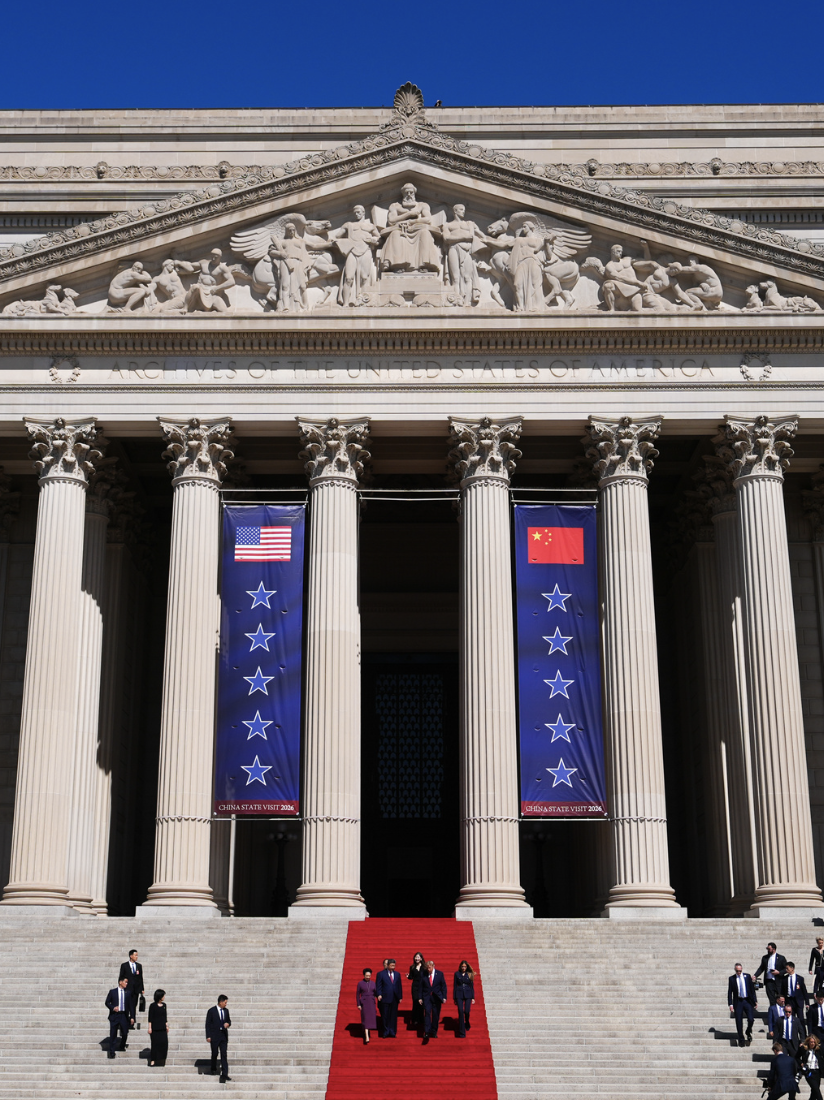
President Donald Trump, First Lady Melania Trump, China's President Xi Jinping, and his wife Peng Liyuan arrive at the National Archives Museum, Friday, Sept. 25, 2026, in Washington. ( Source: AP Photo/Julia Demaree Nikhinson)
The summit between the United States and China brought some progress in their economic relationship, with both upsides and lingering concerns. However, the market’s reaction to the summit was a bit nuanced. The S&P 500 closed down around 0.8 percent on Sept. 28, while the CSI 300, a major Chinese onshore equities index, was down around 2.2 percent by the midday break. Although the summit brought some positive news, both markets were still facing other pressures.
The upsides are pretty direct: the summit made some progress on trade. The United States and China released lists covering $30 billion worth of goods each that could receive lower tariffs. These include Chinese household goods and toys, as well as US agricultural products and medical devices. If implemented, the cuts could lower import costs and benefit businesses and consumers. The two countries also extended their trade truce by two months, giving companies more certainty about trade conditions in the near term. These are meaningful steps, although neither country had announced the timing or size of the tariff reductions.
However, the problems also remain alongside the progress. The summit did not resolve several concerns facing the two markets. A two-month extension gives both sides more time to negotiate, but it does not establish a long-term trade agreement. Meanwhile, technology restrictions remain an issue. Around the summit, US lawmakers introduced a bill concerning Chinese-made components used in sensitive government AI systems. The bill had not become law, but the news put pressure on Chinese optical-component shares. The truce is a good sign, but it is not enough to remove these worries. This helps explain why progress in the relationship could happen while Chinese stocks were still falling.
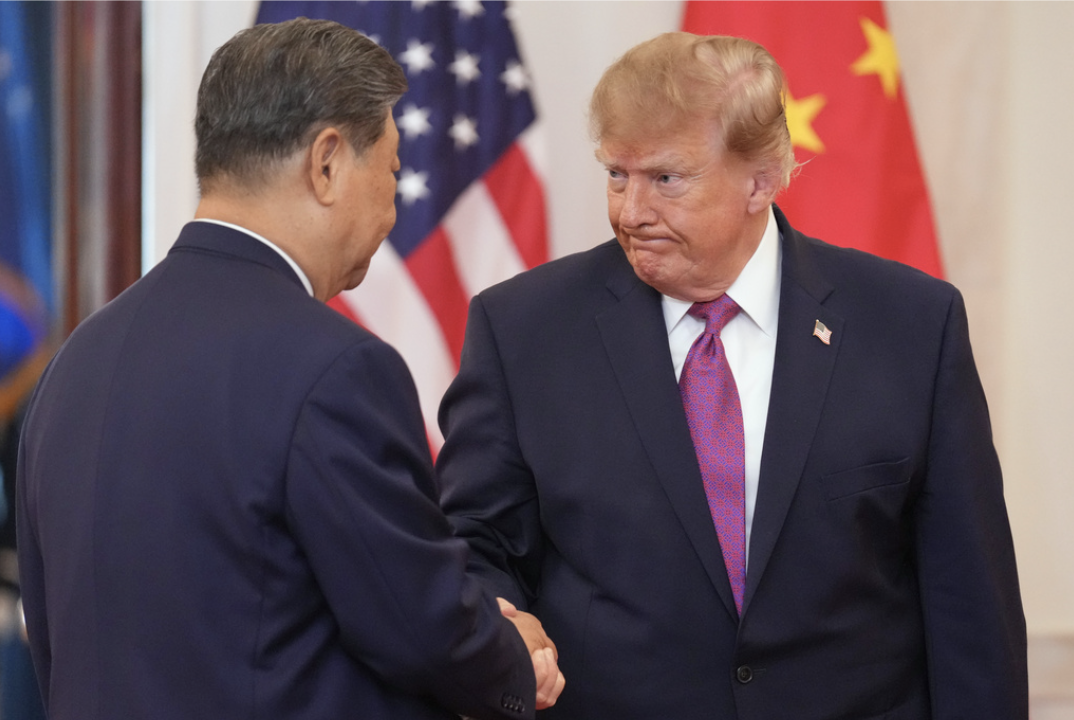
President Donald Trump shakes hands with China's President Xi Jinping during an arrival ceremony in the Grand Foyer of the White House, Thursday, Sept. 24, 2026, in Washington. (Source: AP Photo/Jacquelyn Martin)
As we can see, technology is an important connection between the two markets, but it also comes with different challenges. Both countries agreed to continue discussions on AI, while competition in the industry remains. For Chinese technology suppliers, possible restrictions create uncertainty about access to customers and markets. For US companies investing heavily in AI infrastructure, rising financing costs are another concern. This means that progress on trade does not automatically improve the outlook for every technology company, even when both sides are willing to keep talking.
From the US side, inflation remains a major concern, with consumer prices rising 3.4 percent over the year through August, while the Federal Reserve targets 2 percent inflation. Lower tariffs could help reduce the cost of selected imports, but their effect would depend on implementation and how much businesses pass the savings to consumers. Meanwhile, rising Treasury yields and uncertainty around oil prices were weighing on US stocks. Higher yields can raise borrowing costs and put pressure on valuations. This helps explain why the market did not broadly rise after the summit.
From China’s side, economic growth remains a major concern, especially the strength of domestic demand. In August, industrial production grew 5.2 percent from a year earlier, while retail sales increased only 0.4 percent. This shows that stronger factory output has not been matched by equally strong consumer spending. More stable trade conditions could help exporters, but they do not directly increase household demand. The summit made progress, while the economic data show why investors still have reasons to be cautious about how broadly that progress will support growth.