
Hanwha Aerospace Invests $2.2B in Munitions Manufacturing Campus in Arkansas
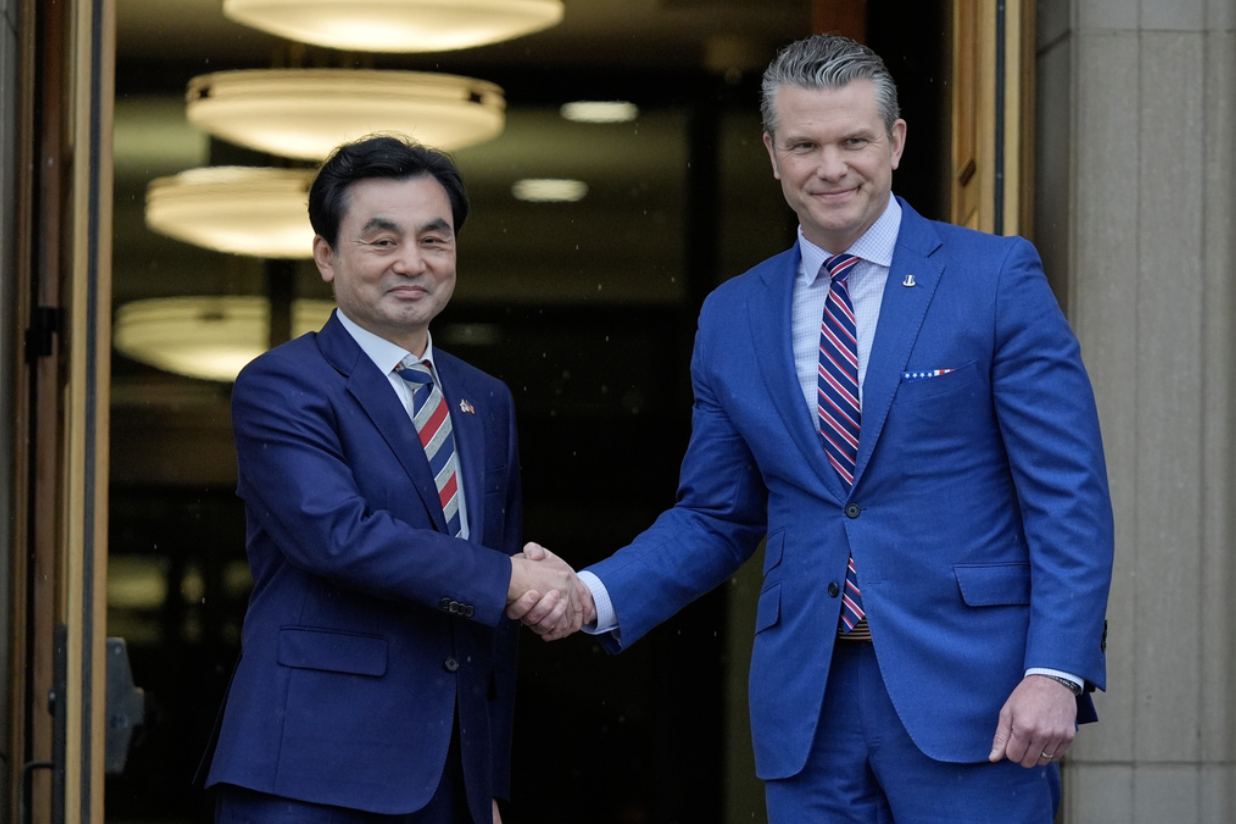
Defense Secretary Pete Hegseth welcomes South Korea's Defense Minister Ahn Gyu-back, during a ceremony at the Pentagon on Monday, May 11, 2026 in Washington. (AP Photo/Manuel Balce Ceneta)
Hanwha Aerospace is a leading South Korean space, aviation, and defense systems company. For twenty-five years, the company has actively supported South Korea’s space development journey through the production and development of rockets, satellite propulsion systems, and aircraft gas turbine engines, along with successful launches.
They also seek to enhance their global competitiveness through process optimization for individual components and by expanding their global supply chain network. In 2019, Hanwha Aerospace acquired EDAC Technologies to form Hanwha Aerospace USA in Connecticut. It began supplying components for GE Aviation’s most advanced engines that power the Boeing 777X. Moreover, in early 2021, the company established Hanwha Defense USA and also received the Supplier Gold Certification from the world-renowned aircraft engine manufacturer Pratt & Whitney for flawless quality control.
However, on Aug. 20, 2026, a new project marked a shift for the South Korean defense industry when Hanwha Defense USA, a subsidiary of Hanwha Aerospace, signed a milestone contract to supply the US Army with six K9 wheeled self-propelled howitzer prototypes. The deal was valued at approximately $103M, with options that could potentially bring the total to $263M. It marks the first time a Korean-made weapon system has broken into the world’s largest defense market.
These developments are important for both Hanwha Aerospace as well as the US Army due to strategic and technological rationales. The US Army sought a wheeled howitzer to better meet operational demands for rapid deployment and easier transports, since overseas deployments have become more frequent. Moreover, the war in Ukraine has highlighted the vulnerability of artillery units, as drones and counter-battery radars can quickly locate firing positions and direct attacks against them; the self-propelled howitzers would be able to counter this by traveling long distance quickly and relocating immediately after firing.
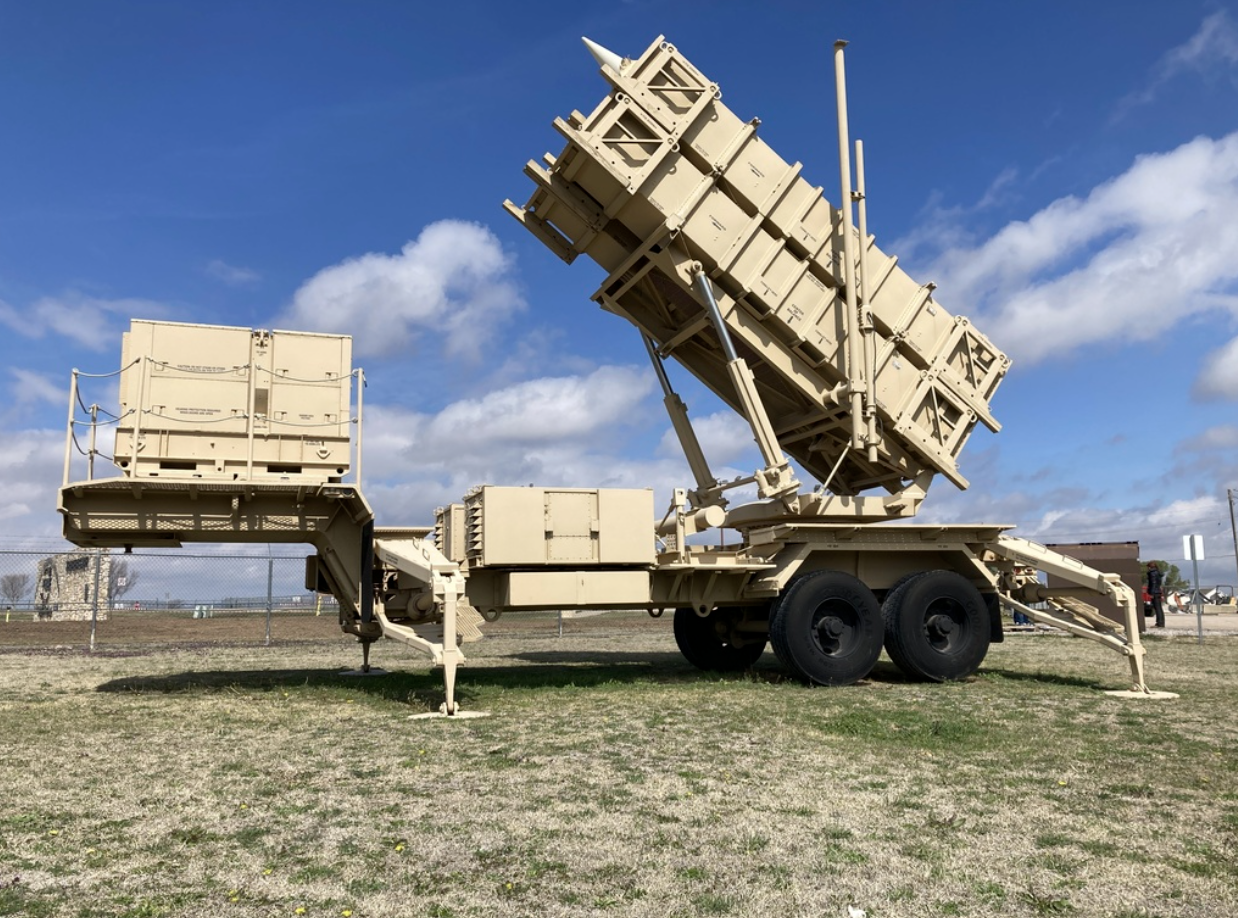
A Patriot missile mobile launcher is displayed outside the Fort Sill Army Post near Lawton, Okla., on March 21, 2023. The U.S. will send $1.7 billion in military aid to Ukraine, officials announced on Monday, July 29, 2024, including an array of munitions for air defense systems, artillery, mortars and anti-tank and anti-ship missiles. (AP Photo/Sean Murphy, File)
Hanwha’s rapid development of the K9MH (Mobile Howitzer) specifically tailored to these needs, thereby setting it apart from bigger players like BAE Systems, Rheinmetall, Leonardo DRS, and KNDS. A considerable win for Hanwha, as it has successfully outmaneuvered established American startups and European powerhouses. The contract could potentially pave the way for a full production deal and additional exports to other countries that Hanwha supplies to, but on a smaller scale.
Hanwha is simultaneously spending billions to build its new Hanwha Advanced Manufacturing Campus at the US Army Pine Bluff Arsenal (PBA) in Arkansas. Through the Enhanced Use Leasing (EUL) program, the Army is strategically leasing underutilized property to Hanwha. It seeks to transform the domestic munitions industrial base and further strengthen America’s arsenal of freedom. The new complex will also vertically integrate the manufacturing system for the ammunition production process from raw materials to finished products.
There will be multiple advantages to the new project, one of the biggest being boosting the local economy by creating hundreds of jobs, close to 400, over seven years. The new facility will focus on the production of 155 mm propellant charges, which launch the artillery shell from the howitzer barrel, and base bleed units, slow-burning gas generators attached to the back end of an artillery shell which extend the shell’s flight range by reducing aerodynamic drag.
Jordan Gillis, Assistant Secretary of the Army for Installations, Energy and Environment said, “By leasing underutilized land, the Army can reinvest the consideration into critical infrastructure to support quality of life of Soldiers, civilians, and their family members—delivering lasting value for both the Army and the region.” From a long-term point of view, this move is also coming at a critical time as the Pentagon seeks to rapidly rebuild the nation’s munitions stockpiles amid the wars in Ukraine and Iran.