
Suspected Nuclear Expansion in North Korea and its Strategic Implications
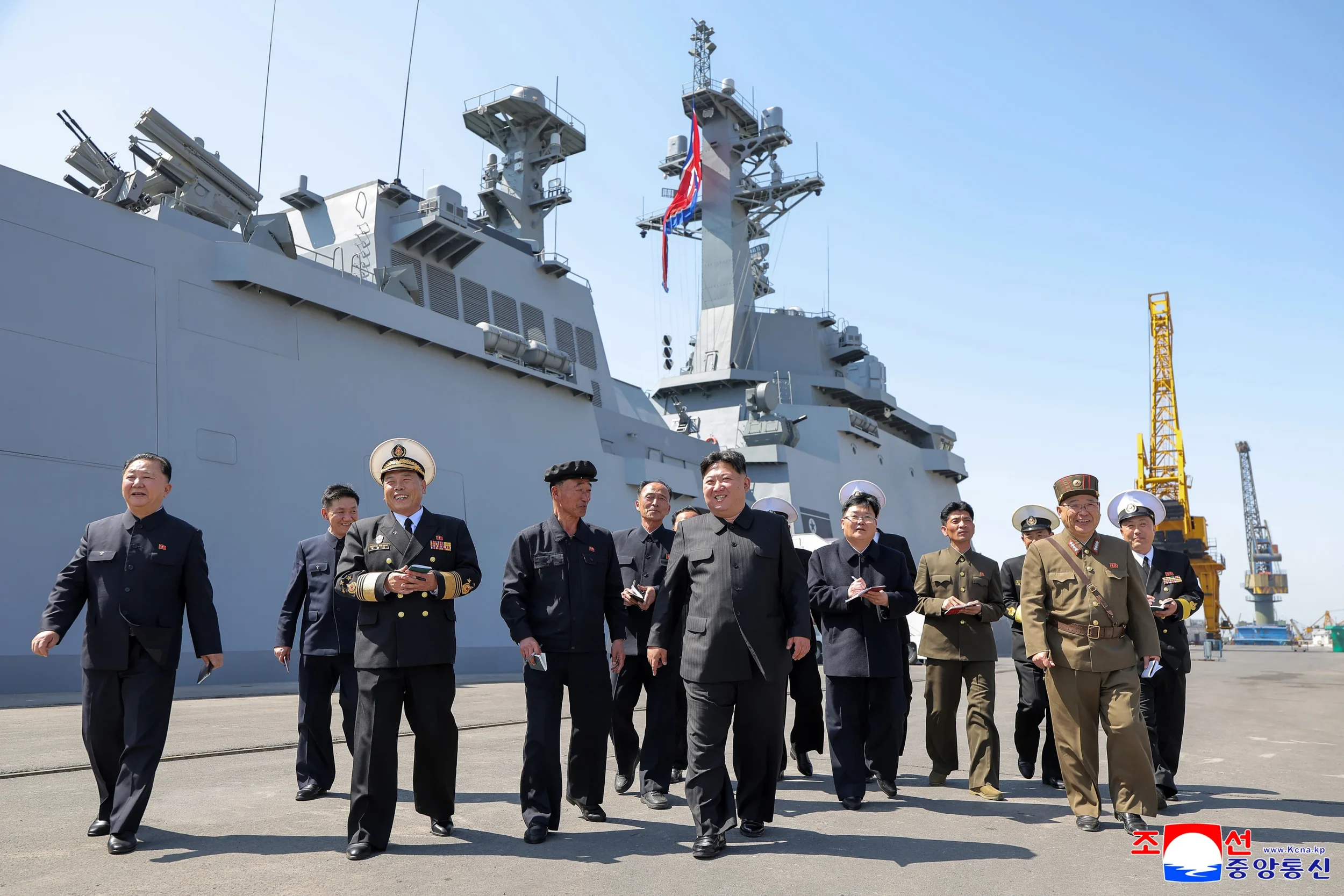
In this photo provided by the North Korean government, its leader Kim Jong Un, center, visits to observe the test launches of missiles at an undisclosed place in North Korea Sunday, April 12, 2026. Independent journalists were not given access to cover the event depicted in this image distributed by the North Korean government. The content of this image is as provided and cannot be independently verified. Korean language watermark on image as provided by source reads: "KCNA" which is the abbreviation for Korean Central News Agency. (Korean Central News Agency/Korea News Service via AP, File)
Recent reports have brought renewed attention to North Korea’s suspected development of a third nuclear facility, highlighting growing concerns over the country’s expanding nuclear capabilities. Analysts suggest that what had previously been treated as an unofficial assessment by South Korea and the United States is now becoming more widely recognized as a substantive development. The issue gained further credibility following an unusually strong response from the United States to public remarks by South Korean officials, reinforcing the perception that these facilities may already be operational or nearing completion.
The suspected site is located in Kusong, North Pyongan Province, a region long associated with North Korea’s military-industrial infrastructure. Situated relatively close to Yongbyon, the country’s most well-known nuclear complex, Kusong has drawn attention as a potential location for an additional nuclear base. Within the region, Yongdeok-dong is considered particularly significant due to its concentration of industrial facilities and advanced manufacturing capabilities, which are believed to support nuclear-related activities.
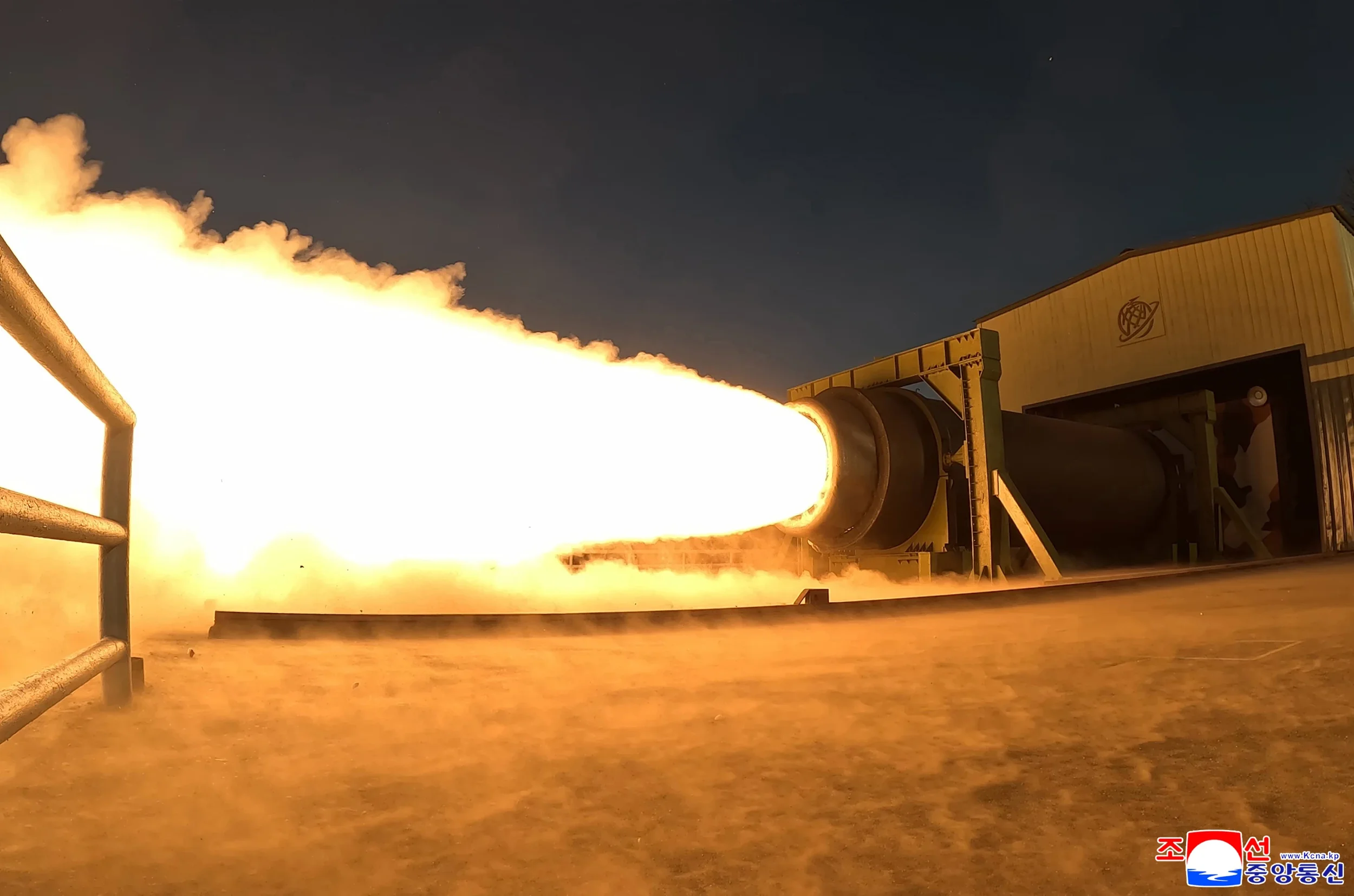
This undated photo provided on March 29, 2026 by the North Korean government, shows what it says a solid-fuel engine test at an undisclosed place in North Korea. Independent journalists were not given access to cover the event depicted in this image distributed by the North Korean government. The content of this image is as provided and cannot be independently verified. Korean language watermark on image as provided by source reads: "KCNA" which is the abbreviation for Korean Central News Agency. (Korean Central News Agency/Korea News Service via AP)
Evidence supporting these concerns has largely been derived from satellite imagery and technical analysis conducted over several years. Observations have indicated the possible operation of uranium enrichment facilities, including centrifuge activity, as well as the construction of structures designed to conceal sensitive operations. Additional signs, such as vehicle movements near underground tunnel entrances, have been interpreted as indicators of ongoing development, possibly related to the expansion of enrichment capacity or the handling of nuclear materials.
Experts increasingly view this site as part of a broader strategic shift in North Korea’s nuclear program. While Yongbyon has long been exposed to international monitoring and is sometimes regarded as serving both technical and diplomatic purposes, Kusong is believed to represent a more concealed and potentially operational facility focused on large-scale production. This distinction suggests an effort by North Korea to strengthen the reliability and survivability of its nuclear infrastructure.
Beyond nuclear development, the area may also be emerging as a broader military hub. Recent satellite observations have pointed to the deployment of advanced unmanned aerial vehicles near nearby air bases, raising the possibility that drone operations are being integrated into the region’s strategic role. Taken together, these developments indicate that North Korea is not only expanding its nuclear capabilities but also reinforcing a more complex and diversified military strategy centered on concealed and technologically advanced facilities.