
China and Spain Strengthen Ties Midst War in the Middle East
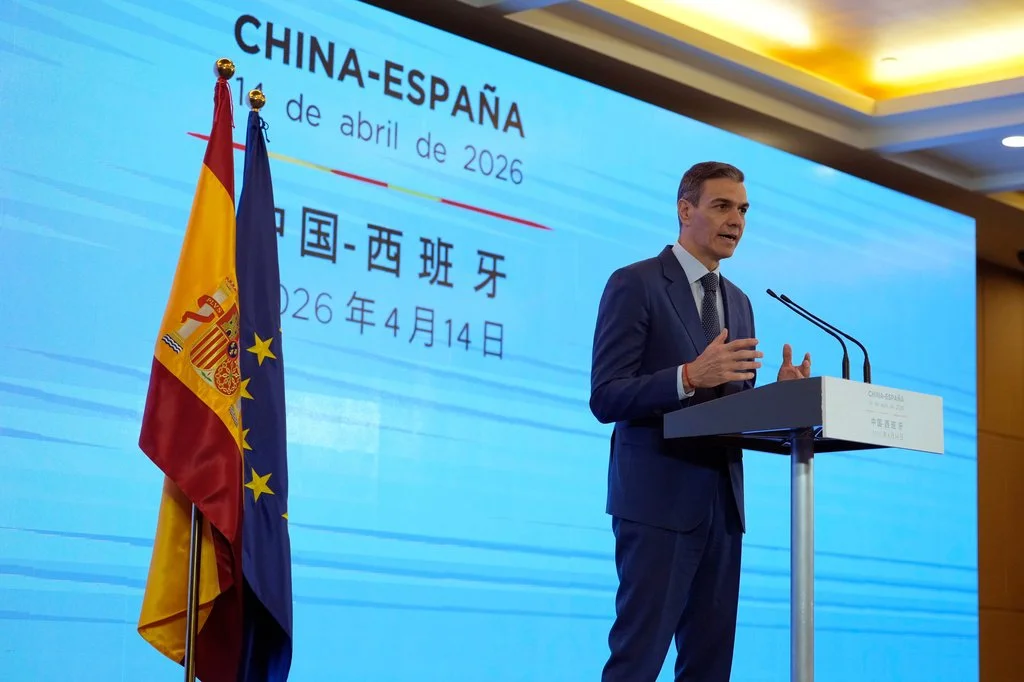
Spain's Prime Minister Pedro Sanchez gestures as he speaks during a press conference in Beijing, China, Tuesday, April 14, 2026. (AP Photo/Ng Han Guan)
International foreign ties continue to strengthen as nations across both the EU and Asia stand against the US-Israel-Iran war. The result could mean increased animosity and opposition to the US from its own allies in the future.
April 11 to 15, Pedro Sanchez, the Prime Minister of Spain, traveled to China for a series of talks with Chinese President Xi Jinping. He isn’t the first European leader to do so, with presidents from Britain, Finland, Canada, and Ireland all having made visits to China within the last year. In this meeting, both leaders have recognized that their growing alliance is in the wake of the current war in Iran.
“China can do more. For example, by demanding ... that international law be respected and that the conflicts in Lebanon, Iran, Gaza and the West Bank and Ukraine cease,” says Sanchez. The EU has begun requesting that China take a more active role in the international arena and oppose the US more directly.
Spain, in particular, has been one of the loudest voices against the US’s hand in war in Iran, announcing that it has closed its airspace off from US aircraft as well as refusing the operation of joint military bases in Spain by US troops. Xi Jinping has made similar comments regarding the US’s recent actions in the Middle East, saying he wished to “reject the world’s return to the law of the jungle” and “jointly defend genuine multilateralism.”
Do these continued meetings mean a decline in the United States reputation abroad? The United States under the Trump administration has repeatedly faced backlash and dissent internationally for its foreign policy decisions. Starting as early as the United States’ withdrawal from the World Health Organization in January 2026—less than a month after Trump’s inauguration—the country has begun to break off its international ties. The continued withdrawal has been part of Trump’s “America First” policy, which involves a reduction of foreign aid, protectionist trade policies, and other changes to isolate the US from the outside world.
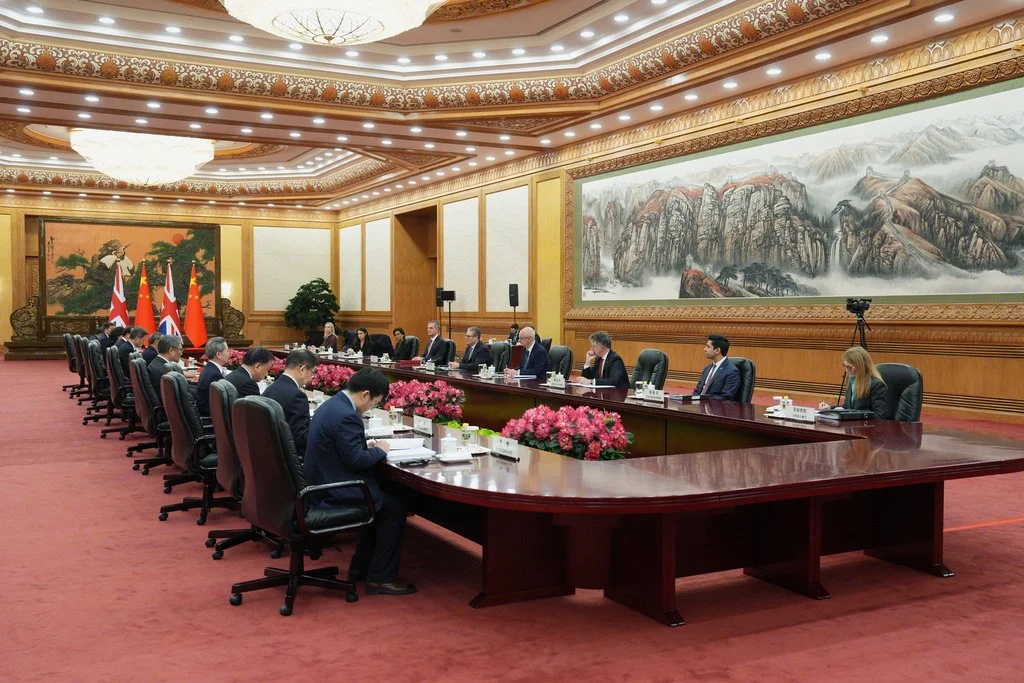
British Prime Minister Keir Starmer and Chinese Premier Li Qiang attend a bilateral meeting with their delegations at the Great Hall of the People in Beijing, Thursday, Jan. 29, 2026. (Carl Court/Pool Photo via AP)
However, these changes were juxtaposed when the US and Israel issued a joint attack on Iran, causing the closure of the Strait of Hormuz, which is a vital waterway passage for the shipment of crude oil from the Middle East. Following the closure, Trump then urged members of the EU and East Asia to assist in the war in an effort to reopen the strait, but to open refusals.
As a result, President Xi Jinping has said that the international order is "crumbling". Following the second World War, the US drew away from its isolationist policies and took a more proactive role in the international world. Their foreign policy became more focused on cooperation, alliances, and free trade, joining the United Nations for this express purpose. The nature of the United States’ dominance and control in the international system has coined the phrase ‘American Exceptionalism’ which has highlighted instances where the US’ comparative power over other countries has led to contradictions and hypocritical allowances in their foreign policy decisions.
Now, the US-Israel joint war on Iran has given the US the reputation of “a rogue superpower, neither internationalist nor isolationist but aggressive, powerful, and increasingly out for itself,” according to Michael Beckley, an American political scientist. This volatility has created a chasm in the relations between the United States and other western countries, who are now turning to the other international superpower - China.
Since China’s rising presence both politically and economically since the beginning of the twenty-first century, there has been frequent rivalry between the US and China in recent years. Now, with the US being deemed as volatile and dangerous by its allies, countries are now leaning towards China for assistance. There is a possibility that the US’s hegemony will subside and other powerful countries will be given decision-making power internationally.
The meetings between China and the EU could be the start of this change. Due to the US withdrawal from so many global crises such as climate change, President Sanchez has implored China to take a more decisive, leading role in the US’ place. For now, what is clear is that the EU and China are steadily creating a united front in times of crisis and uncertainty, with Sanchez describing it as an “EU-China relationship based on trust, dialogue, and stability.” Such an alliance could have unfavorable effects on the United States reputation and power in the future.