
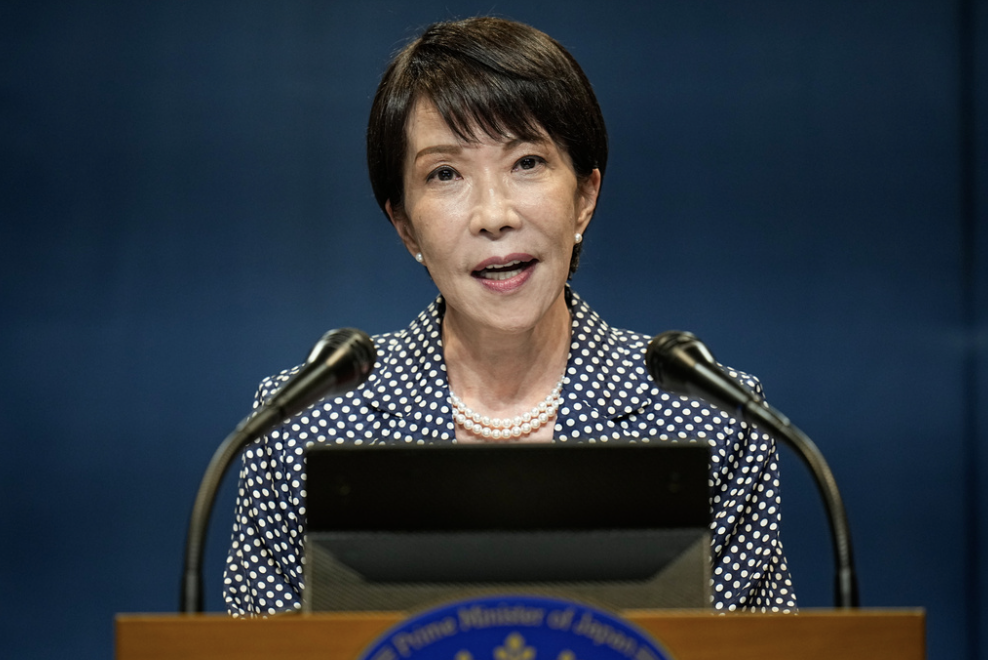
Japan's Prime Minister Sanae Takaichi speaks during a media conference in Archamps, France, after a meeting of the G7 in Evian-les-Bains, Wednesday, June 17, 2026. (AP Photo/Laurent Cipriani, File)
The Immigration Services Agency of Japan has revised its permanent residence guidelines effective Oct. 1, 2026. The new guidance provides details on how authorities will assess permanent residence applications moving forward and whether an applicant’s continued residence aligns with Japan’s national interest.
Under Prime Minister Sanae Takaichi’s push to tighten immigration controls, the new guidelines expanded the criteria for assessment that would deem a foreign resident suitable to attain permanent residency.
They may consider financial stability, including household income, assets, and the ability to maintain an independent livelihood; compliance with tax, pension, and other public payment obligations; adherence to immigration requirements, including required notifications and reporting obligations; criminal history and other legal violations; extended absences from Japan that may affect eligibility. The guidelines are also integrating new factors such as Japanese language proficiency (generally at approximately the B1 level), understanding of Japanese laws, and school attendance for school-age dependent children residing in Japan.
Not only has the new fee structure increased the amount of money required to file the application from 10000 yen (approximately 63 USD) to 200000 yen (approximately 1266 USD), but it has also substantially increased the costs of all types of applications based on the periods of stay granted. Before the change, there was no statutory minimum income written, though 3 million yen per year (approximately 19000 USD) served as a practical, widely accepted baseline for a standard worker; now, however, applicants are generally expected to meet or exceed the Japanese national average income of 5.75 million yen per year (approximately 36387 USD).
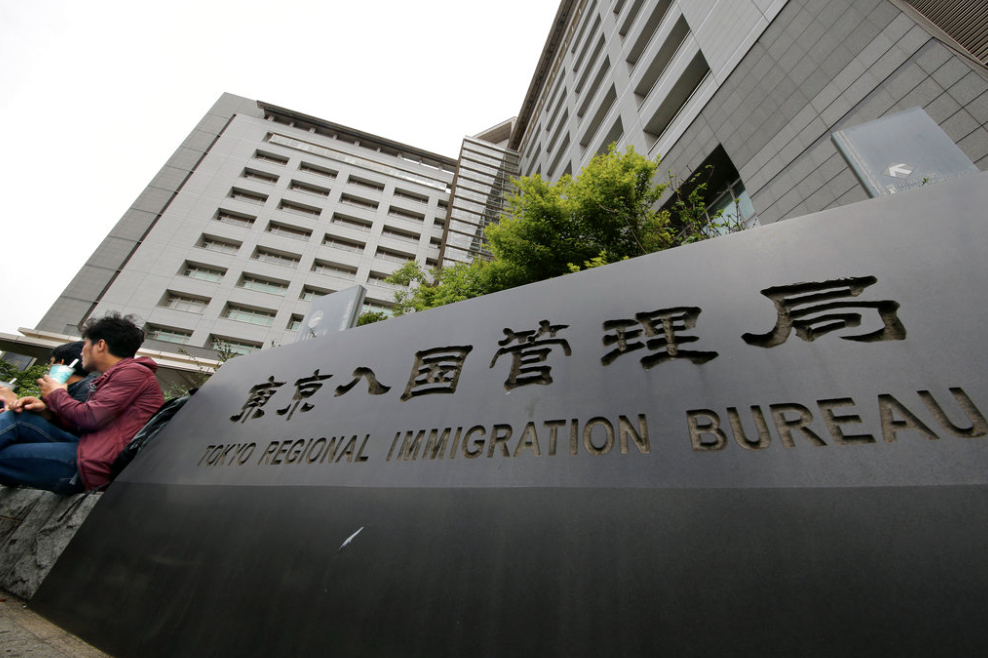
Foreign residents rest in front of the Tokyo Regional Immigration Bureau in Tokyo, Thursday, May 25, 2017. Dozens of people seeking to immigrate to Japan have staged a hunger strike while in detention, highlighting what human-rights advocates criticize as the shoddy treatment of foreigners here. Supporter Mitsuru Miyasako told reporters Thursday many had been recruited to work in Japan during the “bubble economy” about 30 years ago but now were being told to go home. None has been charged with a crime. About half are seeking refugee status, although only about 0.3 percent of such applicants are awarded asylum here. Many have had children in Japan. The hunger strike, which started May 9 with 22 people in a Tokyo center, expanded to 70 people there. Thirty people in another city joined. It ended Tuesday, May 23. (AP Photo/Shizuo Kambayashi)
The new fee structure led to hundreds of people queuing in front of the immigration office in central Tokyo, hoping to wrap up procedures before the increase in prices. People also voiced their concerns and thoughts regarding this change. Even though Japan has a low birth rate, a rapidly aging population, and labor shortages in many sectors, opposition to immigration is growing, prompting Takaichi to call for tighter regulations on foreign nationals.
“As the number of foreign residents in Japan increases, the government is facing the fact that some citizens feel anxiety and a sense of unfairness,” Takaichi said in a post on X around Sunday, September 27, 2026. She emphasized that the government was focusing on an “orderly coexistence” with foreign nationals.
There are also many false claims on social media platforms, including that a significant portion of welfare payments in Japan go to foreigners and that they are making Japanese streets less safe, which added fuel to the fire. This sets the backdrop for two other criteria set to change this coming April, one of which involves how long a foreigner married to a Japanese citizen has to live in Japan before they can obtain permanent residency. While it used to state that couples must have been married for at least three years and the foreign spouse must have lived in Japan for at least one year, in order to be eligible starting April, it will be increased to the couple having to have been married for five years with the foreign spouse having lived in Japan for at least three years.
Moreover, for foreign residents not married to a Japanese citizen, they will have to have lived for ten years in order to be eligible for permanent residency. Against all of this, evaluators will also be looking at permanent residency applicants’ projected pension benefits, with the new guidelines saying applicants should have benefits equivalent to those of someone who has been paying into Japan’s national pension system for 30 years.
The anti-immigration sentiment is strong, and foreigners were a major issue in last year’s upper house election, which saw the sharp rise of the “Japanese-first” Sanseito party, which describes immigration as a “silent invasion”.
The new rules for permanent residency come after the ruling Liberal Democratic Party last year pushed to tighten regulations for business manager visas, meaning entrepreneurs will be forced to leave Japan if they don’t meet the new conditions.
Some foreign residents need permanent residency to secure long-term stability or at least to have assurance regarding employment freedom and to earn trust within Japanese society. For example, those without permanent residency often have difficulty securing mortgages. Raising permanent residency charges and rules would also create a hostile environment, which would not attract expats or individuals looking to work long-term in Japan. Instead of viewing foreigners merely as a temporary labor force, Japan should welcome foreign workers to sustain itself, given the fact that it is also facing the most severe price inflation in generations for basic goods and services.