
The Black Market for iPhones: How Pakistan's Tax Policy Built a Shadow Tech Economy
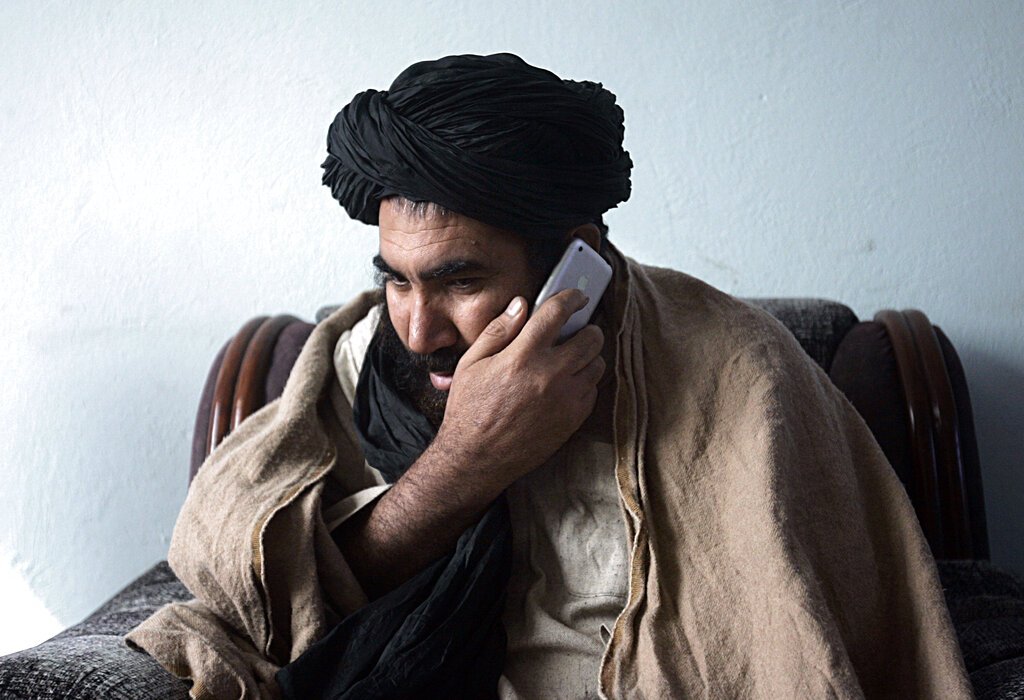
Abdul Salaam Zaeef is a former Taliban ambassador to Pakistan speaks on his iPhone at his residence in Kabul, Afghanistan, Wednesday, Feb. 25, 2009.Zaeef spent almost four years in Guantanamo. He wears a black turban and has a thick beard _ and he is a huge fan of Apple's iPhone."It's easy and modern and I love it," Zaeef said Wednesday while he pinched and pulled his fingers across the device's touch screen to show off photos. "I'm using the Internet with it. Sometimes I use it for the GPS to find locations."(AP Photo/Rafiq Maqbool)
Walk through Karachi's Saddar market or Lahore's Hall Road on any given afternoon, and you will find something mind-blowing: rows of iPhones, freshly imported, unlocked, and ready to sell, displayed in glass cases and traded at prices that would be impossible if the transaction had been taxed by the government. This is Pakistan's black market for smartphones, and it is thriving.
The Pakistan Telecommunication Authority (PTA) introduced its Device Identification, Registration, and Blocking System (DIRBS) in December 2018 with a straightforward goal: bring imported devices into the tax net and block unregistered phones from accessing local networks. The idea was to curb smuggling and generate revenue for the state. However, the actual outcome was mixed.
The taxes PTA levies on imported smartphones are steep, and on premium devices they become eye-watering. Registering a base model iPhone 16 can cost a buyer over 100,000 Pakistani rupees in tax alone, with the exact figure varying depending on whether the registration is done via passport or national identity card. That is on top of the retail cost of a device that Apple does not even officially sell in Pakistan, since the company has no direct corporate presence in the country and all iPhones arrive through third-party importers. A Deloitte study previously found that taxes account for more than 30 percent of the total cost of owning and using a mobile phone in Pakistan, compared to a global average of around 18 percent.
The result was predictable. When legal compliance becomes this expensive, informal markets fill the gap. A category of phone locally known as a "JV," or joint venture device, has become commonplace. These are handsets brought into Pakistan through informal channels, often carried in baggage from the Gulf, traded through brokers, or misrepresented at customs. Sellers offer to handle PTA registration for the buyer through unofficial means, and buyers largely accept this as just how things work.
The numbers tell the story clearly. Official PTA data reveals a striking mismatch between Apple's actual footprint in Pakistan and the devices being formally registered. Despite holding around 16.5 percent of shipment volume in the country by early 2024, iPhones make up the smallest share, about 19.4 percent, of registered devices among major brands. Nokia, a brand synonymous with basic feature phones, dominates the registration charts. This discrepancy represents the gray market in statistical form: hundreds of thousands of iPhones in daily use that their owners chose not to register, either because the cost was prohibitive or because they found a workaround.
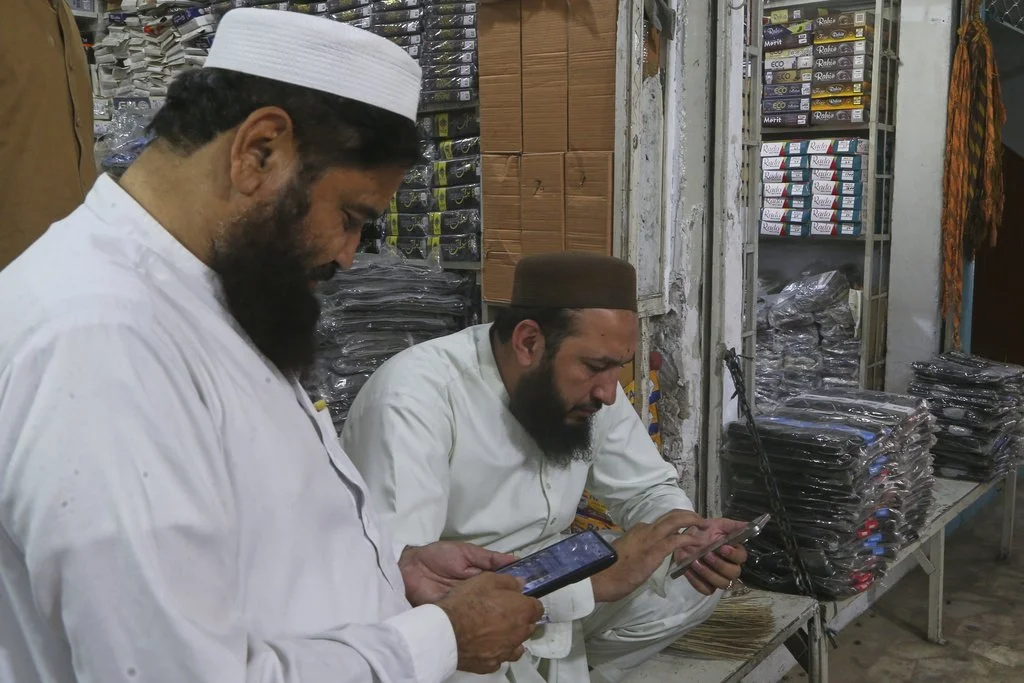
Shopkeepers watch news through heir mobile phones regarding ongoing military tension between Pakistan and India, at a shop in Peshawar, Pakistan, Saturday, May 10, 2025. (AP Photo/Muhammad Sajjad)
High import duties on premium consumer electronics consistently produce black markets rather than reducing demand for those products. What makes Pakistan's case worth examining is the particular status the iPhone holds in the country. Owning one signals something well beyond the practical utility of a smartphone. In a market where the rupee has lost significant value against the dollar and legal import costs can push a new flagship device to the price of a used car, an iPhone remains aspirational in a way that makes buyers willing to navigate a bureaucratic maze to obtain one.
The government is aware of the paradox it created. PTA itself has recommended that the government reduce taxes on smartphones, noting that the current pricing structure has made illegal phones more attractive and reduced state control over imports while also cutting into tax revenue. In the National Assembly, legislators have started pushing back against what one called "unjust and unaffordable" taxes, arguing that modern devices are no longer luxury items but economic necessities for Pakistan's youth and growing IT sector.
The black market for iPhones in Pakistan is not simply a story about tax evasion. It is a case study in what happens when regulation collides with desire in a large, young, digitally connected population. When the formal path to a product becomes too costly, consumers do not stop wanting that product. They find another way to get it, and an entire parallel economy grows up around that need. The policy question now is whether Pakistan can find a way to bring that economy back into the formal channel before it grows further out of reach.