
Nigeria and US Sign Critical Minerals Framework at UN General Assembly
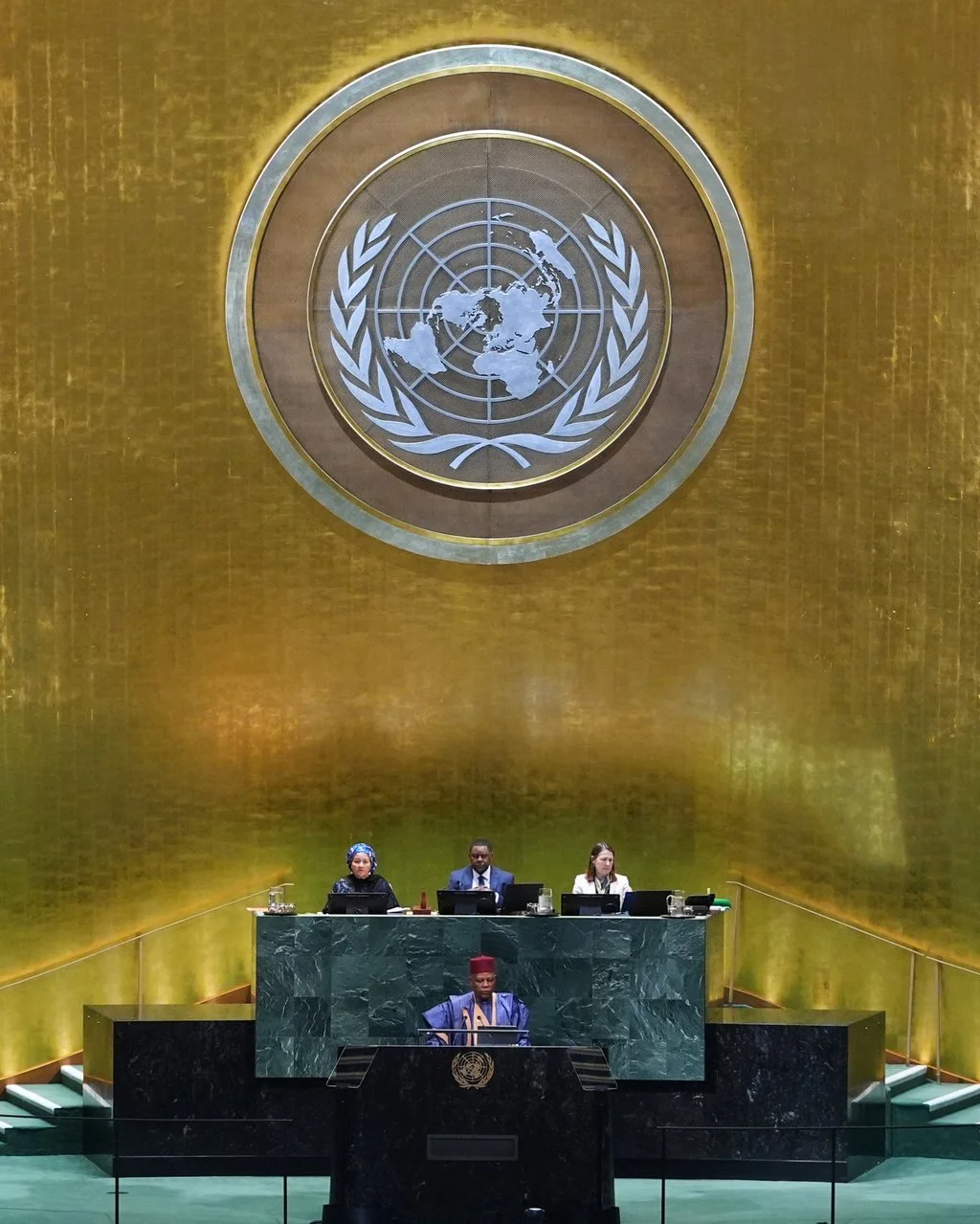
Vice President of Nigeria Kashim Shettima addresses the 81st session of the United Nations General Assembly at U.N. headquarters Thursday, Sept. 24, 2026. (AP Photo/Frank Franklin II)
The US and Nigeria signed a Memorandum of Understanding on September 23, 2026, on the sidelines of the UN General Assembly at Nigeria’s Mission house in New York by Nigerian Minister of Solid Minerals Development, Dele Alake, and US Deputy Secretary of State, Christopher Landau. This agreement covers shared geological data and exploration, infrastructure, technical capacity, and mineral development and processing. It is expected to provide a platform for US investment in Nigeria’s estimated $700 billion in mineral resources.
Alake stated, “We are not here to remain as a source of raw materials for the value that others create.” The minister further explained that Nigeria wants its mineral wealth to attract industries, develop skills, create jobs and bring in investment as part of President Bola Tinubu’s economic diversification and industrialization agenda, and that the effectiveness of the partnership will be determined by how well it facilitates these goals. Landau stated that for the US, this agreement signifies that “The United States and Nigeria are partners” and that they are well positioned to contribute capital, technical expertise, and investments while still allowing Nigeria to keep ownership of its natural resources.
This agreement is a result of months of discussion between the two countries on mining and critical minerals. This is a part of a greater trend of the US trying to reshape the market for critical minerals. In February, the US hosted 54 countries at the European Critical Minerals Ministerial and signed 11 bilateral frameworks covering similar topics in one day. During the UNGA week, the US also signed a Memorandum of Understanding covering critical minerals with Italy.
A Memorandum of Understanding is a formal written agreement between two countries that highlights their shared goals and expectations for working together. In this case, the document highlights the US and Nigeria’s shared commitment to ensuring that critical mineral supply chains are secure and supported by responsible investment. The details of what the framework will do for geological data and exploration, infrastructure, technical capacity, and mineral development and processing have not been released yet. However, cooperation on geological data and exploration typically involves joint mapping of where critical minerals are likely to occur and sharing survey data between national geological agencies to help identify new sources of supply. Nigeria’s Geological Survey Agency says its own national exploration program aims to reduce risk for mining investors by providing geoscience data. In other recent U.S. minerals agreements such as the US-Argentina framework signed the same week, infrastructure cooperation has meant financing the rail, ports, power and roads needed to move minerals from mines to export markets. Processing refers to refining raw ore into materials manufacturers can use, the stage of the supply chain where Nigeria has sought to expand domestic capacity in the past. Technical capacity generally refers to training workers and officials in the skills needed to run mining and processing operations, which Alake listed among Nigeria’s goals for the framework. The countries have not disclosed funding commitments, specific projects, participating companies or a timeline. The framework's full text has not been made public.
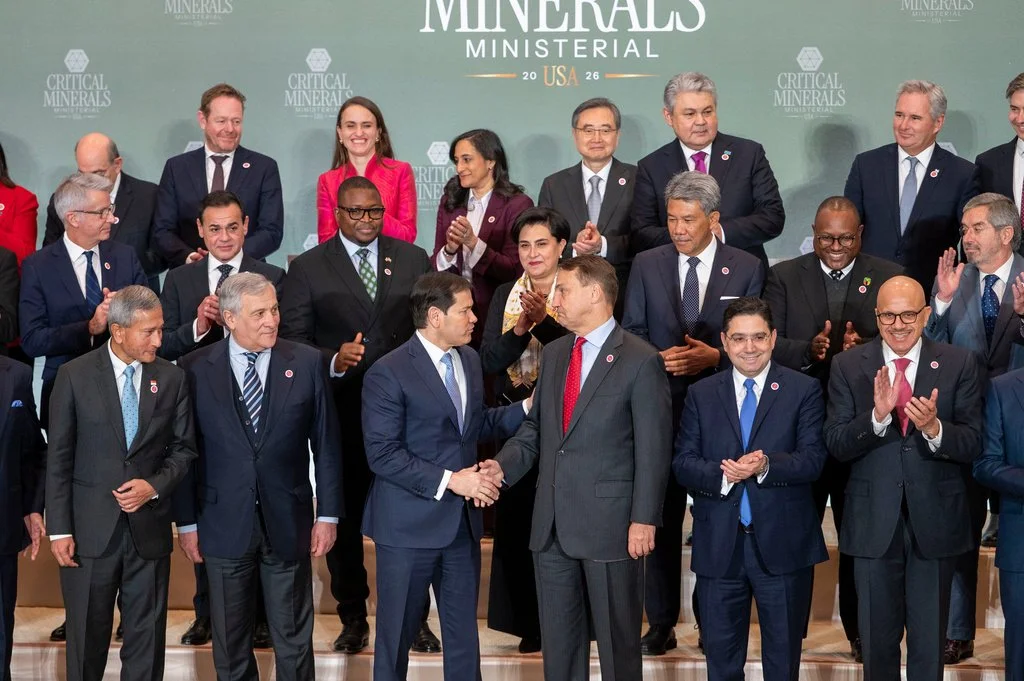
Secretary of State Marco Rubio, bottom center left, shakes hands with Poland Minister of Foreign Affairs Radosław Sikorski during a group photo at the Critical Minerals Ministerial meeting, Wednesday, Feb. 4, 2026 at the State Department in Washington. (AP Photo/Kevin Wolf)
The agreement is part of a broader U.S. effort that analysts say aims to reduce reliance on China, which the IEA found accounts for more than 90 percent of global refined supply of gallium, graphite, manganese and rare earths. The State Department explained that these frameworks aim to address pricing challenges, create fair markets and close supply chain gaps. As Alake put it, “The signatures are promises”, and whether they deliver on Nigeria’s goal of processing its own minerals and Washington’s aim of reshaping the global critical minerals market will depend on what the two countries build in the months ahead.