
EU Warns Energy Crisis Will Outlast the War in Iran
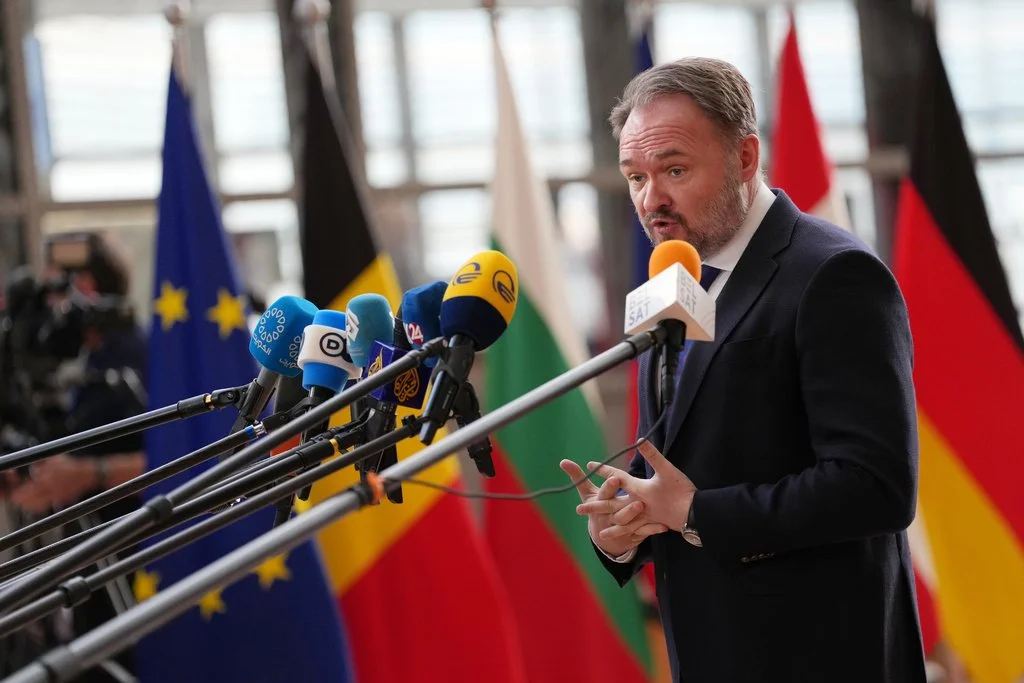
European Commissioner for Energy and Housing Dan Jorgensen speaks with the media as he arrives for a meeting of EU energy ministers at the European Council building in Brussels, Monday, March 16, 2026. (AP Photo/Virginia Mayo)
European Union energy ministers held an emergency meeting on Tuesday to address the economic fallout of the war in Iran, with Energy Commissioner Dan Jørgensen warning that the crisis will not end even if peace comes tomorrow.
Speaking after the virtual meeting, Jørgensen declared that the EU is considering reviving the emergency measures it used in 2022, when Russia cut gas deliveries after its invasion of Ukraine. The measures included an EU-wide gas price cap, a windfall tax on energy companies, and targets to reduce gas demand. Jørgensen said the Commission is now preparing similar options, including proposals to cut grid tariffs and taxes on electricity.
The war in Iran has already cost EU countries an additional 14 billion euros in fossil fuel imports since it began. Gas prices have risen more than 70 percent and oil prices have increased by about 60 percent since the US-Israeli strikes on Iran began on February 28. Subsequently, Iran effectively closed the Strait of Hormuz, which carries 20 percent of the world’s oil supply.
Jørgensen claimed that the effects would be long-lasting because energy infrastructure in the region has been damaged by the fighting. “Even if peace is here tomorrow, still we will not go back to normal in the foreseeable future,” he told reporters.
The Commission is particularly concerned about Europe’s supply of jet fuel and diesel. Before the war, the EU relied on the Persian Gulf for over 40 percent of its jet fuel and diesel imports. The last kerosene shipments that passed through the Strait of Hormuz before its closure are expected to arrive in Europe around April 10.
Jørgensen urged EU governments to follow recommendations set in place by the International Energy Agency, which include remote working, lower highway speed limits, increased use of public transport, and car sharing. In a letter to energy ministers sent ahead of the meeting, Jørgensen also asked governments to delay non-essential refinery maintenance and to consider increasing the use of biofuels.
On Monday, German Chancellor Friedrich Merz warned that the economic burden could rival that of the Covid pandemic or the start of the Ukraine war. European Central Bank President Christine Lagarde echoed this sentiment, reportedly saying that the longer-term effects are “probably beyond what we can imagine at the moment.”
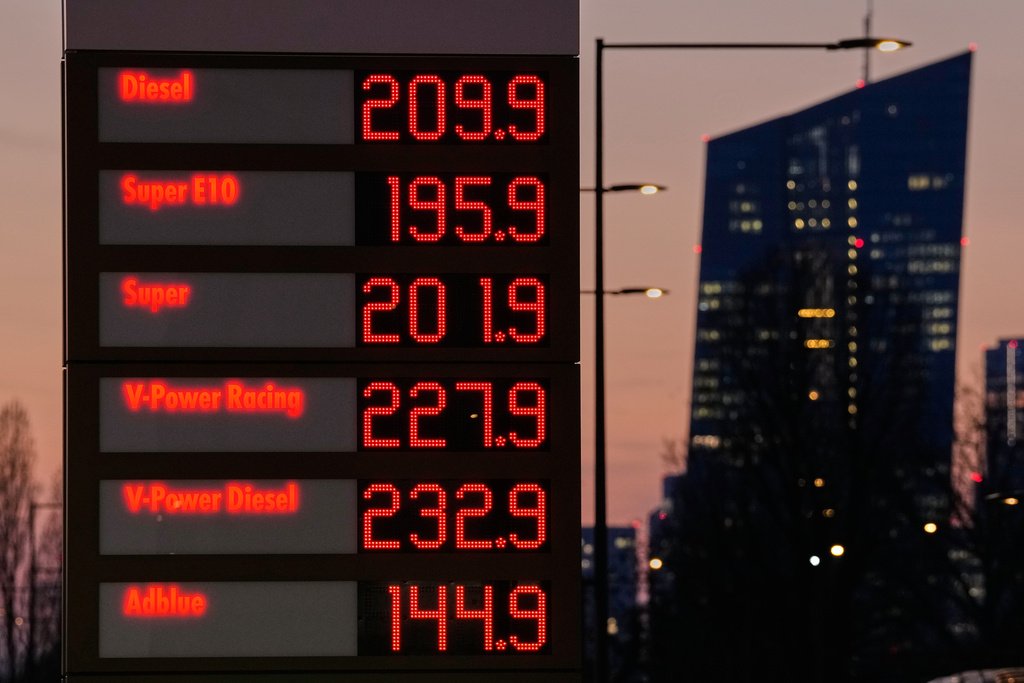
Gas prizes are displayed at a gas station near the European Central Bank in Frankfurt, Germany, Thursday, March 5, 2026. (AP Photo/Michael Probst)
Member states have begun to respond to the crisis in different ways. Slovenia became the first EU country to adopt fuel rationing, Spain cut its VAT on fuels from 21 to 10 percent, and Poland introduced a price cap at petrol stations while reducing its own fuel taxes. Additionally, Austria cut fuel taxes and introduced limits on retailer margins as Germany proposed restricting fuel price increases to once per day.
But the EU’s push for coordination faces resistance from some capitals. Poland’s energy secretary Wojciech Wrochna said that EU capitals should be driving the response, not Brussels. He called on the Commission to show more “flexibility,” arguing that measures such as reducing car use may work in countries with strong cycling cultures but are less realistic in cities like Warsaw.
Jørgensen acknowledged the differing circumstances across the bloc but warned against fragmented national responses. He said member states should avoid measures that increase fuel consumption, restrict the movement of petroleum products, or discourage refinery output. The Commission is expected to present a broader package of measures soon.
The EU maintained its ban on Russian gas purchases, which Jørgensen said was essential to avoid repeating the mistakes of the past. EU reliance on Russian gas has dropped from 45 percent before the Ukraine war to 10 percent today. The bloc is now seeking additional supplies from the US, Azerbaijan, Algeria, and Canada.
Cyprus, which holds the rotating EU Council presidency, urged member states to move forward with this energy transition. “Decarbonisation and diversification remain the priority,” insisted Cypriot Energy Minister Michael Damianos.