
France’s Summer was Extreme. Why Is Climate Action So Difficult?
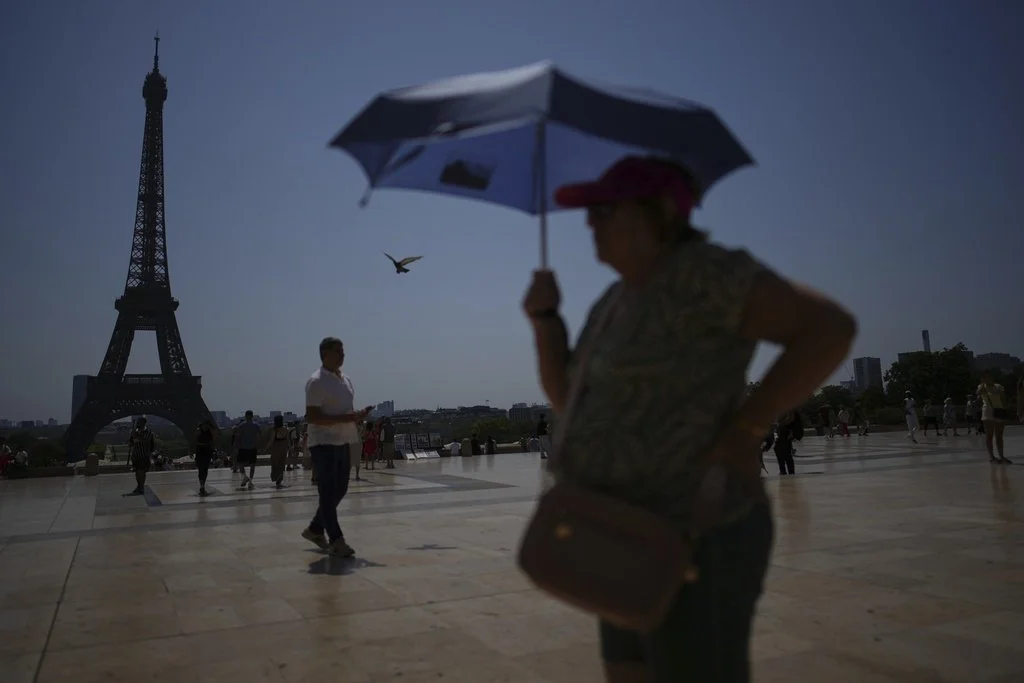
People walk at Trocadero plaza near the Eiffel Tower during a heat wave July 2, 2025, in Paris. (AP Photo/Christophe Ena, File)
Thousands of French citizens took to the streets last Saturday across 250 towns and cities to protest for “the climate, the natural world, peace, and social justice.” Around 120,000 people marched throughout the country, carrying signs that read “How do you prefer your Earth: rare, medium-rare or well done?” and “Join the green side of the Force.” At the heart of their message was anger over an unprecedentedly hot summer and frustration at a political world that seems unresponsive to the issue.
The timing of these protests was no secret. The following Wednesday, Monique Barbut, French minister for ecological transition, had to compile a plan for national adaptation to climate change. The idea from the organizers of the demonstration, Movement of September 26, was to send a wake-up call to politicians about the issue and show public support for climate action ahead of the report. But even with all this, why is it that French politics seems unable to keep up with the demands of climate change?
This summer was the hottest summer on record in France. With multiple heatwaves, the most severe one lasted 23 days from late July to early August. According to a Météo-France report, France’s national weather service, the country had an average temperature of 24 degrees Celsius (75 degrees Fahrenheit), 3.6 degrees Celsius higher than normal for this time of year. French public health authorities announced around 8,000 excess deaths due to the extreme heat. Much of daily life was also put on hold, with schools closing down, fireworks for France’s national holiday being called off, and outdoor activities becoming rare.
According to that same report, this was also a summer of particularly low rainfall, making it the second driest on record. This played into France experiencing a season of severe wildfires, the worst the country had seen since 1949. In Gironde, a region in the south-west of France, a fire broke out on July 22 that forced 224,000 people to evacuate until it was put out on September 28. The EU’s Copernicus Earth, a program that monitors the planet's environment and climate, reported around 96,000 hectares of land had been burned as of August 26, well above the average of 14,000 per year in France. This has led to massive health concerns in regards to air quality degrading in some regions due to the wildfires releasing 1.5 million metric tons of carbon into the air.
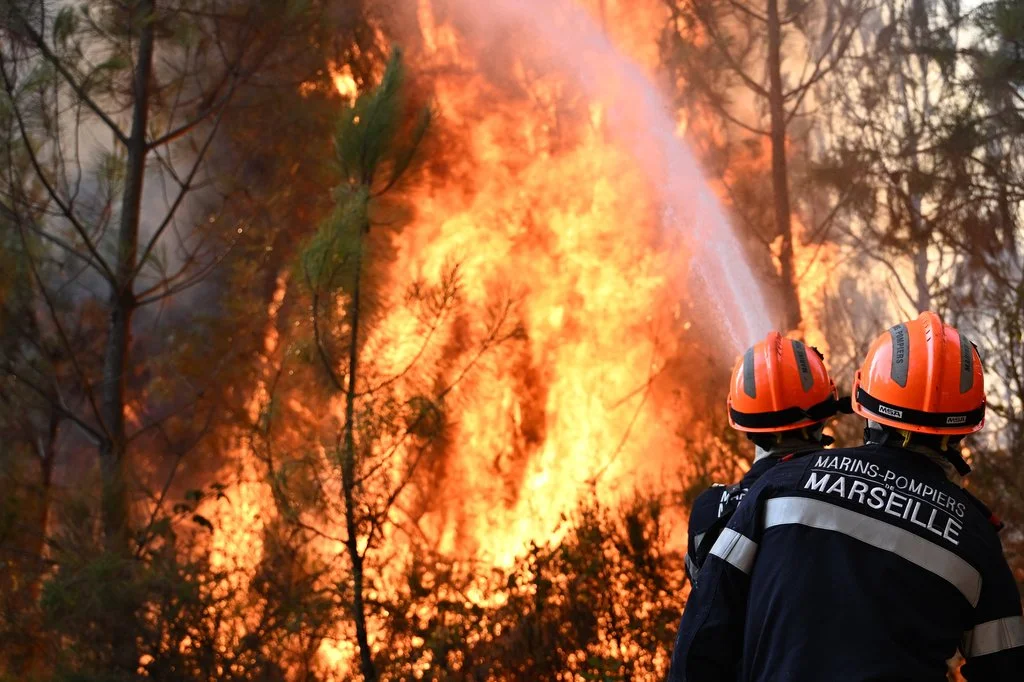
Firefighters battle a forest fire near Blagon during wildfires in southwestern France, July 29, 2026. (AP Photo/Emma Da Silva, File)
Ursula von der Leyen, President of the European Commission, called it a “summer of truth” in her State of the Union Address (SOTEU). “These were the hottest summer months ever – but probably the coolest of the years to come.” It is clear that climate change is a concern among some politicians just as it is among citizens. A survey by IPSOS, a French polling company, saw concern for climate change among French people jump from 14% to 29% before and after the summer, becoming the third most important issue for voters. But, apart from Prime Minister Sebastien Lecornu, who announced around 100 million euros in wildfire relief to cover the immediate costs in affected regions, the political world has still been slow to answer. Why?
Part of the answer lies in the complexity of politics. Any sort of climate-related policies would have to go through a French government currently in gridlock, as the National Assembly is fractured with no clear majority. Proposed laws would need to be agreed upon in their text and in their enforcement, at both the local, national, and sometimes European levels. It becomes a problem of bureaucracy slowing down the effective actions the climate crisis needs.
If laws do get passed, they often face massive opposition. Climate policies create economic and political winners and losers. Losers that, if their interests are concentrated enough, would have the incentive and strong motivation to push back on climate action. Oil companies are usually the biggest culprits, but when a fuel tax increase was proposed in 2019, it was met with massive backlash from people, becoming the Yellow Vest Movement.
And to add to this, the French government currently has one of the worst debt problems in the world, hurting prospects of giving climate action more money and resources. The country currently sits on 3.5 trillion euros in debt, a recurring issue that has made passing a government budget increasingly difficult in recent years. This creates economic constraints, and when it comes to partitioning money, the problem of climate change is often one of the first areas that loses its funding.
But, one of the most apparent political issues when it comes to fighting climate change is a global rise in far-right populist movements. France's National Rally party, whose leader, Marine Le Pen, is poised to win next year’s presidential election, is the only party that lacks any climate action plan. While their official stance states that they believe in climate change and a need to fight it, many party officials have thrown out climate skeptic comments. A good part of the party’s proposed policies go against climate action with things like a moratorium on renewable energy and the dismantling of wind farms. Climate change has often become central to the far-right’s culture war in defense of other priorities like the economy or immigration.
While climate change becomes a more dire situation every year, it seems the political world of France is failing to keep up. And with the rise and influence of far right parties, the prospect of any climate action seems to dwindle.