
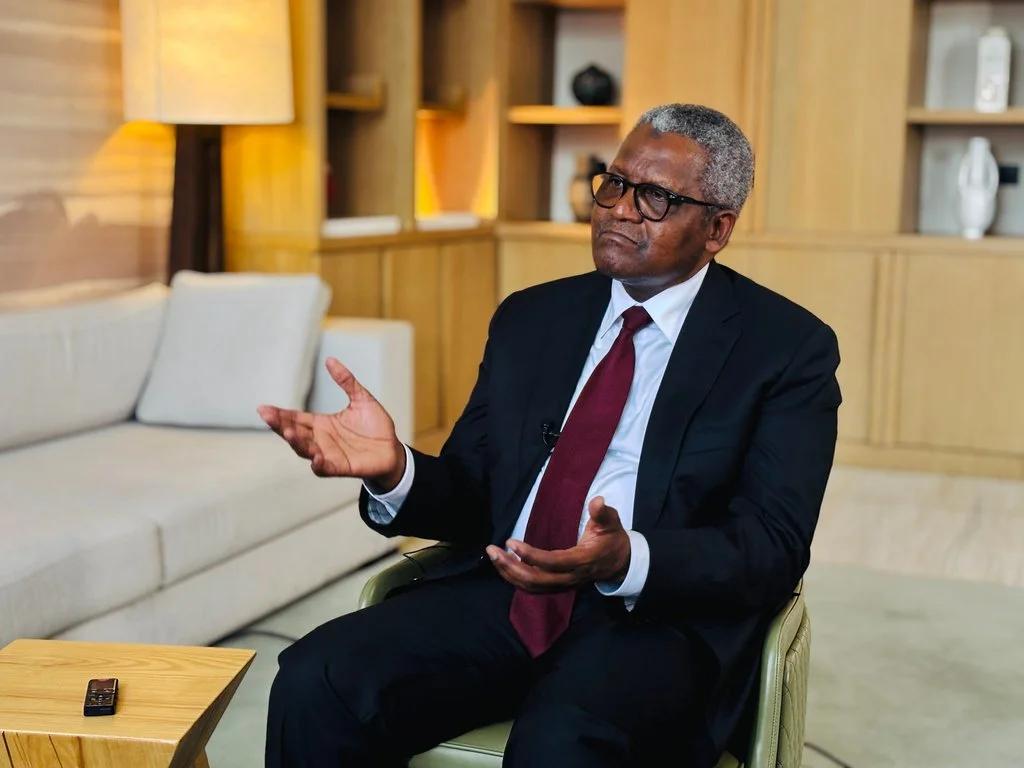
Nigerian industrialist Aliko Dangote speaks during an interview with the Associated Press, in Nairobi, Kenya, Tuesday, Sept. 29, 2026. (AP Photo/Jackson Njehia)
Aliko Dangote has been the richest African man since 2011, according to Forbes. He started building his fortune through commodity trading. However, his breakthrough project was the Dangote Refinery, which is a massive oil refinery and petrochemical complex near Lagos, Nigeria. Its construction began in 2016, and the refinery started operating in early 2024.
Nigeria is Africa’s largest oil producer. However, for decades, the country exported crude oil while importing “almost all its fuel due to years of neglect of its national refineries.” The Dangote Refinery reduced Nigeria’s dependence on imported fuel. According to the U.S. Energy Information Administration (EIA), Nigeria’s seaborne imports of petroleum products fell from nearly 400,000 barrels per day in 2023 to less than 130,000 in the second quarter of 2026. The refinery impact helped Nigeria become “self-sufficient in refined petroleum products” by increasing the supply, reducing imports, and increasing exports. Additionally, the country's seaborne exports rose from 46,000 to 250,000 barrels per day, highlighting its importance as both a domestic fuel supplier and exporter.
To increase the refinery’s operations, Dangote opened the company to public investors through an initial public offering (IPO). An IPO is a process through which a company sells shares to the public, allowing buyers to own a small portion of the company. These shares increase in value as the company grows.
During an interview with the recruiters on August, 14, 2026, David Bird, the Dangote Refinery’s CEO, explained that the “mandate of the IPO was to be the People’s IPO,” reflecting the company’s aim to make ownership accessible to ordinary people rather than relying exclusively on funding from large institutions.
On September 7, 2026, the refinery announced that it planned to raise approximately $1.6 billion by offering 4.1 billion shares at ₦525 each. The proceeds will “partially finance a $14.3 billion expansion,” aiming to “add another 700,000 barrels per day, taking capacity to 1.4 million by 2029.”
The Dangote Refinery IPO opened at the Nigerian Exchange in Lagos on September, 14, 2026, and was initially scheduled to close on October 13, 2026. The offering was open to retail investors across Africa, reflecting the refinery’s ambition to extend public ownership beyond Nigeria. During the opening ceremony, Dangote declared its intention to fully share its “prosperity with the people,” and that's why the initiative is called “the People’s IPO.”
While the IPO was in progress, Dangote was pursuing other expansion projects in East Africa. On September 24, Dangote announced a separate “$660 million fuel pipeline between Djibouti and Ethiopia.” This 120-kilometer pipeline would transport petroleum products, including petrol, diesel, and jet fuel, from Djibouti's Damerjog port to Dewele in Ethiopia, with a storage capacity of approximately 400 million liters. The project is expected to begin within 18 months. Additionally, according to Ethiopian Prime Minister Abiy Ahmed, the project aims to “reduce the time needed to transport fuel from Djibouti port to the Ethiopian capital, Addis Ababa, from five days to one.”
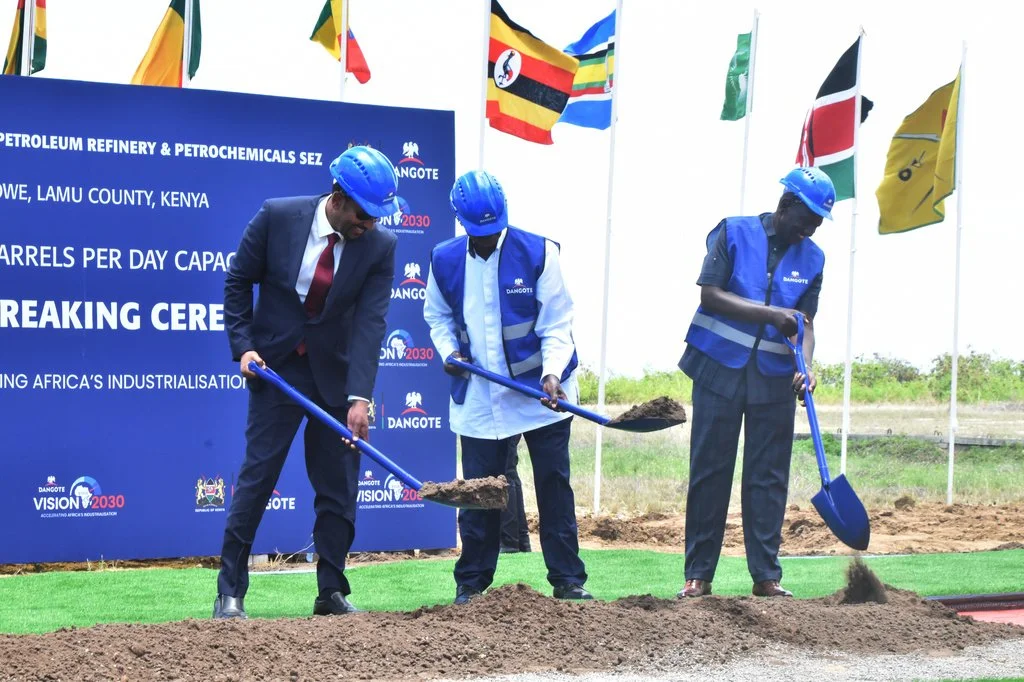
Ethiopian Prime Minister Abiy Ahmed Ali, Nigerian Industrialist Aliko Dangote and Kenya's President William Ruto launch the Dangote East Africa Petroleum Refinery in Lamu County, Kenya, Wednesday, Sept. 30, 2026. (AP Photo/Brian Wachira)
Dangote is continuing its expansion into East Africa. On September 30, 2026, he broke ground on a $16 billion oil refinery in Lamu, Kenya, with President William Ruto and other African leaders. The project is expected to process 700,000 barrels of crude oil per day, including supplies from regional producers, and is set to begin operations by 2030. According to the Associated Press, Dangote mentioned that “three East African countries—Kenya and two others he declined to identify—would acquire a combined 30% stake in the Lamu refinery.” However, the project’s regional ambitions faced a step back. Despite attending the ceremony, Ugandan President Yoweri Mosenvi reaffirmed his country’s plans to “build its own small refinery.”
On October 12, 2026, the refinery announced that it would extend the IPO deadline from October 13 to October 27, allowing investors across Africa to have more time to participate. When the offering closed, demand had exceeded expectations. Nigerian retail and institutional investors have placed orders worth about $4.78 billion, representing almost three times the initial $1.6 billion target. The company received applications from all 54 African countries and 120 countries worldwide. As the Dangote Group is currently going through regulatory approval of the share allocations, the final amount raised has not yet been confirmed.
From September to October 2026, Aliko Dangote launched a historic IPO, announced a groundbreaking fuel pipeline in East Africa, and broke ground on a second billion-dollar-worth refinery in Kenya. These developments reflect an ambition to build an African industry capable of exporting the continent’s resources, reducing dependence on imports, and creating wealth and jobs. The scale of these projects raises questions about the potential impact of Dangote’s investments on African energy markets and African-led industrialization.