
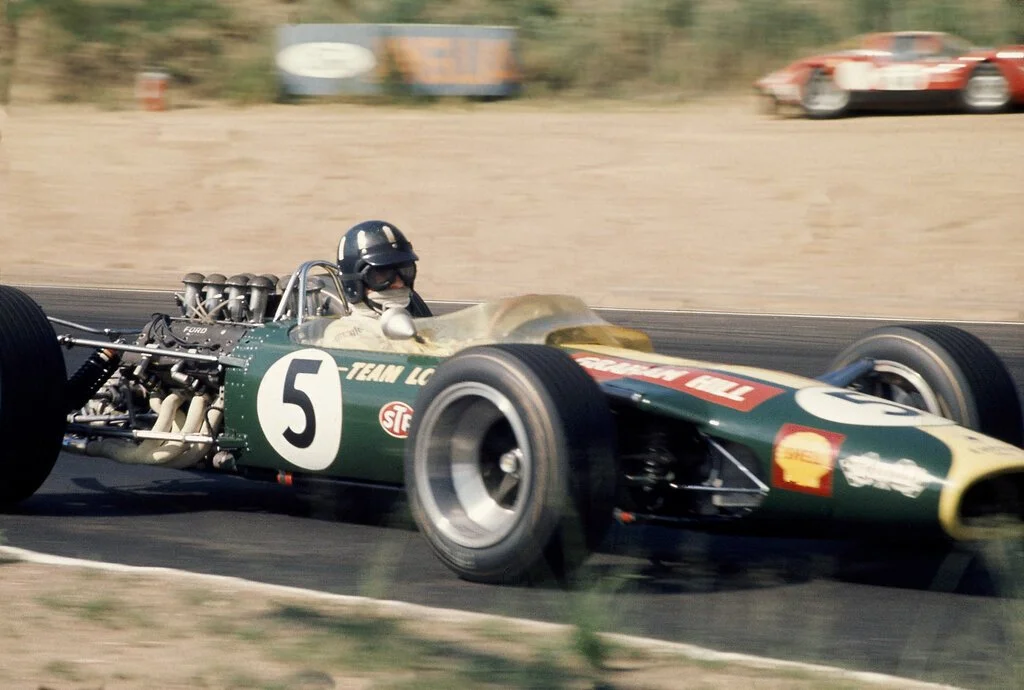
Graham Hill of Great Britain drives a Lotus-Ford in the South African Grand Prix Formula One race at Kyalami circuit, on the outskirts of Johannesburg, Jan. 1, 1968. Hill finished second in the race. (AP Photo/Unidentified AP Photographer)
After a nearly 40-year absence, Formula One racing will return to Africa. The sport’s governing and managing organizations—the Fédération Internationale de l'Automobile and Formula One Management—announced a 10-year deal with Rwanda that sets the country up to host the new African Grand Prix in the early 2030s. While there are 24 Grand Prix race weekends in each Formula One season, the last one in Africa took place in 1993 in South Africa.
Such a major sporting event has tremendous potential to boost the economy and global visibility not only of Rwanda, but of the entire African continent, through tourism and infrastructure development. An average of 275,000 people attended each race weekend of the 2025 season, and the sport has only grown in mainstream popularity across the world. In closing the deal, Rwanda surpassed other bids from Morocco, Nigeria, and South Africa.
South African President Cyril Ramaphosa congratulated Rwandan President Paul Kagame and said he was in a “pole position to make all of Africa proud and take motorsport to new heights.”
"We are not just looking at Rwanda alone," Kagame said. "We are looking at Rwanda in the context of a continent and we have ambitions to bring in our African brothers and sisters to participate.”
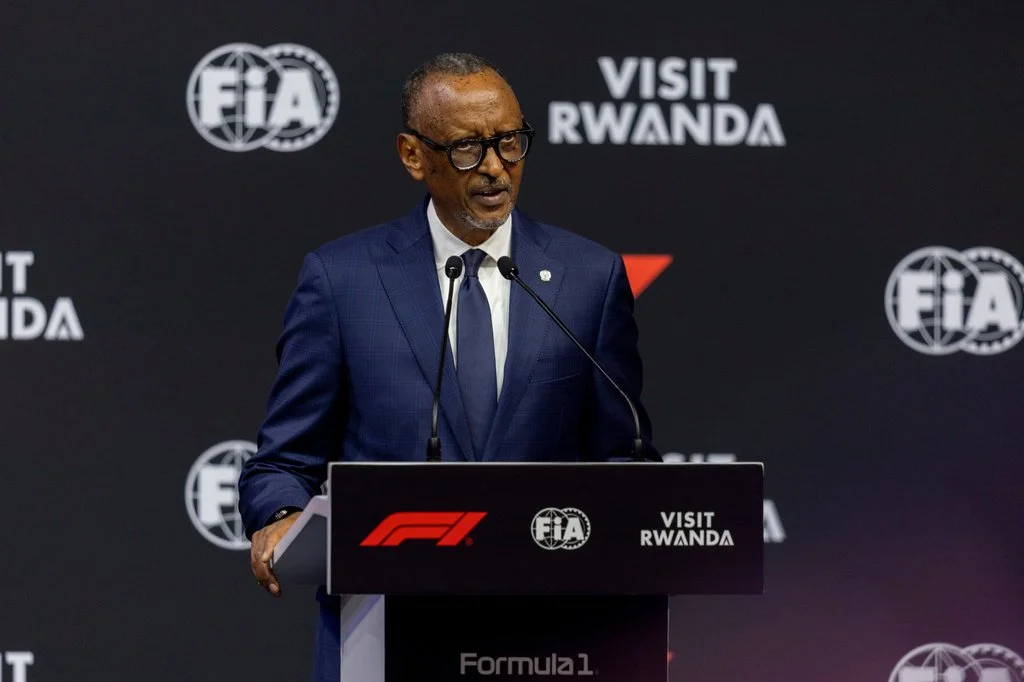
Rwandan president Paul Kagame speaks during an announcement that Formula 1 will return to Africa with a grand prix in the country starting early next decade, in Kigali, Tuesday, Oct. 13, 2026. (AP Photo/Yuhi Irakiza)
Rwanda’s winning bid includes the government’s plans to construct an entirely new racing circuit in Bugesera, just 25 miles away from the country’s capital, Kigali, and near the currently underway $2 billion New Kigali International Airport.
In recent years, Kagame has been consistent in establishing the country as a hub for international sporting events as part of the government’s “Visit Rwanda” tourism and marketing campaign. Rwanda hosted the Union Cycliste Internationale (UCI) Road World Championships in 2025—the first time the event was hosted by an African country in over 100 years—and holds partnerships with the NBA’s Basketball Africa League as well as sponsorship deals with major clubs, including the Los Angeles Rams and England’s Aston Villa.
While the campaign has been widely successful, fans and other governments alike have flagged the agenda as “sportswashing”—the practice of using high-profile sporting events to divert attention from political controversy—given Rwanda's history of transnational repression and involvement in the decades-long conflict in the Democratic Republic of Congo. On account of human rights abuses committed by the Rwanda-backed March 23 Movement (M23) group in eastern DRC, Amnesty International urged the NBA to reevaluate its collaboration with Rwanda, “no matter how lucrative its sponsorship deals may be.” Protests by fans of German football club Bayern Munich in early 2025 even led to the club turning its existing commercial sponsorship deal with Rwanda into a much smaller talent development program.
The DRC filed a legal case against Rwanda with the International Court of Justice earlier this year, alleging Rwanda's violations of international laws concerning genocide, racial discrimination, discrimination against women, and torture. Kayikwamba Wagner, the DRC’s Minister of Foreign Affairs, called Formula One’s support for Rwanda “morally indefensible,” and warned the organization against funding the exploitation of Congolese resources.
Besides its speculated intent, Rwanda’s Formula One partnership announcement has done little to distract the international community and, if anything, has only drawn more attention to the government’s charges and to Formula One’s potential complicity.
Formula One now finds itself under the same scrutiny as the NBA, amid worsening conflict in the DRC and a faltering Trump-brokered peace agreement between Rwanda and the DRC. In addition to the nation’s support for M23, Human Rights Watch has also shared concerns regarding Rwanda’s treatment of marginalized communities during high-profile events. The organization cited past instances of Rwandan authorities arbitrarily detaining sex workers, homeless children, and LGBTQ individuals in anticipation of an international conference held in Kigali.
Human Rights Watch quoted its Central Africa director, Lewis Mudge. “Rwanda’s strategy to promote Kigali as a hub for meetings and conferences often means continued abuse of the capital’s poorest and most marginalized residents,” Mudge said.
Still, Africa’s entrance into the limelight of Formula One has been much awaited. "It's about more than just one country,” said Afro-Caribbean British driver Lewis Hamilton, the first Black driver to compete in Formula One. “It's about the continent itself, and there are so many beautiful countries within it.”
Hamilton holds the most Formula One World Drivers' Championship titles in the sport’s history, only tied with one other driver, and is also a longtime advocate for an African Grand Prix.
“Going there doesn't mean that you neglect the things that are happening there,” Hamilton said. He expressed a hope for people to educate themselves on African history and for African leaders to unite and “take Africa back.”