
South China Sea Code of Conduct Nears its Deadline with Core Questions Still Unanswered
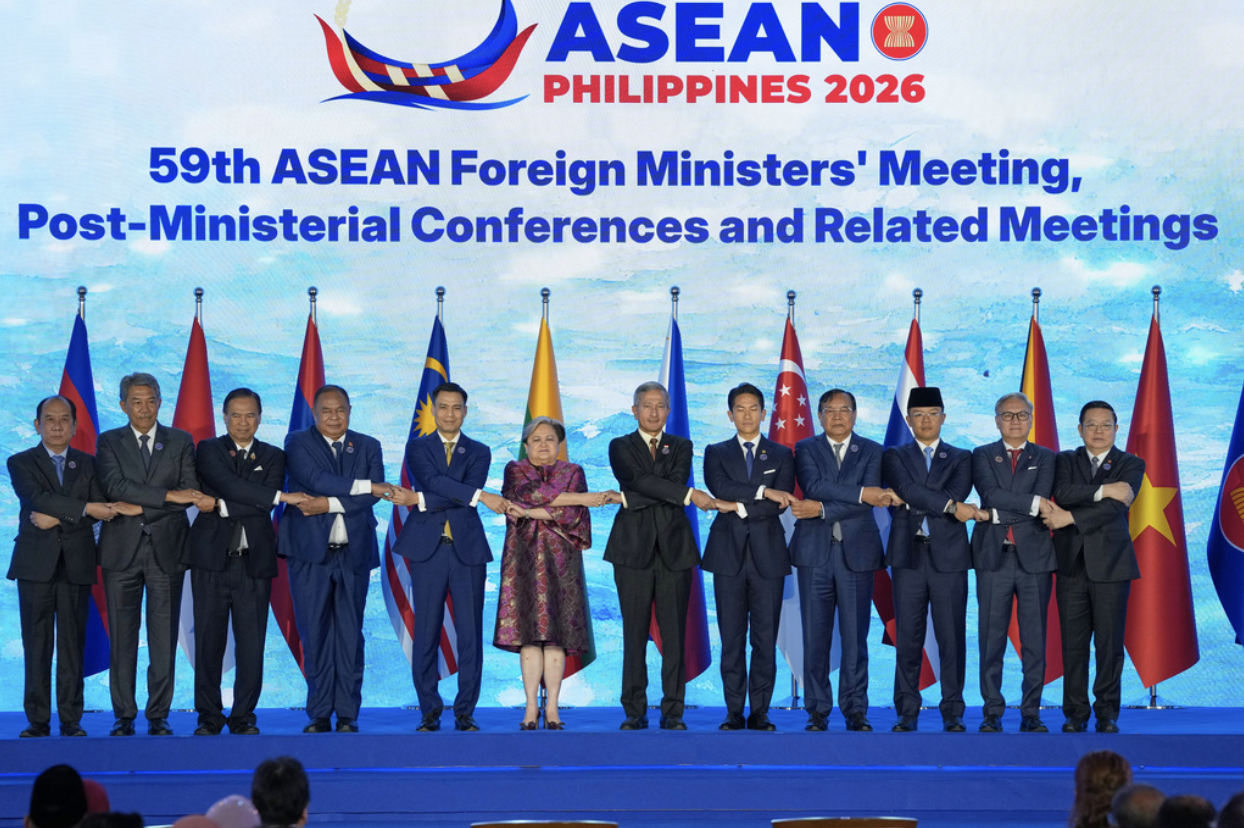
Foreign ministers from ASEAN countries pose for a group photo during the opening ceremony of the ASEAN Foreign Ministers' Meeting at the Philippine International Convention Center on Tuesday July 21, 2026 in Pasay city, Philippines. (AP Photo/Aaron Favila)
In July 2023, the Association of Southeast Asian Nations (ASEAN) and China gave themselves three years to finalize a code of conduct, or COC, for the South China Sea. The three year deadline ran out this July. With tensions rising in the region, both sides are eager to finalize the code soon.
The Philippines, which chairs the 11-member bloc this year, wants a code to be finished before Singapore takes over as the chair on Jan. 1. The code is meant to govern how the member states behave in waters where China's claims overlap with the exclusive economic zones of Brunei, Indonesia, Malaysia, the Philippines, and Vietnam.
Negotiators have met every month since January, an increase from once every three months. Malaysia co-chairs the talks between ASEAN and China, and its foreign minister, Mohamad Hasan, has put the agreed share of the text at nearly 70 percent. In July, he designated the 49th ASEAN Summit, which Manila hosts in November, as the target for finishing it.
"We remain optimistic about the conclusion of the negotiations within the year," Filipino Foreign Secretary Theresa Lazaro said Aug. 18 after meeting Hasan in Manila.
The last 30 percent of disputed text stems from issues that have stalled the talks for years. In July, Lazaro said negotiators were still working through the code's geographic scope, its legal nature, and how it relates to the nonbinding declaration ASEAN and China signed in 2002. She has also said that Manila won't accept a code that falls outside the UN Convention on the Law of the Sea.
Antonio Carpio, a former Filipino Supreme Court justice who helped build Manila's 2013 arbitration case against Beijing, laid out the split. The Philippines wants a legally binding code that covers Scarborough Shoal and reflects the 2016 arbitral ruling, which rejected China's claim to historic rights over most of the South China Sea. Similarly, Vietnam wants the Paracel Islands included in the COC. China strongly opposes both of those positions, Carpio told the Inquirer in July. "Nothing will happen with the COC this year or next year," Carpio predicted.
The talks haven't stopped the confrontations at sea. On July 20, the day before ASEAN foreign ministers met in Manila, the Philippine military reported that a Chinese coast guard personnel hit a Filipino sailor in the head with a wooden baton at Second Thomas Shoal. Following the incident, China’s Coast Guard disputed this claim and said that Filipino personnel attacked first.
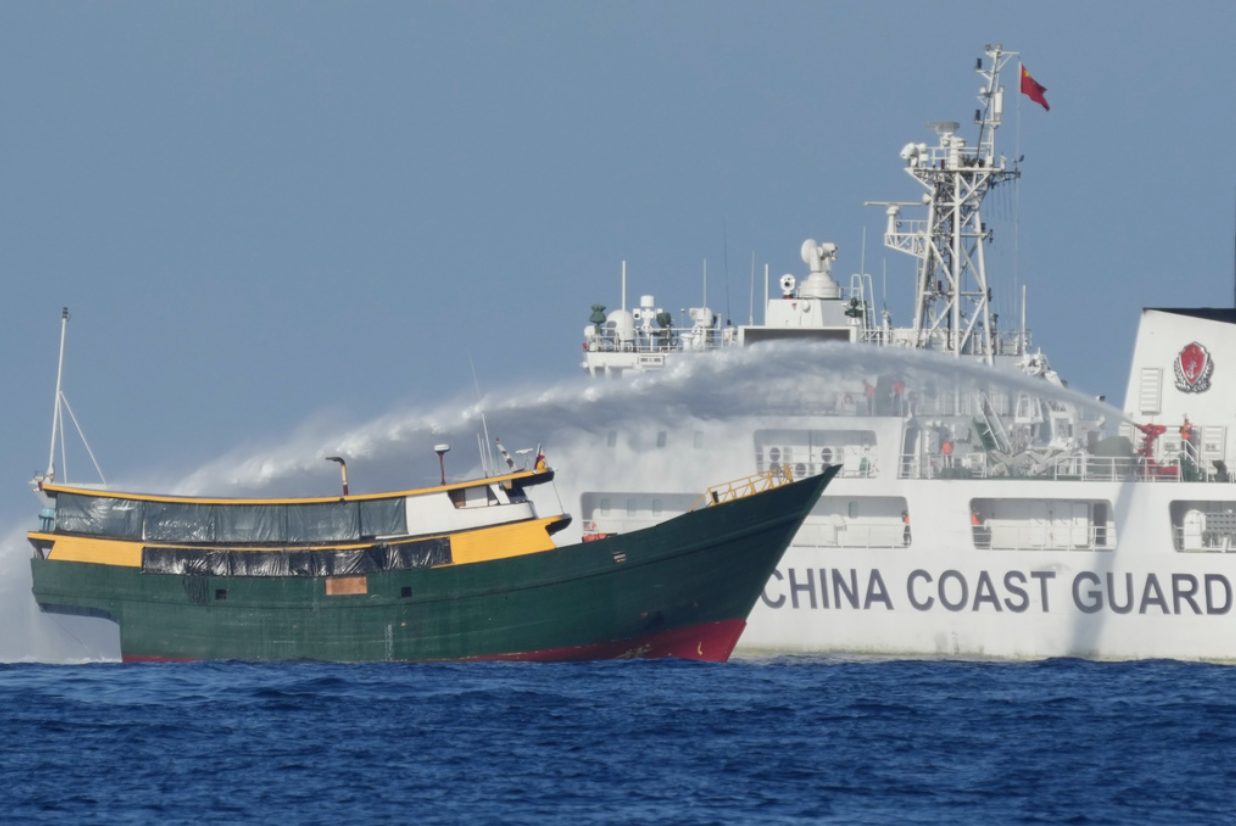
Philippine resupply vessel Unaizah May 4 is hit by Chinese coast guard water canon blast causing injuries to multiple crew members as they tried to enter the Second Thomas Shoal, locally known as Ayungin Shoal, in the disputed South China Sea on March 5, 2024. (AP Photo/Aaron Favila)
When the ASEAN foreign ministers issued their joint communique the next day, they again left out the 2016 arbitral ruling, which ASEAN hasn't mentioned in a joint statement since the tribunal issued it.
The United States isn't a party to these talks, but one of China’s proposals would affect the United States directly. In the draft text, China proposed that the parties cannot hold joint military exercises with countries outside the region unless the parties concerned are told in advance and don't object. Carlyle Thayer, an emeritus professor at the University of New South Wales, described the provision in 2024. BenarNews, which reported his account, said that the provision would give Beijing a way to stop Southeast Asian countries from conducting joint military drills with countries such as the United States or Japan. Vietnam countered with a 60 days notice before any exercise in the South China Sea.
Kevin Kim, the US ambassador to ASEAN, said in July that Washington respects the negotiations but expects any outcome to leave US interests intact. He added that US ships will keep sailing in international waters in regard to freedom of navigation. That same week, China's delegation declared that Beijing was seeking an early conclusion and accused countries outside the region of instigating conflict in the South China Sea.
If the year ends without a final text, the push will pass to Singapore. It last chaired ASEAN in 2018, the year it helped broker the single draft text negotiators still work from. The code is meant to keep disputes in the region from turning into an outright war, which would inevitably involve the United States, a treaty ally to the Philippines. The South China Sea is also home to the Strait of Malacca and Taiwan, each carrying about a fifth of global maritime trade in 2024. Lazaro cited this year’s blockage of the Strait of Hormuz, which sent fuel prices soaring across Southeast Asia, as a reason to finish the code this year. Lazaro ended by saying that “we (ASEAN) do not want the South China Sea to be a choke point”.