
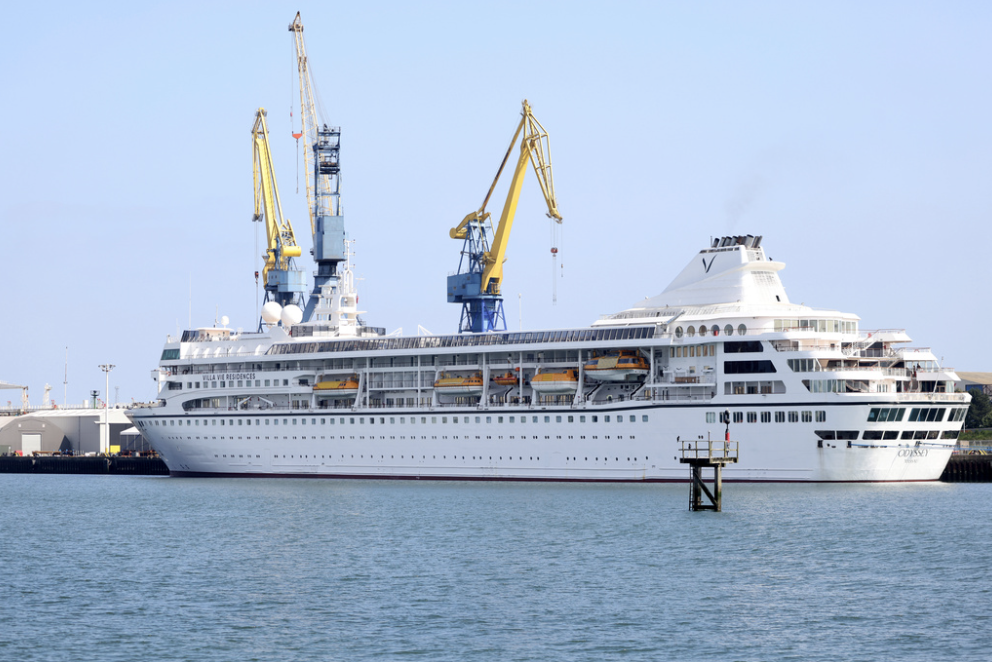
The Odyssey, a U.S. cruise liner operated by Villa Vie Residences is docked at Harland & Wolf ship repair facility in Belfast Harbour, Northern Ireland, on Aug. 30, 2024. (AP Photo/Peter Morrison)
On Oct. 28, Cambodia welcomed 203 passengers and 156 crew members in Sihanoukville, after Villa Vie Residences abruptly suspended operations of the Odyssey due to financial issues and rising fuel costs. This marks the second time within six years that Cambodia has received a stranded residential cruise ship, recalling its reception of the MS Westerdam in 2020 during the spread of the COVID-19 virus.
According to a Cambodian News Outlet, the Cambodian government dispatched a delegation of officials to receive the stranded passengers. Officials demonstrated hospitality by speaking with passengers and providing essential assistance.
In an interview with Reuters, Mary Ann Demsar, 67, from Ontario, Canada, expressed frustration with the cruise company while praising the Cambodian government’s response. “We don’t get any clear indication from the owners of Villa Vie as to what is happening,” she said. “They’ve been so quiet; the only information we get is from the wonderful government and the representatives here in Cambodia.”
On Wednesday, Nov. 4, the ship departed Cambodia carrying 50 crew members and no passengers. Approximately 100 passengers remain in Sihanoukville, while others are traveling to other parts of Cambodia or have departed for other countries.
Cheng Kimlong, president of the Asian Vision Institute, attributed Cambodia’s reception of The Odyssey to the government’s commitment to upholding humanitarian principles. He connected the recent response to the emergency reception of The Westerdam cruise ship in February 2020 during the COVID-19 outbreak.
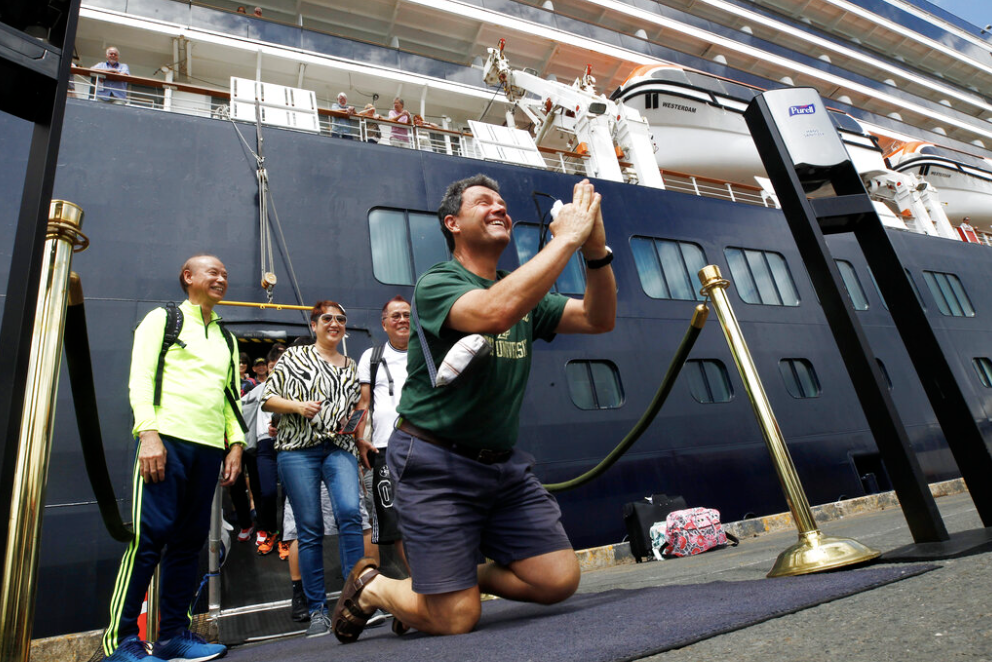
Passengers react after they disembarked from the MS Westerdam, back, at the port of Sihanoukville, Cambodia, Friday, Feb. 14, 2020. Hundreds of cruise ship passengers long stranded at sea by virus fears cheered as they finally disembarked Friday and were welcomed to Cambodia. (AP Photo/Heng Sinith)
In February 2020, Cambodia granted MS Westerdam permission to dock after it was turned away by five other Asian ports amid fears of a potential COVID-19 outbreak. Following testing, the uninfected passengers were permitted to disembark the ship and the Cambodian government coordinated their arrival, helping arrange transportation to Phnom Penh International Airport for their return journeys.
According to the Associated Press, Cambodia received praise from the United States as an exemplary model of international humanitarian assistance and cooperation. “The one thing I can say is we’re very, very grateful that Cambodia has opened literally its ports and its doors to people in need,” said US Ambassador W. Patrick Murphy.
Although the two incidents occurred under different circumstances, both demonstrated Cambodia's willingness to assist stranded passengers. According to The ASEAN Frontier, “Pen Bona, spokesperson for the Cambodian government, said the government’s intervention concerning the cruise ship was purely humanitarian and reflected Cambodia’s goodwill.”
The guidelines of the International Maritime Organization state that countries have the right to hold their own discretion when deciding whether to grant vessels access to their ports on a case-by-case basis. Cambodia’s response to the two cases raises broader questions about the responsibilities of coastal states when approached by vessels that are unable to find a port willing to receive them.