
U.S.-India Trade Talks Hit ‘Plateau’ Over Russian Oil

An elderly couple carries a gas cylinder to their home after collecting it from a depot, in New Delhi, Thursday, March 19, 2026. (AP Photo/Manish Swarup)
India and the United States have reached a “plateau” in negotiations over a trade agreement, according to Indian Finance Minister Nirmala Sitharaman. The current impasse comes amid repeated disagreements over India’s continued purchases of Russian oil, which have become a source of tension between the two countries.
The pause in negotiations underscores the geopolitical considerations shaping India’s economic strategy, which has consistently been rooted in the principle of strategic autonomy. As India maintains relationships with the United States, Russia, and other major economies, disagreements over energy imports have complicated trade discussions with Washington.
Russia became India’s largest crude oil supplier after Moscow redirected its energy exports away from Europe following the invasion of Ukraine. Discounted Russian crude oil offered Indian refiners a valuable opportunity to reduce the cost of importing energy needed to sustain one of the world’s fastest-growing major economies. Since 2022, India has become a leading buyer of Russian seaborne crude, rendering the relationship economically valuable for both countries.
However, India’s reliance on Russian supplies is beginning to shift. Indian refiners imported an estimated 1.74 million barrels of Russian crude per day in September, down from 2.02 million in August and 2.65 million in July. Although Russia still remains India’s largest supplier, refiners are increasing purchases from Iraq, Saudi Arabia, and other producers. The decline reflects growing uncertainty surrounding Russian supplies. Russian oil exports have faced disruptions amid attacks involving Russia and Ukraine. Meanwhile, China has increased its own purchases of Russian crude, competing with India for available shipments.
Washington has also increased pressure on countries purchasing Russian energy, additionally pushing India to diversify. The United States has considered legislation authorizing tariffs as high as 100 percent on countries purchasing Russian energy, with the levying terms of the Sanctioning Russia and Iran Act of 2026 adding pressure over potential penalties. India’s Ministry of External Affairs has warned that such measures could damage bilateral relations, while refiners have urged the government to negotiate exemptions.
The stakes extend to India’s broader trading relationship with the United States. From April through August 2026, Indian merchandise exports to the United States reached $42.8 billion. The United States, as of 2026, is India’s largest trading partner, with annual bilateral trade exceeding $240 billion, a figure both nations are working to double by 2030. This relationship supports India’s efforts to attract foreign investment, expand manufacturing, and strengthen its position in global supply chains.
This creates competing economic pressures. Russia provides an important source of discounted energy, while the United States offers access to a major export market. Reducing Russian oil purchases could raise India’s energy costs, while maintaining them could expose Indian exporters to higher U.S. tariffs.
The consequences of these looming choices extend beyond trade negotiations. Oil remains essential to India’s transportation, manufacturing, and industrial sectors, and higher crude prices can raise production costs for businesses and consumers. On Oct. 8, Indian equities fell as oil prices rose above $100 per barrel, while the rupee approached a record low against the dollar.
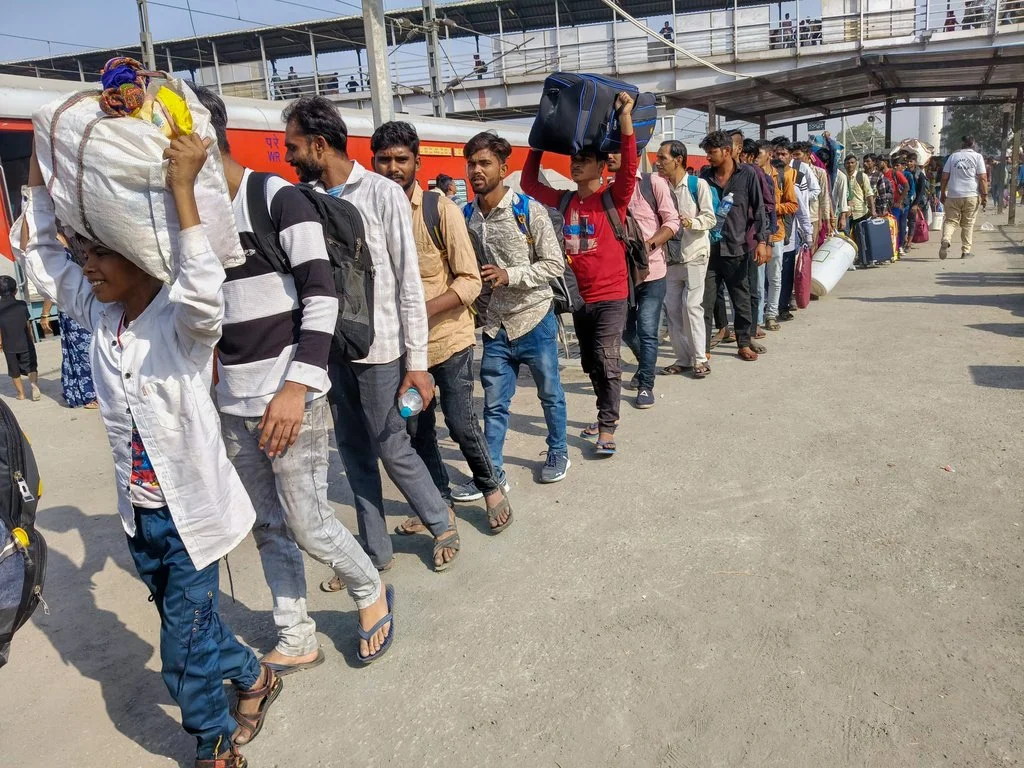
Textile workers returning to their hometowns stand in a queue to board a train following a brief shutdown of their factories caused by gas shortage and unavailability of LPG for homes, in Surat, India, Monday, March 16, 2026. (AP Photo)
India has demonstrated some capacity to diversify its energy supplies. Increased purchases from Iraq and Saudi Arabia have helped offset declining Russian imports. However, replacing discounted Russian crude with more expensive alternatives could increase import costs, adding pressure to an economy already exposed to global price fluctuations.
For India, the issue extends beyond diversifying oil supplies to managing the economic and diplomatic relationships that support its international position. This approach reflects its longstanding pursuit of strategic autonomy, which emphasizes maintaining flexibility in its relationships with major powers. India has expanded defense and technological cooperation with the United States while preserving longstanding ties with Russia. India also competes with China economically and strategically, while the two countries remain connected through trade.
These complex relationships reflect India’s efforts to maintain economic and diplomatic engagement with multiple major powers without formally aligning itself with a single geopolitical bloc. However, the global economy is becoming increasingly fragmented, with escalating sanctions, tariffs, and geopolitical competition already costing the international market up to $307 billion annually, according to a 2026 World Economic Forum report. The same interconnectedness that enabled India to grow and benefit from multiple partnerships may now make those relationships harder to balance in an evolving global economy.
Other emerging economies, including Brazil, are also attempting to preserve access to energy, investment, and export markets while navigating competition between major powers. For developing countries, economic interests are becoming increasingly difficult to separate from foreign policy shifts.
India’s Russian oil dilemma therefore reflects broader questions about strategic autonomy in a fragmented global economy. The ongoing trade discussions with the United States highlight the challenges of balancing energy security, trade interests, and diplomatic ties. Their outcome may offer insight into how both countries will go forward navigate competing economic priorities and differences over energy policy.