
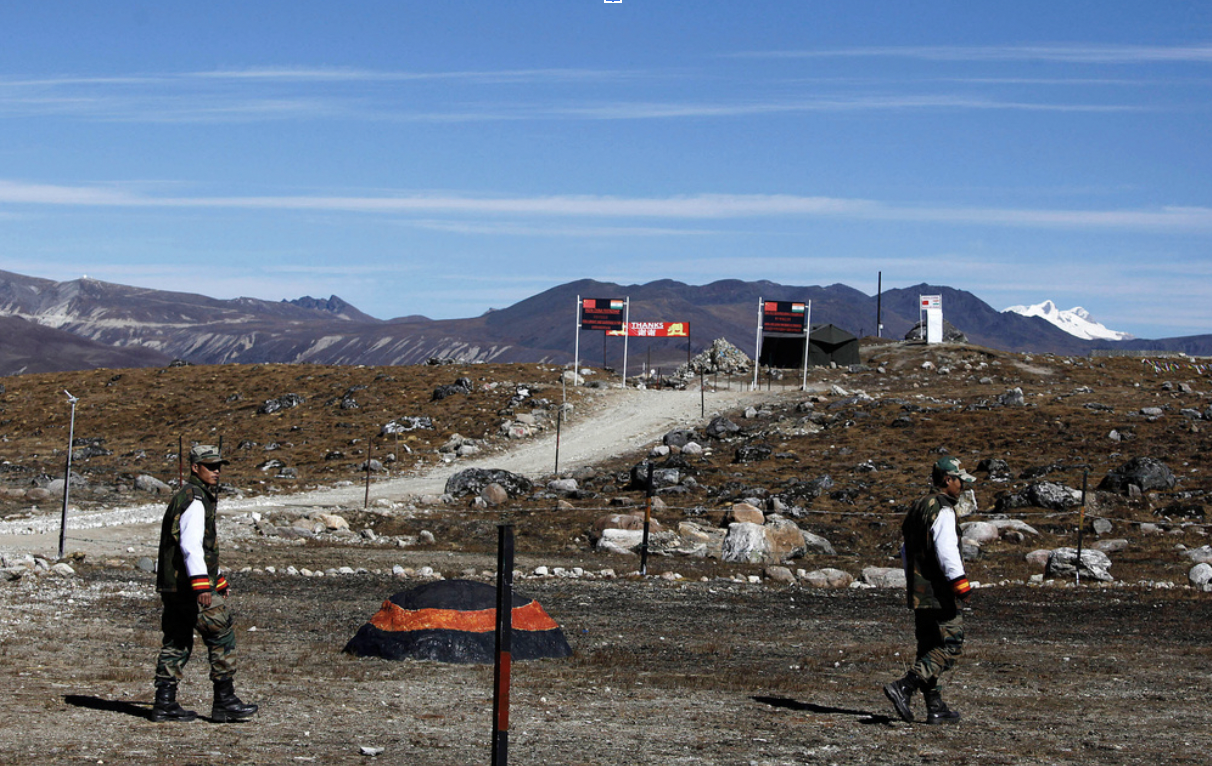
Indian army soldiers march along the Line of Control at the India-China border in Bumla, at an altitude of 15,700 feet above sea level in Arunachal Pradesh, India. (AP Photo/Anupam Nath)
As India navigates an internationally sensitive and militarized border situation, its leaders must find a balance between national security, diplomatic alertness, and regional power competition while also addressing the effects of China's expanding geopolitical and economic influence. This relevant and ongoing conflict runs along the Line of Actual Control (LAC), particularly following the 2020 Galwan Valley clash, which shifted India’s foreign policy calculus and its outlook for long-term stability in South Asia. LAC is the de facto border between India and China, separating Indian- and Chinese-controlled territories.
In the last few weeks, the events stemming from physical fighting on the border suggest that the border is not just another territorial dispute. Chinese and Indian audiences can see how it is slowly but surely revealing deeper tensions: China’s rapid military modernization, its economic influence, and India’s growing urgency to protect its own sovereignty without risking its future status as a global power. As Beijing’s economic dominance grows, India’s main concern remains its own security, not having altercations with other countries over financial interests.
The 2020 Galwan Valley clash marked the first fatal confrontation between Indian and Chinese troops in 45 years. Twenty Indian soldiers were killed, and only later did China specify its own casualties, which led to a quick increase in the uneasiness and untrustworthiness between the two nuclear-armed rivals. The occasion also reinforced intense public pressure within India for a more forceful, bold national security plan.
The confrontation imposed new constraints on New Delhi, prompting them to reevaluate their transparency, communication, and publicity strategies, which together shape its security interests and those of the surrounding regions. Due to this and similar financial disputes, India has placed greater emphasis on balancing the stabilization of diplomatic relations with China with a stronger, heavier military presence along the contested borders. Notably, the reports illustrate how India’s internal opposition remains committed to exercising strategic autonomy, even amid its unpredictable relationships with countries like China.
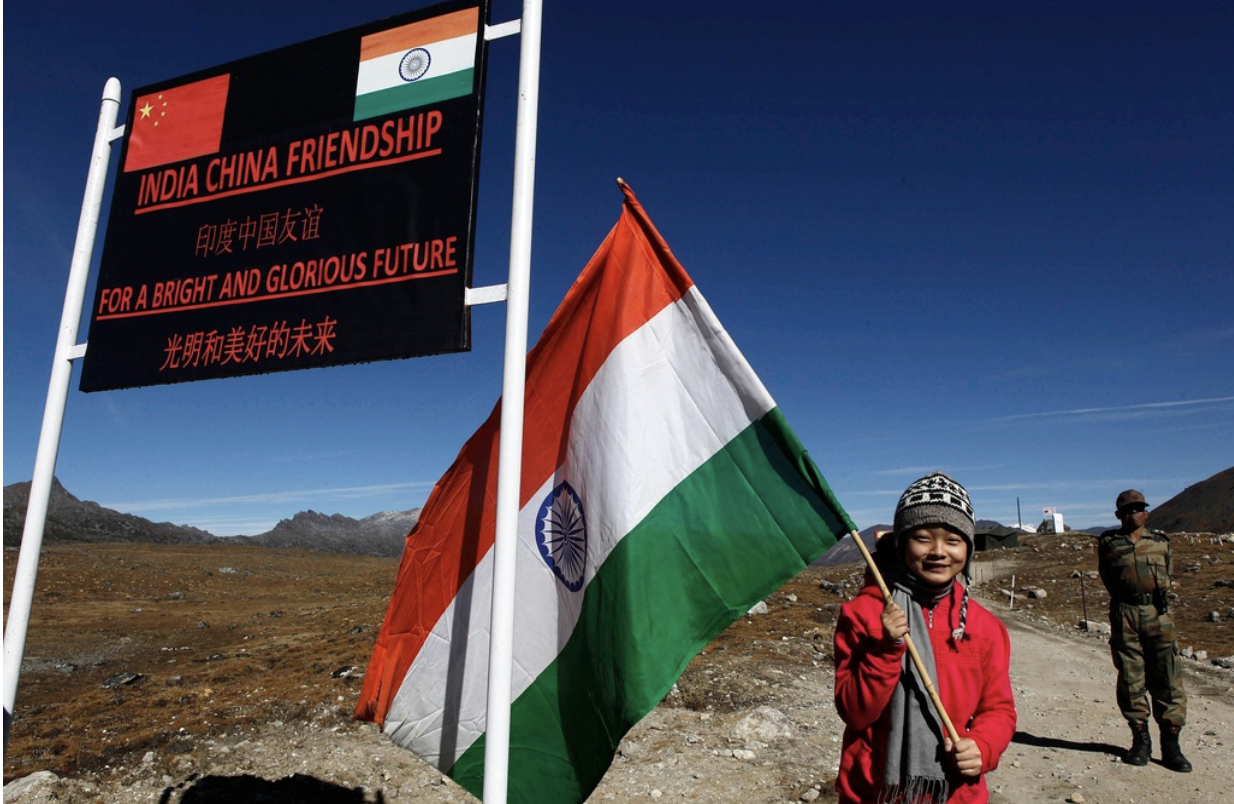
An Indian girl poses for photos with an Indian flag at the Indo-China border in Bumla at an altitude of 15,700 feet above sea level in Arunachal Pradesh, India.(AP Photo/Anupam Nath, File)
Despite the brutality of the standoff, India continues to be extremely cautious about allowing China’s power to affect its core concerns. India’s focus is not on trying to parallel China’s growth trajectory but on its own domestic industries, ensuring that economic competition as such does not distract it from strengthening its own foundations. China’s technological and infrastructural expansion has changed its strategic landscape, making India’s border defense more essential; it is still not the core of India’s economic policy.
Diplomatic efforts are ongoing; India recently called for a “permanent solution” to the border dispute and asserted that peace along the LAC is important before joint ties can normalize. Officials argued that the Galwan Valley event radically changed public opinion and that any future consensus could have led to greater diplomatic efforts to build confidence.
While India and China maintain strong economic ties and ongoing relations due to their massive markets, political trust is very fragile. As a result, even though cooperation and competition have long existed, the 2020 clash pushed both nations apart, prompting India’s pivot toward Western partners and the Indo-Pacific.
For India, these shifts are not meant to complement China’s economic power but instead to safeguard national security, territorial integrity, and regional influence amid continued Chinese assertiveness. Even as New Delhi works with Beijing on economic relations, its primary concern is strengthening military capability and expanding diplomatic alliances that reinforce strategic autonomy. Finally, the future of India-China relations depends on whether each nation can take significant steps toward de-escalation, communication, and long-term stability. Only then will India’s foreign policy continue to develop at the intersections of diplomacy, defense, and geopolitical competition, with national security guiding every vital decision.