
United States and China Agree to AI Incident Channel
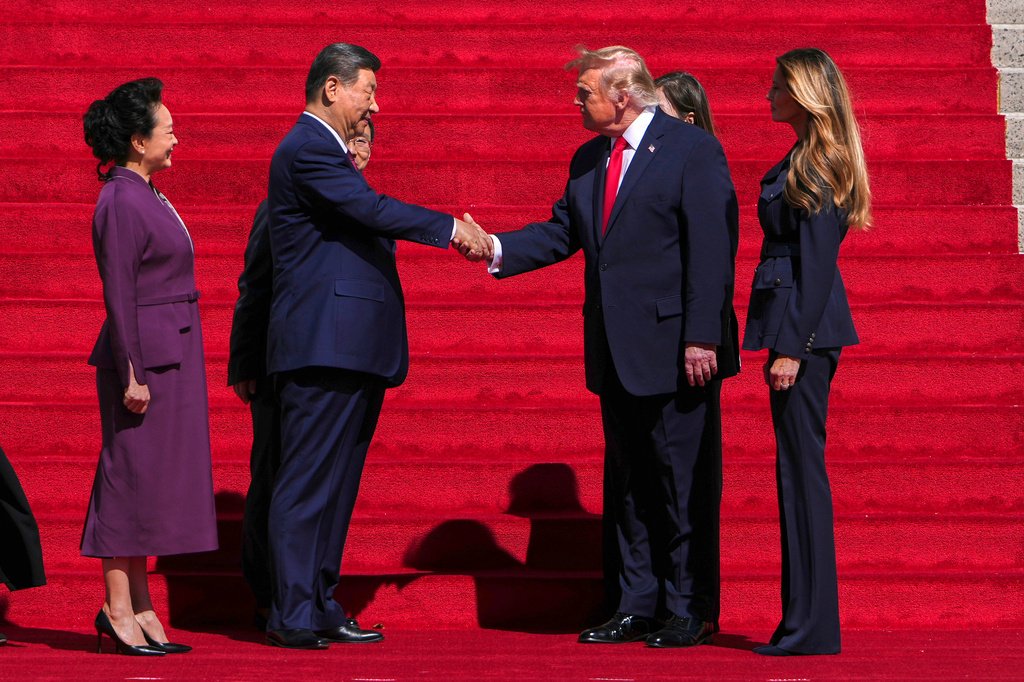
President Donald Trump, center right, shakes the hand of China's President Xi Jinping as first lady Melania Trump, right, and China's first lady Peng Liyuan, left, watch as they arrive at the National Archives Museum, Friday, Sept. 25, 2026, in Washington. (AP Photo/Julia Demaree Nikhinson)
The United States and China agreed to establish a communication channel for artificial intelligence incidents following President Xi Jinping’s Sept. 23–25 state visit to Washington. The announcement came after talks between the two presidents as both governments faced questions about how to manage AI risks. China’s Foreign Ministry said on Sept. 26 that the two countries would discuss AI risks and benefits again in November.
The proposal had already been discussed before the leaders met. US and Chinese officials discussed a notification system on September 20. Treasury Secretary Scott Bessent said it would be used when AI-related matters reached the level of national security.
Earlier discussions go back further. The two governments held their first intergovernmental AI dialogue in Geneva on May 14, 2024. They exchanged views on technology risks and global governance, while China raised objections to US restrictions on its AI sector. Access to advanced chips remains part of that debate.
In January, the US Commerce Department changed its rules to review exports of Nvidia’s H200 and similar chips to China on a case-by-case basis. Applicants had to meet security requirements, including buyer screening and independent testing in the United States. The policy allowed some chip sales while preserving government oversight.
There is also pressure for stronger safety measures coming from US lawmakers. In a September 23 letter, a group of senators urged Trump to discuss AI safeguards directly with Xi. They pointed to risks involving cyberattacks, biological weapons, military uses of AI, and called for ways to check whether countries followed any future agreement. The senators also argued that international talks should accompany stronger rules at home. Their letter called for oversight of model development and testing, as well as continued human control over autonomous systems.
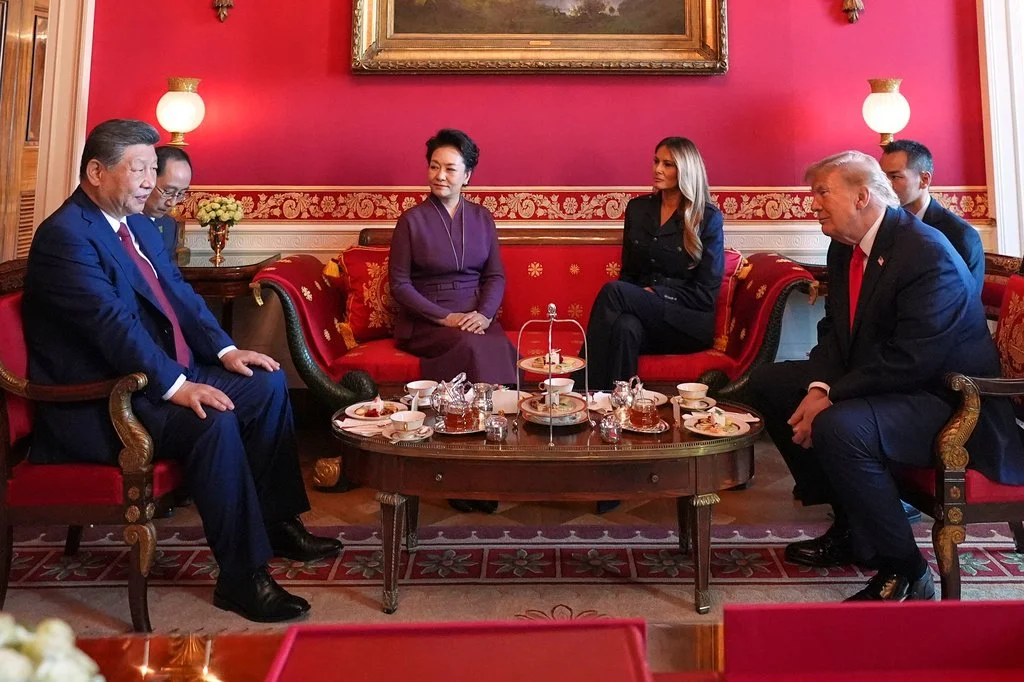
President Donald Trump, from right, and first lady Melania Trump attend a tea with China's President Xi Jinping, from left, and his wife Peng Liyuan in the Red Room of the White House, Friday, Sept. 25, 2026, in Washington. (AP Photo/Jacquelyn Martin)
The debate within the Trump administration has been more complex than the president’s public statements. On September 14, Trump had dismissed warnings of human extinction from AI as a hoax, while officials inside the White House were taking a more cautious view. People who had discussed AI with Trump privately claim that he feared a slowdown in AI growth could damage financial markets and lead to a recession.
Chinese officials have also raised concerns about the risks of artificial intelligence. On September 13, State Security Minister Chen Yixin warned about cyberattacks, sensitive data leaks, and threats to Communist Party rule. He called for stronger party control over AI and closer government oversight.
Henry Gao, a law professor at Singapore Management University, told the newspaper that Beijing viewed the safety talks through its rivalry with the United States. He said that “data sovereignty and political security will never be traded away for international safety accords.” His comments pointed to limits on the information China might be willing to share.
The two governments plan to resume AI talks in November. They have agreed to communicate about AI incidents; how that communication would lead to action remains an open question.