

A man uses a towel to wipe the sweat off his face at koyambedu market in Chennai, India, Tuesday, June 23, 2026. (AP Photo/Mahesh Kumar A.)
China, India, and the United States are among the world’s largest greenhouse gas emitters. But how much of their output serves consumers elsewhere? According to the Traded Emissions Tracker, in 2023, China’s consumption footprint was about 14.1 billion tons of greenhouse gas emissions, and its export-related emissions were 2.9 billion tons. The respective figures were 6.9 billion and 649 million tons for the United States, and 4.3 billion and 524 million tons for India.
Europe’s environmental footprint is one that extends far beyond its borders. A Sept. 8 Euronews report found that approximately 35 percent of the greenhouse gas footprint associated with EU consumption in 2023 was generated outside the continent. These emissions came from producing goods and services consumed in Europe, having their consumers enjoy the outcome without bearing the cost.
The human costs of a warming planet are already visible in India. In June, the Associated Press noted that textile workers in Surat described cyclones, floods, unreliable farming, and water shortages as reasons opportunities had dwindled in their home district of Ganjam, Odisha. In Surat, they faced poorly ventilated factories and 12-hour shifts, causing reported dizziness, headaches, and fatigue from the heat. Although factories provide income and employment, the employees have little protection from elevated temperatures. The World Bank’s 2021 Groundswell report estimated that as many as 216 million people across six global regions could be forced to migrate within their countries by 2050, prompted by high emissions and unequal development.
The presence of extreme heat caused by global warming can also greatly reduce work efficiency. A study published by WIEGO in June 2026 examined women working from their homes in Delhi. In its July 2025 survey, 84 percent of respondents disclosed reducing their working hours because of heat, while 88 percent showed lower productivity. For these laborers, environmental changes led to a reduction in working hours and earnings, harming their households.
International agreements have attempted to slow the emission of greenhouse gases. The 1997 Kyoto Protocol set binding greenhouse gas emission targets for specified industrialized countries and economies in transition, while establishing compliance systems. The Intergovernmental Panel on Climate Change concluded that Kyoto helped reduce emissions in some countries, although its binding targets covered only part of the world.
The 2015 Paris Agreement, on the other hand, requires its parties to prepare national climate plans, known as nationally determined contributions, and communicate them every five years. Member states must pursue domestic measures and report on their progress accordingly. However, achieving each country’s stated emissions target is not a legally binding obligation under the agreement, and its compliance committee cannot impose penalties. The system makes commitments and developments more visible, but leaves much of the responsibility of enforcement to governments.
The results remain distant from the shared goal. The United Nations Environmental Programme’s Oct. 21 assessment projected about 2.6 degrees Celsius of warming above preindustrial levels this century if all national pledges are delivered and similar efforts continue. That exceeds the Paris Agreement's goal of keeping warming well below 2 degrees Celsius, aiming for approximately 1.5 degrees Celsius. The problem includes both carrying out existing promises and making stronger ones.
One reason action falls short is the collective action problem. A stable climate has the characteristics of a global public good: its benefits are nonrival and nonexcludable. One country’s benefits do not reduce another’s, and states can gain even if they contribute relatively little. Governments are unwilling to bear the cost of shutting down greenhouse gas emissions while, at the same time, wishing to share the benefits brought by others. When many governments rely on others to cut emissions, the combined efforts are too small to sustain meaningful progress.
Global supply chains raise a question about who should bear the environmental costs of production. When a company buys inexpensive goods from an overseas factory, the factory can pollute nearby water or damage local livelihoods, causing residents to suffer losses that are not covered by the prices of those goods. Economists call this a negative externality, wherein people outside the transaction bear some of its expenses. To prevent this damage, companies should collectively treat pollution mitigation as part of production costs.
To facilitate improvements, governments have the responsibility to regulate factories. Suddenly closing a factory can cause workers to lose their jobs and income. Moving orders elsewhere may simply expose another community to pollution. Governments should therefore require companies that profit from a supply chain to help during this process.
The first step is to identify where the greenhouse gases are released. The Greenhouse Gas Protocol provides a method for measuring a company’s indirect emissions across its value chain, known as Scope 3. These include gas releases from suppliers producing goods for the company, among others. By requiring large companies to report these supply chain emissions, governments can identify the main sources of pollution and fund the technologies necessary for reducing it.
Companies have the ethical obligation to organize payments toward eco-friendly improvements. Their plans should identify the suppliers needing support, the expenses of changes, and the funding required to solve these ecological problems while maintaining standard factory productivity. Support could include cleaner equipment, lower-emission electricity, or training for workers.
Long-term stable contracts for the factories could also aid these improvements. The Organisation for Economic Co-operation and Development’s guidance warns that buyers’ demand for lower prices can encourage suppliers to cut costs in ways that harm the environment and employees. When installing sustainable infrastructure such as wastewater treatment equipment in factories, parent companies have the responsibility to help cover costs while offering stable contracts that support factory maintenance.
For instance, factories in Bangladesh need financial support to pay for cleaner production. In April 2026, the Business and Human Rights Centre published a survey with 15 brands that produce their goods in Bangladesh. Among the 15 brands, eight responded, stating that they are not paying more for the clothes manufactured in green certificate or emissions-targeted factories.
These companies do not face a price change when paying suppliers who are trying to save energy or reduce greenhouse gas emissions. Some companies mentioned that they are supplying funding and technical assistance to factories to reduce environmental pollution. However, without long-term stable contracts and profitable prices, fewer factories may be willing to take the risk and improve the environment as a whole.
Some improvements exceed the capabilities of what individual suppliers can provide. Building a cleaner electricity system, for example, calls for investments beyond a single factory. Wealthier governments should therefore help finance such projects in developing countries with limited resources. The Paris Agreement already requires developed-country parties to provide funding to developing countries seeking to reduce emissions and adapt to climate change. Such funding could help these countries build cleaner electricity systems without leaving individual factories to cover the full cost.
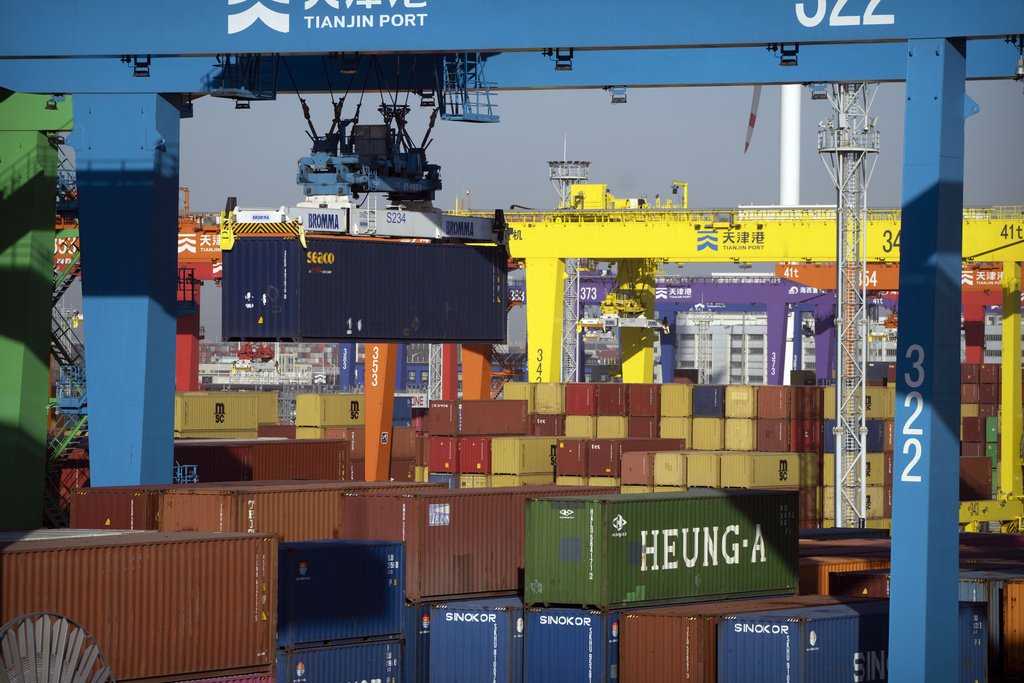
An automated crane picks up a shipping container at a port in Tianjin, China, Monday, Jan. 16, 2023. Chinese exports grew in April by 8.5% to $295.4 billion compared with a year earlier despite weakening global demand. (AP Photo/Mark Schiefelbein)
Workers require protection through labor changes. Employers and the companies placing orders should help pay for cooling, drinking water, and recuperation periods. Income protection is also needed when dangerous heat or local pollution create precarious working conditions. If a production process must close permanently because its conditions are unsustainable, laborers should receive temporary income support and training for other jobs. Environmental plans need to consider how people will support themselves in the event that their jobs disappear.
Higher prices and their impacts also need to be taken into consideration. Companies profiting from global production take on many burdens for improvements yet some expenses may still reach the consumers. To combat this, governments have the ability to provide targeted support for low-income households, offering discounts or purchasing subsidies for those who buy the new reformed goods. France, for instance, uses fees paid by companies to fund clothing and shoe stores that repair items instead of creating new products. Customers purchasing at these stores will receive a discount, which has the capability of decreasing the amount of emissions in the long run.
Eurostat reports that the emissions associated with EU consumption, including imported goods and services, fell 12.9 percent between 2013 and 2023. Producing each item with fewer emissions helps, but success should be measured by whether total emissions fall across global supply chains.
Environmental degradation already carries a cost through damaged livelihoods and lost economic opportunities across the world. Workers and communities affected by pollution deserve a greater say in how its costs are shared. People on Earth, no matter where they are or what they do, all deserve clean water, safe working conditions, and a secure future.