
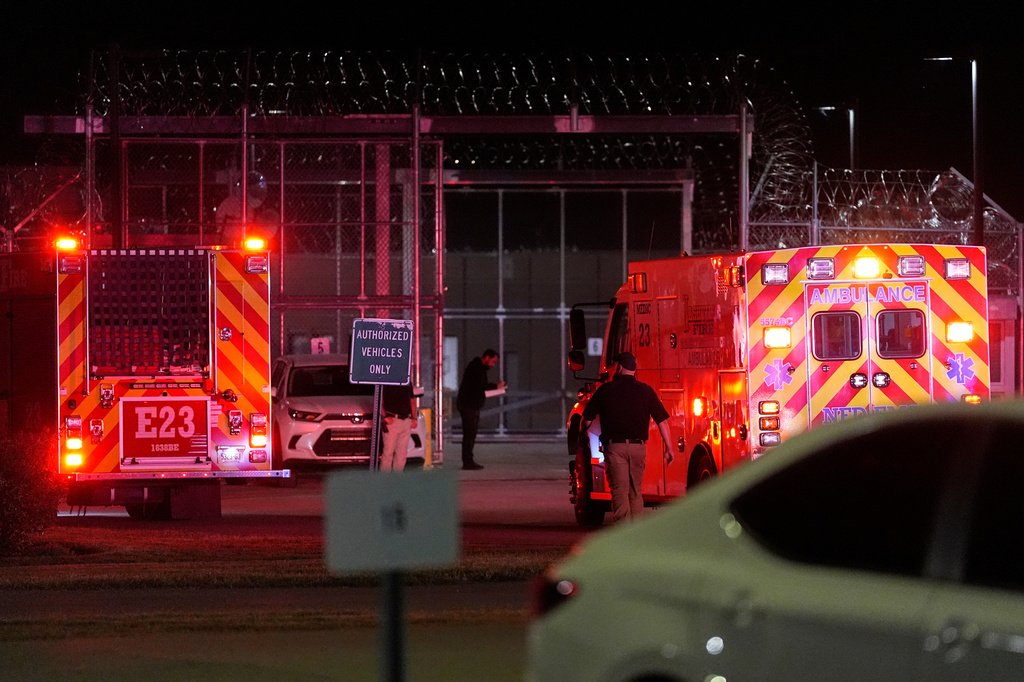
Emergency vehicles arrive at Riverbend Maximum Security Institution after the execution of Christa Pike was halted Wednesday, Sept. 30, 2026, in Nashville, Tenn. (AP Photo/George Walker IV)
At 9:03 pm on Sept. 30, a dispatcher declared that no medical assistance was needed at Tennessee’s Riverbend Maximum Security Institution. Yet Christa Pike remained alive after receiving two doses of pentobarbital during an attempted execution. Tennessee’s protocol called for a second dose of pentobarbital but provided no explicit instructions for what to do if she survived both. Beyond the missing instructions, Tennessee has a duty to anticipate complications and establish procedures to address them. Decades of documented execution failures provide evidence of these risks, yet the state continues to protect the identities of drug suppliers and execution personnel without providing adequate public accountability.
Pentobarbital alone cannot explain Tennessee's two failed execution attempts in less than five months. On May 21, officials halted Tony Carruthers's execution after failing to establish a required backup intravenous (IV) line. On Sept. 30, Christa Pike survived two doses of the drug after execution personnel also struggled with IV access. Tennessee had shortened its execution protocol from more than 100 pages to 44, eliminating the requirement to practice inserting IV lines.
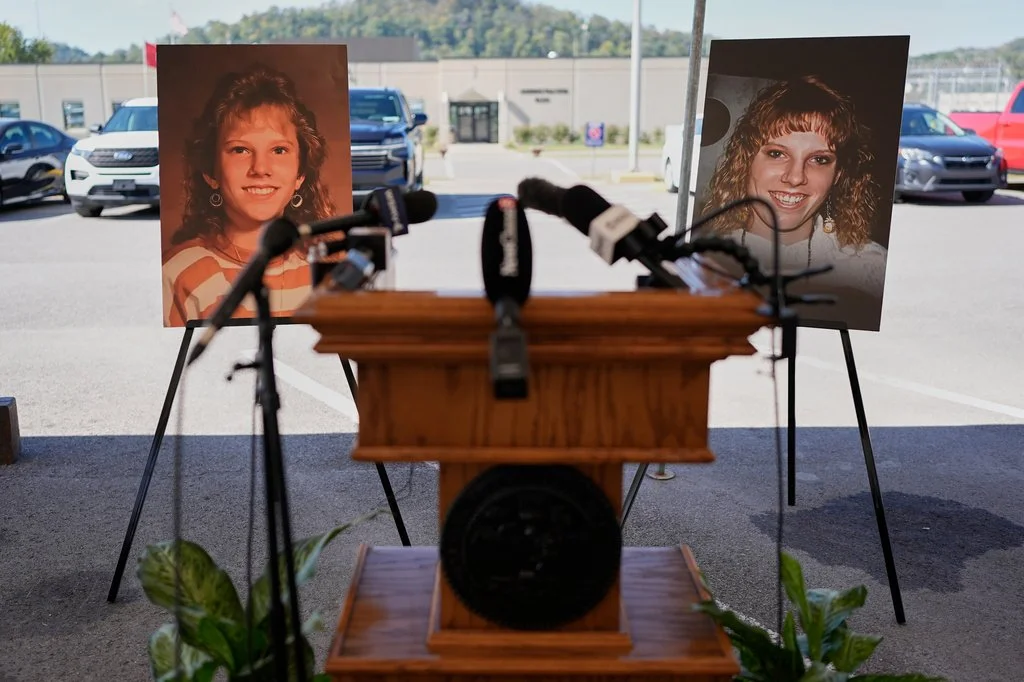
Photographs of Colleen Slemmer, who was murdered in 1995, are displayed outside Riverbend Maximum Security Institution before the planned execution of Christa Pike, Wednesday, Sept. 30, 2026, in Nashville, Tenn. (AP Photo/George Walker IV)
Pike was sentenced to death in 1996 for the 1995 murder of her classmate, Colleen Slemmer. The crime explains her sentence but not the state's medical responsibilities in carrying it out. The Netherlands' January 2026 Euthanasia Code specifies how physicians should respond when injected substances miss a vein or an IV line stops working. Unlike capital punishment, euthanasia requires a voluntary request and medical assessments. Both procedures, however, depend on drugs reaching the bloodstream as intended.
The Dutch guidelines call for a coma-inducing drug followed by a muscle relaxant. Physicians must verify that the patient is unconscious before administering the second drug, which could otherwise leave the patient aware but unable to breathe. They must also have backup supplies available and restart the procedure if it fails.
In 1988, a syringe left Raymond Landry’s vein, spraying execution chemicals toward witnesses. Officials closed the viewing curtain for 14 minutes while they reinserted the catheter. Two years later, a kinked IV prevented the drugs from reaching Charles Walker in Illinois, where the needle had also been inserted incorrectly. In 1992, Robyn Lee Parks experienced violent muscle spasms, gasping and gagging before his death. In 1994, chemicals solidified in John Wayne Gacy’s IV tubing, a failure anesthesiologists blamed on inadequate experience and believed basic IV training could have prevented.
Pentobarbital slows activity in the central nervous system and can suppress breathing at high doses. But when an IV line is misplaced, the drug may leak into surrounding tissue rather than enter the bloodstream, a complication known as extravasation. After Pike's failed execution, her attorneys reported swollen and blistered arms, including discoloration in one arm. Medical experts pointed to possible problems with unsuccessful IV delivery or the drug itself. Extravasation has not been confirmed in Pike’s case, and the exact cause of her failed execution remains unknown.
Before Sept. 30, Pike's attorneys had warned that her small veins and blood disorder could make IV access difficult and painful. The Tennessee Supreme Court declined to intervene, describing the concerns as “speculative.” After the failed execution, anesthesiologist Joel Zivot, one of Pike's medical experts, offered his interpretation: “It just got into her arms, and most of it stopped there.”
This was not Tennessee’s first problem with its execution procedures. In 2022, the state suspended executions after officials failed to conduct required tests for toxins produced by bacteria in its execution drugs. Kit Thomas, a federal public defender who criticized Tennessee's revised execution protocol, observed: “When there are fewer rules, there are just fewer ways for you to be penalized.”
Following Pike's failed execution, the Tennessee Department of Correction maintained that officials had “followed every step of the State's lawful, established execution protocol.” Yet those instructions provided for a second dose of pentobarbital without specifying what should happen if both attempts failed. Following a protocol does not mean the protocol adequately protects against foreseeable harm, a distinction that matters especially under the Eighth Amendment.
In Baze v. Rees (2008), the Supreme Court upheld Kentucky's lethal injection procedure. Chief Justice John Roberts explained in a plurality opinion, a non-majority opinion supported by several justices, that “some risk of pain is inherent in any method of execution.”
In January 2025, the Biden Justice Department rescinded the federal pentobarbital protocol over concerns about unnecessary pain and suffering. In April 2026, the Trump administration reversed that decision after disputing the previous administration’s assessment. The federal reversal shows how a change in leadership can lead to a different response to medical concerns, even when those concerns remain disputed.
The American Medical Association and American Nurses Association oppose their members' participation in executions. This does not change the reality that lethal injection still requires trained personnel. Secrecy surrounding execution teams prevents independent experts from assessing their training and qualifications. In November, Tennessee asked a judge to prevent Pike's attorneys from inspecting or testing the remaining pentobarbital, arguing that doing so could reveal the state's drug supplier.
Gov. Bill Lee paused further executions pending review, and Corrections Commissioner Frank Strada resigned after Pike's failed execution. Both responses show that something went wrong, but neither explains why. An independent investigation must examine drug quality, IV training, and delays in emergency assistance, and make those findings public.
Not every medical complication can be prevented, but Tennessee had reason to anticipate problems. Pike's attorneys had warned officials, and decades of failed executions had shown what can happen when lethal drugs are not administered as intended. Whether Pike’s treatment violated the Eighth Amendment remains for the courts to decide. Pentobarbital did not write the protocol. Tennessee did.