
War, Oil, and Ashes: The Environmental Costs of the US-Israel War in Iran
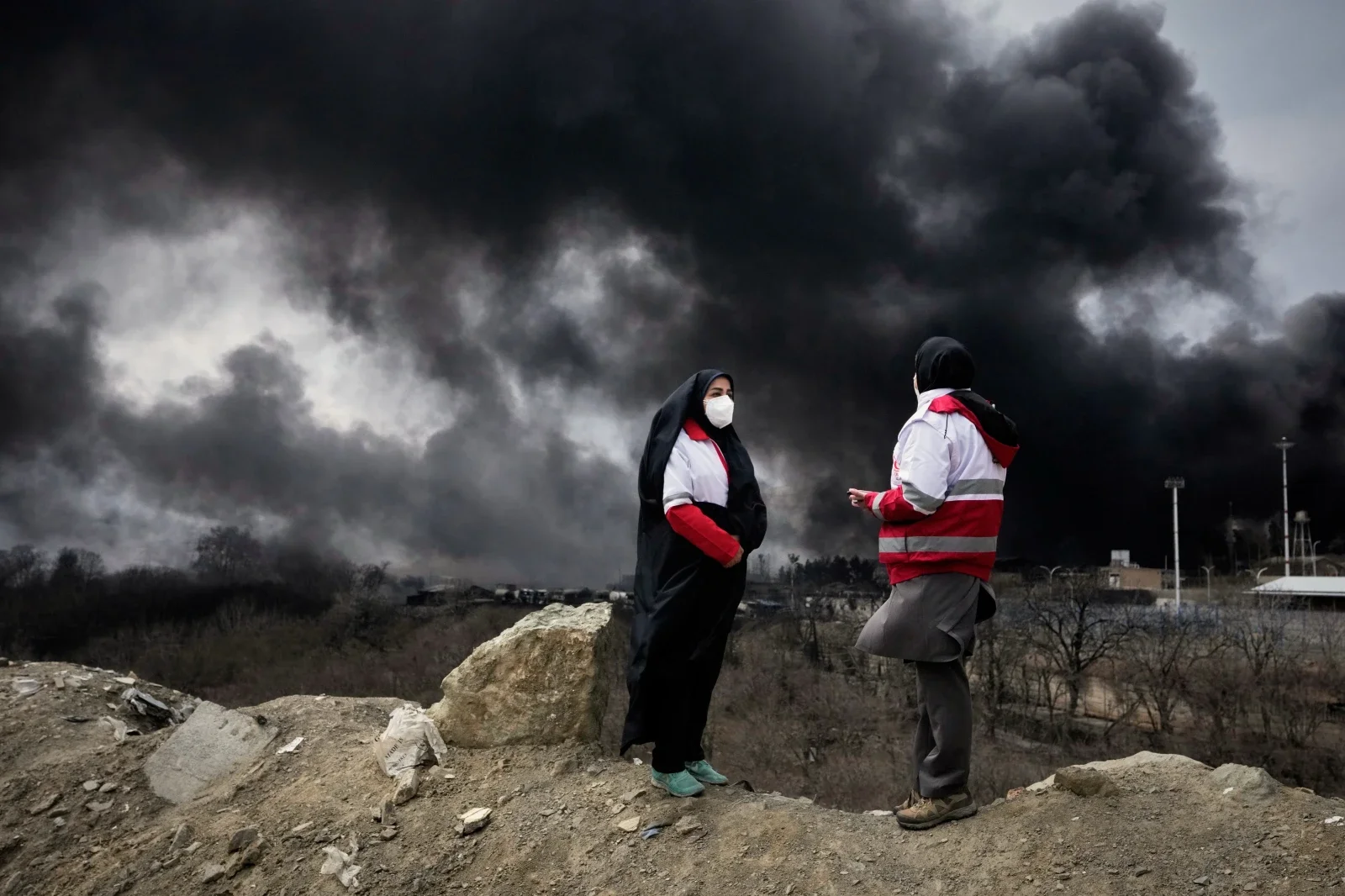
Two women from the Iranian Red Crescent Society stand as a thick plume of smoke from a U.S.-Israeli strike on an oil storage facility late Saturday rises in the sky in Tehran, Iran, Sunday, March 8, 2026. (AP Photo/Vahid Salemi)
Though the escalating US-Israel war in Iran has rightfully drawn attention to its geopolitical stakes and the devastating loss of life, the environmental consequences of this conflict are being dangerously overlooked. According to researchers, international health organizations, and environmental monitoring groups, the airstrikes launched by the United States and Israel against Iran, beginning February 28, 2026, have produced measurable environmental consequences. Modern warfare has long carried ecological harm, yet this specific conflict highlights an alarming acceleration in immediate and long-term environmental destruction that extends far beyond.
The morning after major Israeli airstrikes on Iran’s oil facilities, the city of Tehran, with a population of nearly 10 million people, was cascaded in rain. Thick black smoke from burning fuel depots engulfed the sky, the pollutants mixed with precipitation to create toxic rainfall that contaminated air, soil, and water supplies across the region. These emissions included hazardous compounds such as sulfur oxides, nitrogen oxides, and carcinogenic particles that pose severe health risks, ranging from respiratory illness to long-term cancer. The World Health Organization has warned that “the conflict in the Middle East poses serious threats to public health,” emphasizing that environmental damage directly harms the people.
The scale of environmental harm has become a serious concern. A report from the Climate and Community Institute estimates that the first 14 days of the war have generated more than 5 million tons of carbon dioxide, surpassing Iceland’s total annual carbon output and equal to yearly emissions of approximately 1.1 million petrol-powered vehicles. These emissions stem not only from explosions and fires, but also from the fuel-intensive military operations made up of thousands of airstrikes and combat flights. Military activity itself is a major contributor to climate change, with global armed forces responsible for over 5 percent of greenhouse gas emissions. In fact, the US Department of Defense is the world’s single largest consumer of oil, making it one of the leading greenhouse gas contributors. Compared to past conflicts, such as the Gulf War or the current conflict in Ukraine, the rapid surge in emissions within just weeks shows how technologically advanced warfare skyrockets the pace of ecological damage. However, research has identified that the destruction of homes and civilian infrastructure is actually the primary source of environmental damage in war, accounting for 2.4 million CO₂e, followed by the burning and destruction of oil, military fuel consumption, military equipment losses, and munitions such as missiles and drones. Researchers suggest that associated climate damages are estimated to exceed $1.3 billion. This is due to the rise in production of replacement weapons and equipment, ongoing fires at oil facilities, and the potential involvement of additional countries.
Beyond greenhouse gas emissions, the targeting of infrastructures has intensified the risks. Strikes on oil refineries, desalination plants, and military sites have released toxic chemicals, such as heavy metals and long-lasting pollutants, into the surrounding ecosystems. The Conflict and Environmental Observatory has reported more than 500 incidents of environmental harm inside Iran and an additional 100 outside the country’s borders as of mid-March.
Amongst these, detrimental damage to water infrastructure is particularly alarming. According to Iran's foreign minister, the United States Department of Defense has already struck a freshwater desalination plant on Iran's Qeshm Island, disrupting water supplies to 30 villages. Similarly, Bahrain has accused Iran of damaging a desalination plant in a drone attack. In regions where desalination provides essential drinking water for millions, attacks or disruptions to the distribution can leave entire populations without access to clean water. As mentioned earlier, black rain carries long-term consequences for soil and water systems, and acidic rain carries toxic heavy metals, such as mercury and aluminum, which reduce the nutrients necessary for crops to grow. Thus, it is highly likely that groundwater has been contaminated, affecting drinking water supplies in the long run. Experts warn that once the water systems fail, the consequences will exponentially increase with the possibility of sanitation collapsing, disease rapidly spreading, and vulnerable populations suffering first and most severely.
Additionally, researchers have projected that the environmental costs of rebuilding will actually exceed those of the conflict itself. Based on prior analysis of harms done in Gaza and Lebanon, the estimated post-conflict reconstruction would produce at least 24 times more emissions than the wars generated directly.
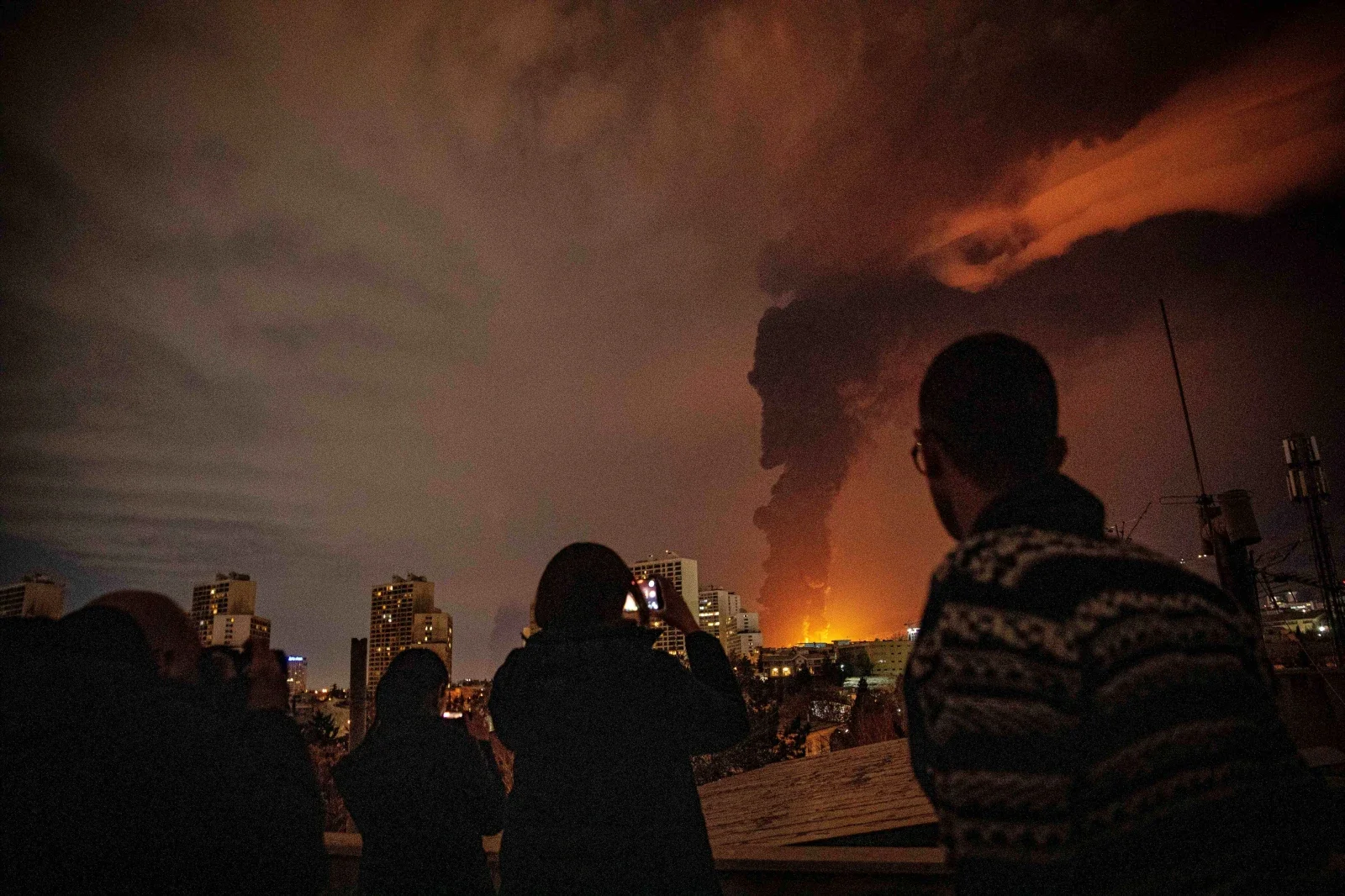
Residents look on and take pictures as flames and smoke rise from an oil storage facility struck as attacks hit the city during the U.S.–Israeli military campaign in Tehran, Iran, Saturday, March 7, 2026. (Alireza Sotakbar/ISNA via AP)
The geopolitical motives behind the war have further complicated the environmental toll. Analysts argue that the government’s pursuit of “energy dominance” has driven military interventions to purposefully target oil-rich regions. Iran's shutdown of the Strait of Hormuz has cut off nearly 20 percent of the world's oil supply, 19 percent of global liquified natural gas, and skyrocketed prices worldwide. The International Energy Agency has gone as far as to describe the disruption as the largest-ever shock to global oil supplies. Furthermore, these disruptions not only strain economies but also encourage fossil fuel expansions in the name of domestic energy security, effectively promising increased future emissions and dependency on carbon-focused systems.
However, there are signs of positive shifts regarding energy production that this conflict has triggered. Particularly in Asia, many countries have begun to reconsider their reliance on fossil fuels and have begun to invest in renewable energy and alternative sources such as nuclear and solar power. Indonesia's energy minister stated that the country must "optimize all domestic energy resources" given disruptions to long-term supply continuity, and has announced plans to begin construction of new solar and geothermal power plants. Japan has advanced timelines for nuclear energy development, while China has done the same in building 23 new nuclear reactors.
Still, these developments are doing little to offset the immediate and long-term environmental damages happening in the Middle East. For civilians, the environmental costs of this war are immediate and devastating. Thousands have already been killed or displaced, and many more are exposed to polluted air, contaminated water, and degraded agricultural land. War’s environmental harm often leads to millions of indirect and ignored deaths through toxic exposure, food insecurity, and diseases that continue to kill people long after the fighting ends. In this sense, the environment becomes a “silent casualty” of war, with impacts that last for generations to come.