
Op-Ed: Migration Is Not a Crisis. Humanity Is.
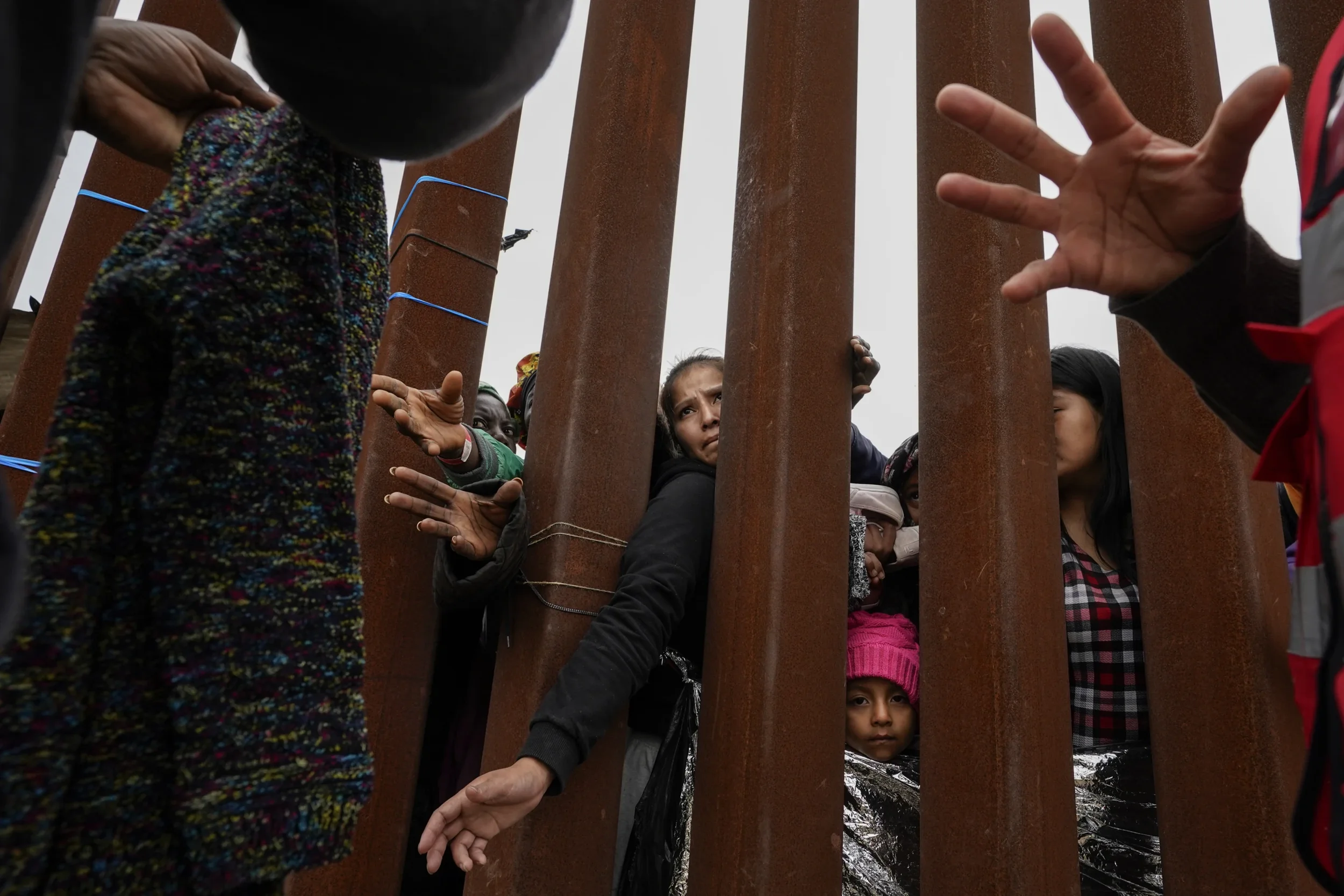
Migrants reach through a border wall for clothing handed out by volunteers as they wait between two border walls to apply for asylum Friday, May 12, 2023, in San Diego. (AP Photo/Gregory Bull)
Migration is not a crisis. It is who we are. Long before the creation of passports, border walls, or deportation, there were people walking: freely following rivers, crossing continents, and remaking the map with their footsteps. Roughly 70,000 years ago, small groups of Homo sapiens began leaving the African continent, following coastlines, rivers, and game across nameless and free landscapes; a world before nations and division. They did not bear legal status. They did not have visas. They moved because humans move, because movement is survival, curiosity, and the longing for something better — forces more powerful than any line drawn in the dirt. Across mountains with no names, toward horizons with no promise, simply forward. That line, the border as we know it today, is a remarkably recent invention. The modern passport system only became standardized after World War I, and the rigid nation-state framework that governs global movement today is less than 200 years old in any meaningful sense. For the overwhelming majority of human history, migration was not a crisis to be managed, it was simply life.
Yet today, governments across the world treat the movement of people as a crisis. The United States has militarized its southern border. The United Kingdom left the European Union, in no small part over anxiety about freedom of movement. Hungary has built a razor-wire fence and enshrined border protection in its constitution. Australia pioneered the offshore detention model, confining asylum seekers to remote Pacific islands for years at a time. The political message, across vastly different democracies and cultures, is strikingly uniform: people moving is a problem, and the solution is to stop them. Not only is this message historically illiterate, it is also economically self-defeating and, and its most fundamental level, a profound human rights failure.
The data on migration and economic impact is not particularly contested among economists, even if it is endlessly contested in politics. The World Bank’s Migration and Development Brief consistently finds that migrants contribute to GDP growth, fill critical labor shortages, and generate tax revenue in host counties. The IOM’s World Migration Report documents how remittances (money sent home by migrants) exceed foreign direct investment and official development aid combined in many lower-income countries functioning as one of the most direct and efficient poverty-reduction mechanisms in the world. In many cases, the countries most aggressively restringing migration today are the same countries facing aging populations, shrinking workforces, and strained pension systems. Germany has openly acknowledged it needs hundreds of thousands of skilled workers annually to sustain its economy. Japan, a country with some of the most restrictive immigration policies in the developed world, is confronting a demographic crisis so severe it is now actively recruiting foreign workers after decades of resistance. The statistics are not complicated to follow: there are fewer working-age people which means slower growth, higher debt, and fewer people paying into systems that fund healthcare, education, and retirement for everyone else. Closing borders does not make this equation disappear - it will only make it worse.
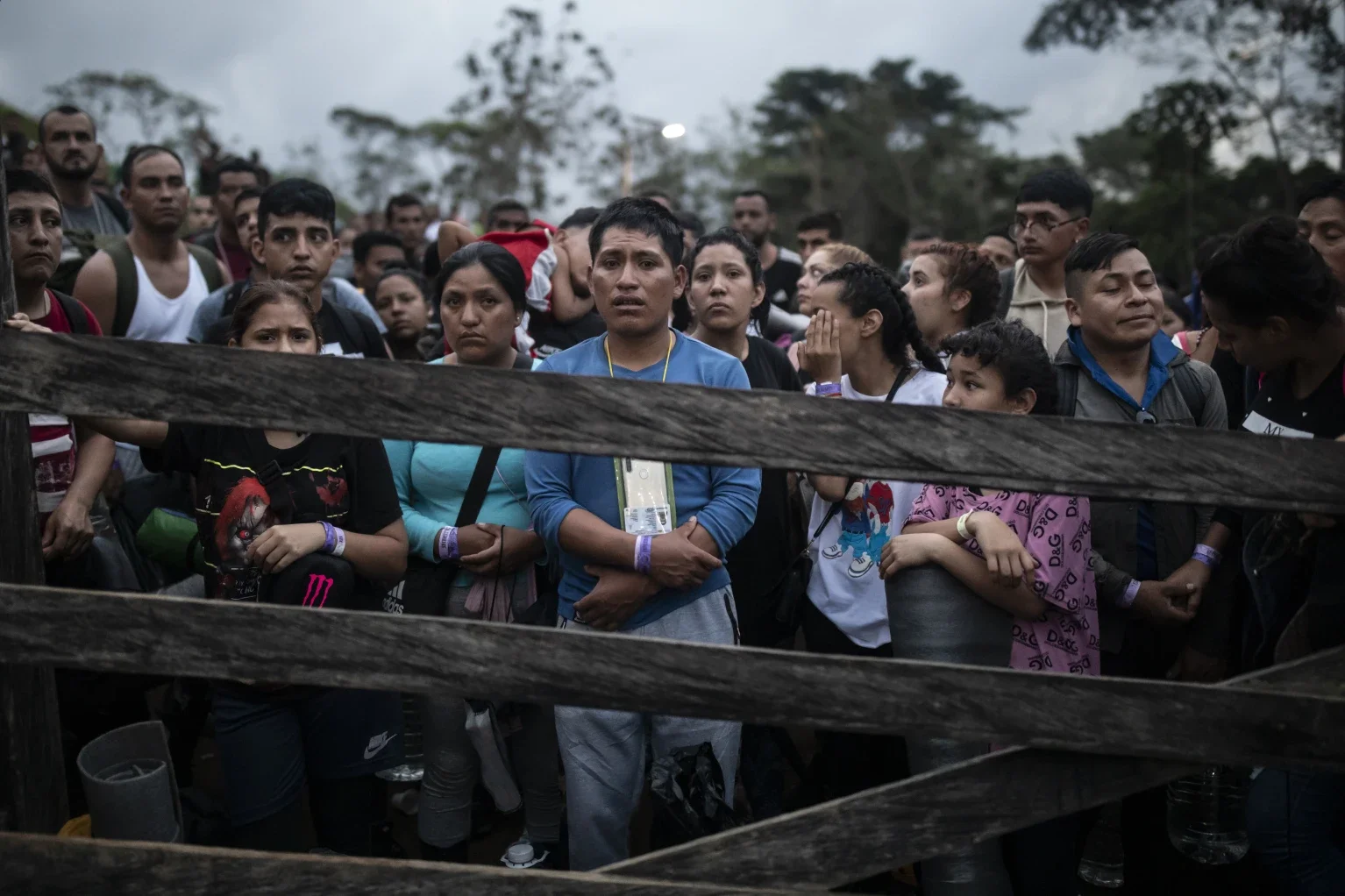
Migrants planning to start walking across the Darien Gap from Colombia to Panama in hopes of reaching the U.S. gather at the trailhead camp in Acandi, Colombia, Tuesday, May 9, 2023. The image was part of a series by Associated Press photographers Ivan Valencia, Eduardo Verdugo, Felix Marquez, Marco Ugarte Fernando Llano, Eric Gay, Gregory Bull and Christian Chavez that won the 2024 Pulitzer Prize for feature photography. (AP Photo/Ivan Valencia)
If the economic case for migration is so clear, why does the political case present the contrary? The answer lies less in migration itself, and more in what migration has become: the most convenient scapegoat for a generation of domestic policy failures. Across Europe and North America, the communities most hostile to immigration are generally not the ones with the highest immigrant populations. They are, more often, post-industrial towns and regions that have been economically hollowed out by deindustrialization, austerity, and decades of disinvestment. When people feel that their government has abandoned them, that public
services are stretched thin, that wages have stagnated and the future feels less certain than the past, the arrival of people who look or speak differently becomes an easy target to unleash that accumulated anger. This is not to dismiss legitimate debates about integration, resource allocation, or the pace of demographic change; those conversations are real and necessary. It is to say that the political backlash against migration is, in large part, a story about inequality - and that no amount of border enforcement will solve the underlying problem of governments that have stopped investing in their own citizens.
The most underreported dimension of the global migration debate is its profound selectivity. Wealthy nations routinely open their arms to skilled workers, foreign investors, and international students, operating points-based immigration systems designed to attract the educated and the affluent. The same countries that criminalize the desperate asylum seeker arriving by boat, actively recruit doctors, engineers, and nurses from the Global South - draining the very countries that can least afford to lose skilled professionals. The UNHCR’s Global Trends Report makes clear that the vast majority of the world's refugees and displaced people are hosted not by wealthy Western nations, but by low and middle income countries such as Turkey, Colombia, Uganda, Pakistan. These countries have a fraction of the resources of the wealthy Western nations, but shoulder the overwhelming majority of the burden. As it currently operates, the global system asks little from those who have the most. That is not a migration policy, it is a moral failure dressed up as one.
None of this means borders should not exist, or that states have no right to manage the movement of people, however, management is not the same as militarization and regulation is not the same as dehumanization.
Nowhere is that distinction more visible right now than in the United States. A Feburary 2026 legal analysis by the American Immigration Council documents how Immigration and Customs Enforcement and Customs and Border Protection have systematically operated beyond the boundaries of what federal law permits. Agents have conducted vehicle stops based on racial profiling and entered homes using administrative forms that lack judicial signatures. Most troublingly, they have redefined the legal standard for a warrantless arrest in ways that create a deliberate catch-22: noncitizens have the legal right to walk away from questioning — but exercising that right is now used as justification to arrest them on the spot. The office responsible for investigating use-of-force complaints was largely dismantled in March of 2025, leaving roughly 550 pending complaints abandoned, and officers who have killed people shielded from federal prosecution.
They call it immigration management; I call it the deliberate architecture of a system designed to maximize arrests while minimizing accountability. This, in a nation built by immigrants; one that has long depended on their labor, their taxes, and the cultural vitality they bring.
The first step toward a more honest global conversation about migration is acknowledging what the evidence has long shown: people move because they must, or because they can build a better life. That impulse is not a threat to civilization: it is the very thing that built it. What threatens civilization is not the movement of people. It is the deliberate choice to treat that movement, and the people caught up in it, as something less than human.
Migration is not the crisis. Pretending we can stop it is.