
Opinion & Editorials

Op-Ed: Beyond Just “Not Trump”: Democrats Need More Than a Majority to Reshape Foreign Policy
The Democrats' midterm majority gives them a meaningful voice in Congress, though the executive branch continues to hold influential control over US foreign policy; the Democrats have yet to fully settle what they hope to do with the new majority's influence. Centrists who emphasize strategic competition and alliances, and progressives who emphasize global cooperation and restraint share many goals but often differ in worldviews. Questions over Iran, Ukraine, aid to Israel, and military spending are likely to enunciate these differences as early as January. Looking ahead to a possible Democratic presidency in 2029, Democrats have good reason to use their new power in Congress to build a consensus on foreign policy now. As divisions within the Carter administration showed in 1977, those debates become harder to resolve once a president must act on them, and as Carter struggled with the Soviet Union, the worst-case scenario for Democrats is to let down the American public in even higher-stakes situations in the Middle East, Taiwan, and Ukraine.
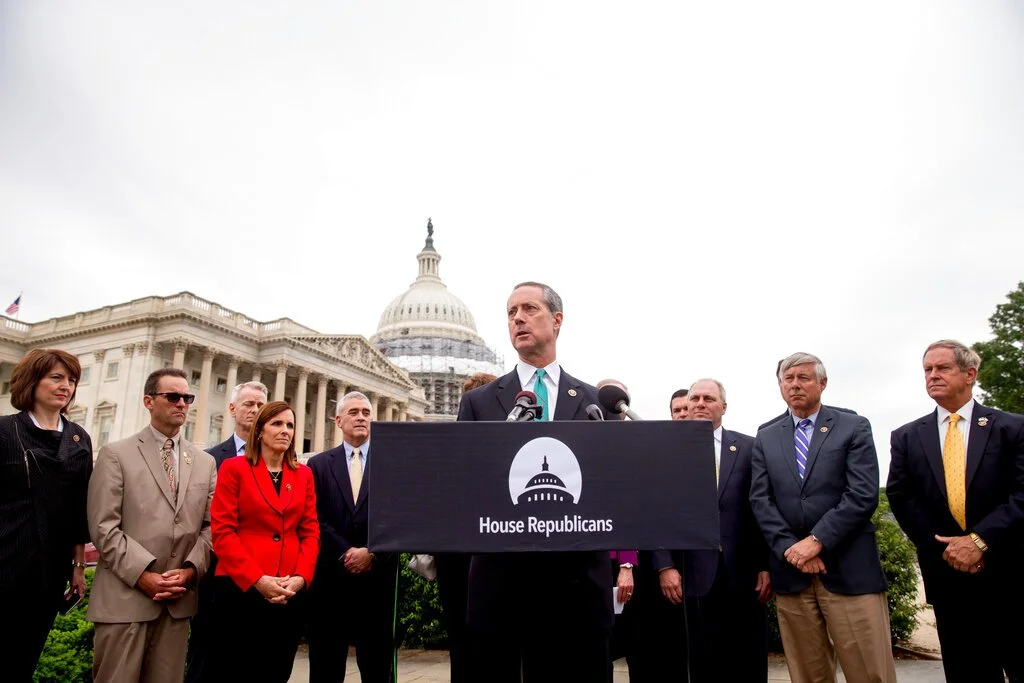
Op-Ed: Division at Home, Defense Abroad, Can the Pentagon Prepare for Tomorrow’s Crisis on Last Year’s Budget: NYU’s Wesley McGovern on the Cost of Congressional Gridlock and Continuing Resolutions
The blue wave in this month’s midterms means the White House will face a Democratic Congress starting in January. With Democrats set to run the Hill, heightened tensions with the White House could complicate negotiations over the National Defense Authorization Act (NDAA) and the funding an already struggling Defense Department needs. In an interview with IR Insider, NYU’s own Wesley McGovern draws on his inside look from his summer on the Hill to explain how political dysfunction at home puts U.S. foreign policy at risk.

Op-Ed: Not Quite Thawed: Future US-China Joint AI Ventures Remain Frozen After Trump–Xi Summit, Echoing Cold War Hegemonic Friction
The Trump-Xi summit eased trade tensions and opened the door to AI dialogue, but competition for technological leadership complicates prospects for binding AI limits. Cold War arms control offers a precedent: both powers may resist compromise as long as each expects to gain more by continuing the race, reviving the classic dilemma of a failed bargaining model.