
Op-ed: The Fed’s Last Mile Is Becoming a Test of U.S. Economic Power
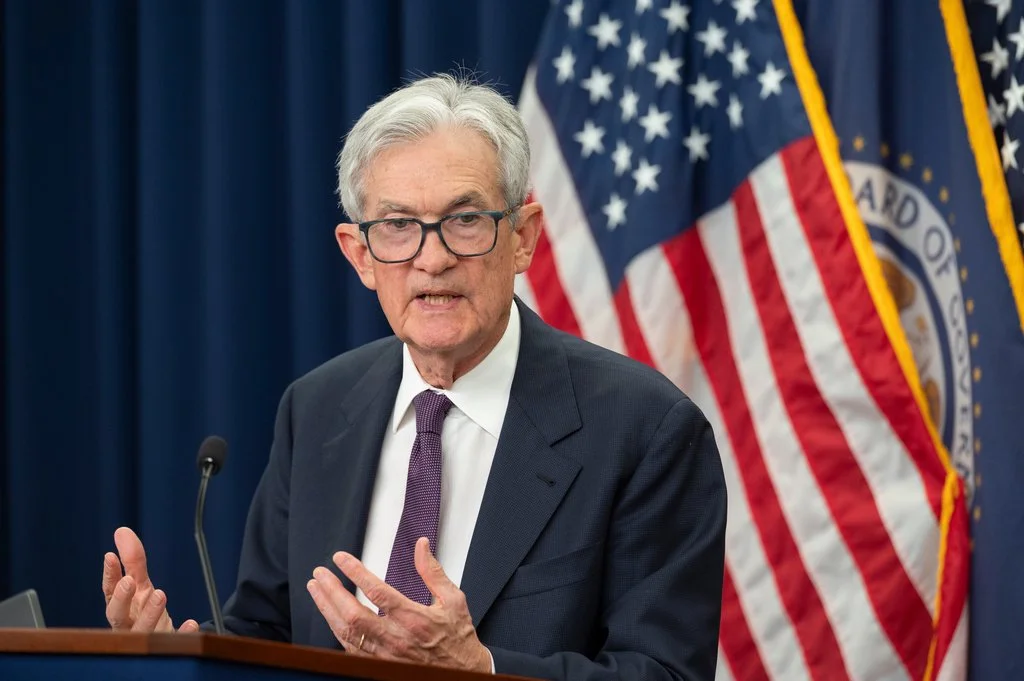
Federal Reserve Chairman Jerome Powell speaks at a news conference at the Federal Reserve, following the Federal Open Market Committee meeting, in Washington, Wednesday, April 29, 2026. (AP Photo/Cliff Owen)
The United States entered the post-pandemic recovery with two goals that quickly came into tension: restoring price stability and preserving economic strength. But surging inflation forced the Federal Reserve to raise interest rates before a broad-based recovery had fully taken hold. In theory, monetary tightening works best after growth becomes durable. In practice, the Fed had little choice but to pivot aggressively while households, firms, and supply chains were still adjusting. This rare dilemma explains why the debate over today’s inflation remains so difficult. The Fed slowed price growth, but the economy never experienced a clean recovery before policy turned restrictive.
That unresolved tension defines today’s policy environment. Inflation has fallen from its peak, but remaining pressure is concentrated in services, housing, and energy. Goods prices stabilized through 2024 as supply chains normalized, yet labor-intensive sectors continue to show resilience. At the same time, the Iran conflict has pushed oil prices higher, feeding directly into inflation expectations. The result is a slower, generally uneven decline in inflation than policymakers had hoped. This is the Fed’s “last mile” problem. Inflation is no longer accelerating, but it is not disappearing either. Policymakers are therefore constrained; they must decide whether to maintain restrictive policy or begin easing in an environment that remains fragile.
In a purely economic framework, the answer would be straightforward. The Fed would hold rates until inflation fully returns to its 2% target. But the current situation cannot be understood in purely economic terms. As inflation moves closer to target, policymakers remain divided over whether lingering pressures justify delaying rate cuts. The debate is now shaped by political pressure, market reactions, and global consequences. This raises a broader question: how can the United States control inflation without weakening growth, markets, or its global financial influence?
Monetary policy is increasingly shaped by political pressure. Recent tensions between the White House and the Fed highlight competing priorities. During the second term, President Trump has pushed for lower interest rates to support growth, investment, domestic industry, and market confidence. His argument reflects both economic logic and political urgency. High borrowing costs affect voters directly through mortgages and business financing. Lower rates could provide visible relief and improve economic sentiment ahead of elections. The Federal Reserve, however, operates under a different logic. Chair Jerome Powell has emphasized that inflation control remains incomplete. Cutting rates too early risks reversing progress, particularly with energy prices still volatile. For the Fed, credibility matters as much as growth. Once inflation expectations rise again, restoring control becomes far more costly.
This tension is not new, but it has become more visible. It reflects a structural conflict between political incentives and monetary discipline. The administration seeks faster economic relief and stronger short-term performance, while the Fed prioritizes long-term stability and policy credibility. These goals overlap in principle but diverge in timing.
Financial markets have already begun to reflect this divide. Over the past year, U.S. equity markets have shown repeated swings driven less by earnings and more by expectations about Fed policy. The S&P 500 and Nasdaq, for example, have rallied when investors anticipate rate cuts, only to pull back when inflation data or energy prices suggest delays. In other words, when investors anticipate easing, markets rally. When inflation risks reappear, yields rise, and conditions tighten. The result is a cycle driven by uncertainty about policy direction.

A driver makes their way past a billboard by the entrance at Fuel City filling station that reflects the current gasoline prices Friday, April 17, 2026, in Dallas. (AP Photo/Tony Gutierrez)
TheU.S. dollar provides an even clearer signal. Higher interest rates continue to attract global capital into dollar-denominated assets, strengthening the currency and reinforcing the United States' role as the world’s financial center. Emerging markets face tighter financial conditions as capital flows toward the U.S., increasing debt-servicing costs and exchange rate volatility. Oppositely, a shift toward lower rates would weaken the dollar and redistribute capital flows. In this sense, the Fed’s policy effectively becomes global policy. Decisions made in Washington shape financial conditions far beyond U.S. borders. Prolonged high rates strengthen the United States’ position in global capital markets, but they also increase pressure on weaker economies. This dynamic reinforces the dollar’s central role while raising questions aboutlong-term stability.
Energy markets further complicate the picture. Conflict with Iran has introduced sustained upwardpressure on oil prices. Unlike goods inflation, energy shocks are external and difficult for monetary policy to control. They generate inflation without corresponding domestic demand strength. For the Fed, this creates a dilemma. Cutting rates risks amplifying energy-driven inflation, while. maintaining high rates could further burden households and slow an already fragile economy. This is where foreign policy begins to shape monetary policy outcomes. The administration faces pressure not only to manage the domestic economy but also to respond to rising energy costs and geopolitical uncertainty. Prolonged conflict risks keeping energy prices elevated, which would delay rate cuts. De-escalating, by contrast, could ease oil prices and create room for monetary easing. Thecost of prolonged conflict is therefore not only geopolitical but economic.
This trade-off suggests a likely direction. The administration has strong incentives to avoid a prolonged energy shock. Rising gasoline prices affect voters directly and quickly, market instability undermines economic confidence, and domestic conditions become more fragile even as global capital flows remain strong. In this context, the economic cost of continued conflict may outweigh the strategic benefits. A near-term de-escalation emerges not because the administration’s military objectives have been achieved, but because economic constraints limit the sustainability of the conflict.
If that scenario holds, it reshapes expectations for the Fed. Stabilization in oil prices would remove one of the key obstacles to rate cuts. Combined with gradual easing in services inflation, it would allow the Fed to begin lowering rates cautiously in the coming months. The shift would likely be gradual, not aggressive, since there are continued concerns about inflation persistence. But the direction would change. The current conflict between the administration and the Fed may not end in direct confrontation but in convergence. Even if the Fed does not explicitly respond to those political pressures, market conditions and geopolitical developments may collectively create the conditions for policy easing. Even more, apotential shift in Fed leadership could accelerate that convergence, particularly if a new chair proves more aligned with the administration’s growth priorities.
In short, the final stage of inflation control requires more than technical adjustment. The Fed still has tools, data, and experience. What it faces now is a more complex environment where economic, political, and global factors intersect. That is what makes the “last mile” so consequential. It is no longer just a test of whether the Fed can reach 2% inflation, but whether the United States can manage price stability, domestic pressure, and global leadership at the same time. The Fed may set interest rates, but the forces deciding thenext phase of U.S. economic power are already moving beyond the Fed itself.