
Op-ed: Trump Fires All Governing Members of the US National Science Foundation Amidst Major Cuts to Research
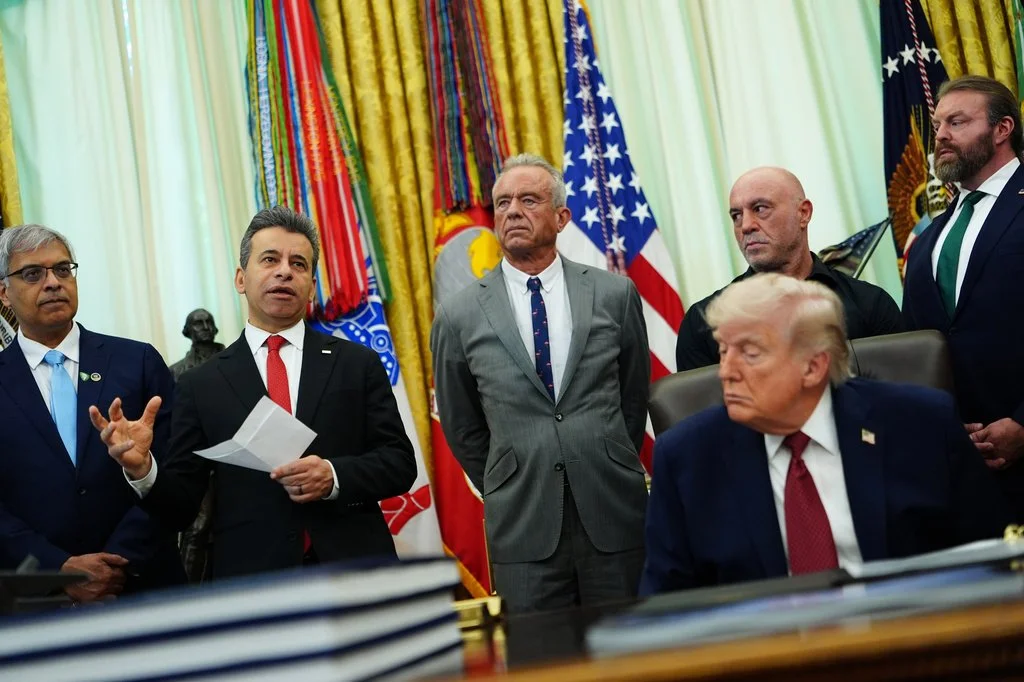
Dr. Marty Makary, commissioner of the Food and Drug Administration, speaks while, from left, National Institutes of Health Director Dr. Jay Bhattacharya, Health and Human Services Secretary Robert F. Kennedy Jr., Joe Rogan, President Donald Trump, Joe Rogan and CEO of Americans for Ibogaine W. Bryan Hubbard listen in the Oval Office of the White House, Saturday, April 18, 2026, in Washington. (AP Photo/Julia Demaree Nikhinson)
On April 24, 2026, the Trump administration’s efforts to undermine the independence of the US National Science Foundation (NSF) intensified as all 22 current governing members were fired through an email from the Presidential Personnel Office. These members had resided on the National Science Board, which oversees the NSF and its funds, as well as advises the President and Congress on scientific matters. The board is specifically tasked with promoting national policies involving research and education in science and engineering, as established by the National Science Foundation Act of 1950. Over the years, the NSF and its board members have effectively worked to shape US national research and scientific policy, playing an integral role in advancing health and securing national defense.
This attack on the NSF is one of many during Trump’s second term in office, as his administration has refused to appoint a new director, leaving this position vacant for over a year. Further, throughout the past year, the Trump administration has pushed infrastructure projects onto the NSF without their consultation or approval, as well as requested a budget cut of more than 50% for fiscal year 2027. Additionally, the Trump administration had already appointed MAGA loyalists within the NSF, such as chief management officer Micah Cheatham. Dismissed board member Keivan Stassun says that Cheatham and other officials appointed by the Trump administration repeatedly went against board governance directives, effectively stating, “We don’t listen to you anymore.”
This move has left many scientists and scholars worried about the future of scientific policy and research in the US, especially as this attack on science and federal agencies’ independence has been reflected far throughout the federal government. The Trump administration’s budget proposal for fiscal year 2027 also includes a 50% cut to the Environmental Protection Agency and a 13% cut to the National Institute of Health (NIH), two federal agencies that play an important role in promoting scientific research and protecting the health and environment for everyday Americans. This proposal also includes a 23% cut to NASA and eliminates funding for the National Oceanic and Atmospheric Administration’s research office. Further, the budget proposal specifically cuts all support for the NSF’s division that oversees research on social sciences and economics, as well as three of NIH’s centers: the National Institute on Minority Health and Health Disparities, the Fogarty International Center, and the National Center for Complementary and Integrative Health.
Trump’s attacks on science have only worsened with his appointment of vaccine-skeptics and conspiracy theorists, such as Robert F Kennedy (RFK) Jr., as the Secretary of Health and Human Services (HHS) and Jayanta Bhattacharya as director of the NIH and previous acting director of the Center for Disease Control (CDC). Recently, on April 22, 2026, the CDC prevented the publication of a study that found COVID-19 vaccines were effective in keeping adults from becoming sick enough to require a hospital visit. This came after an original delay in the study’s publication in the CDC’s Morbidity and Mortality Weekly Report (MMWR), just weeks before, by Bhattacharya. An HHS spokesman attributed this to disputes about the study’s methodology. Reputable journals, like the New England Journal of Medicine and Pediatrics, have published similar papers utilizing the same methodology in calculating the odds of a positive COVID-19 test in vaccinated and unvaccinated individuals.
Bhattacharya had been a fierce critic of the CDC’s policies during the COVID-19 pandemic and similarly questions the validity of the MMWR, which has been utilized for 65 years to convey urgent public health data. While his temporary term as acting director of the CDC has expired, he still retains delegable authorities within the agency. Bhattacharya had previously criticized the MMWR, stating that it wasn’t properly peer reviewed and that they would work to change that. Many scientists worried that the Trump administration would politicize the MMWR and destroy its credibility, as its publication was temporarily suspended last year. While it has resumed since, the publications have been much shorter, drawing much backlash from the scientific community. Further, former CDC officials defended the MMWR, pointing out the intensive internal review of up to 50 people across the CDC for each publication and that they have consistently met quality standards set by the NIH. Additionally, former CDC center official Michael Iademarco explains that the very purpose of not soliciting external review is so that the MMWR can provide a reputable national health bulletin in a timely manner to keep the public up to date.
The Trump administration's efforts to undermine science have only continued, as RFK Jr. has made vast changes to vaccine and health recommendations during his tenure as HHS Secretary. The HHS Secretary has made many changes in vaccine recommendations, especially in children, ending the longstanding recommendation for hepatitis B vaccines for newborns. He similarly decreased the number of vaccines recommended for children, cutting flu, rotavirus, hepatitis, and meningitis shots from the vaccine schedule. Additionally, RFK Jr. has announced new dietary guidelines, with dairy and red meat products at the top of the food pyramid. However, these recommendations are in opposition to those of the American Heart Association and the Academy of Nutrition and Dietetics, which discourage the consumption of foods like these, with excess saturated fats, as they are linked to heart disease.
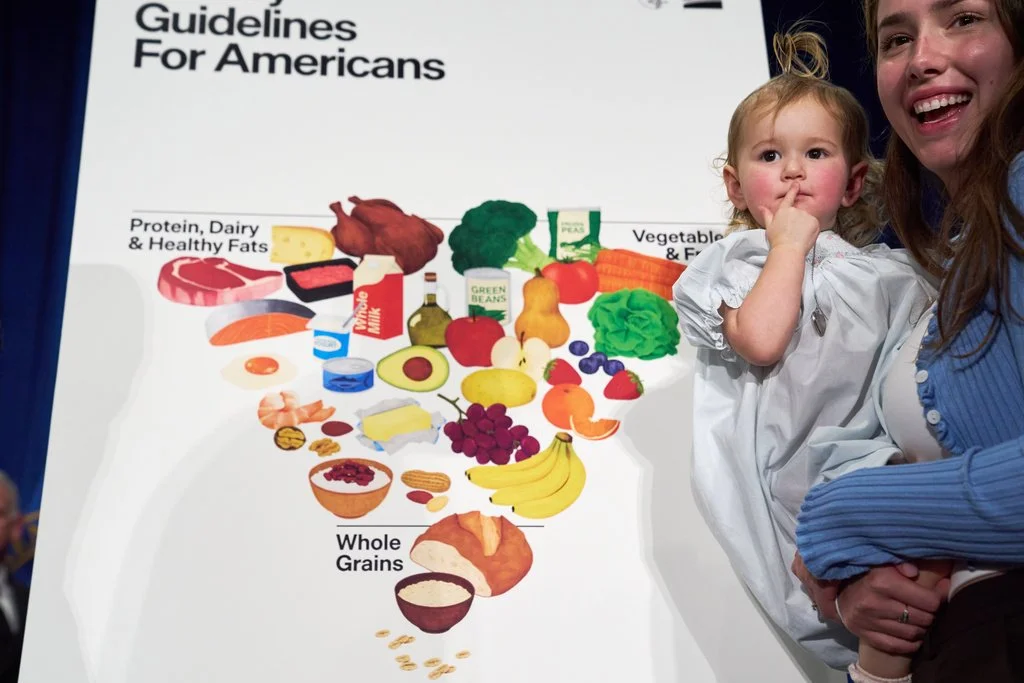
Elle, 18 months, and her mother Claire Dooley stands by the revised food pyramid, after an announcement by Health and Human Services Secretary Robert F. Kennedy Jr., about nutrition policy, at Health and Human Services Headquarters, Thursday, Jan. 8, 2026, in Washington. (AP Photo/Jacquelyn Martin)
These moves by the Trump administration directly undermine research and risk the reputability of these scientific organizations that people, as well as medical organizations, rely on for accurate health information. This risks impeding the development of novel life saving treatments and practices that serve to prevent the spread of disease within the US and around the world, like the COVID-19 pandemic. In addition, this puts many consumers at risk, as they receive varying recommendations from these agencies that are often not proven by science, making it difficult for them to make informed decisions about their health.
However, science and health are not the only industries that have been targeted by the Trump administration, as they have replaced numerous expert officials with political loyalists. On January 24, 2025, Trump fired 17 independent inspector generals at government agencies such as the Department of Agriculture, the Department of Defense, the Department of Homeland Security, and many more. These inspector generals were established by the Inspector General Act of 1978 to serve as nonpartisan public servants, conducting independent audits and investigations of their agency to ensure the efficient and proper use of funds and operations. Other agencies’ independence has been attacked, such as the Department of Justice, with the firing of numerous attorneys and its weaponization to charge enemies of the president, like Letitia James and James Comey. Additionally, Trump has targeted the Federal Reserve, an independent organization responsible for monetary policy, pushing for interest rate cuts and initiating a criminal investigation of Federal Reserve Chair Jerome Powell.
Ultimately, the Trump administration's moves have put the effectiveness of integral agencies and establishments that have come to provide reputable information and safeguard many aspects of the lives of everyday Americans at risk. With these agencies coming under attack and Trump diminishing their independence, executive federal powers within the US become centralized. This centralization of power puts decisions directly into the hands of a select political few, rather than independent experts within a specific policy area. As this continues, policy and decision-making within the federal government risk losing their basis in research and empirical data, leading to potentially detrimental impacts on US citizens and others around the world.