

A person walks in front of a window on the campus of Apple's headquarters in Cupertino, Calif., Monday, June 6, 2022, before the keynote presentation of Apple's World Wide Developer Conference. (AP Photo/Noah Berger)
Silicon Valley’s frontloading trap represents a combination of geopolitical friction and financial overreach. The new WTO data points out that global trade growth is set to drop sharply, to 1.9% this year. The tech industry put the global economy at risk through stockpiling in late 2025, on top of a physical supply chain blocked by the Middle Eastern conflict and a domestic credibility crisis fueled by overinflated AI revenue projections. By prioritizing short-term tariff avoidance over long-term market stability, Silicon Valley has set the stage for a potential deep global recession, parallel to the 2000 dot-com collapse.
At the end of 2025, the technology sector engaged in what appeared to be massive amounts of preemptive action in fear of the new waves of tariffs. Tech firms executed a multi-billion-dollar buying spree, stockpiling enough AI semiconductors and data center hardware to protect themselves from the incoming tax increases. As of March 2026, this strategy has seemingly turned into a frontloading trap, where businesses rush to buy goods to protect themselves from future problems, only to cause a massive crash in demand. By pulling future demand into the present to save on margins, Silicon Valley has inadvertently triggered a post-peak slump that is now risking dragging the global economy toward a synchronized recession.
The data from the World Trade Organization’s March 19 report is a wake-up call to the frontloading trap speculation. Overall, worldwide merchandise trade expansion is projected to plunge from 4.6% in 2025 to 1.9% this year. This collapse is not a failure of innovation, as AI is one of the fastest-evolving technologies in human history, with AI trade surging to 21.9% last year, accounting for nearly half of all global growth. Thus, the crash is seemingly a timing problem, as warehouses were filled in 2025 to protect themselves from future speculation without having adequate current demand. These companies are now sitting on massive stocks of inventory and thus not placing new orders, causing a demand void and global trade growth to drop significantly. Essentially, we are witnessing a market correction where the artificial high of 2025 has left 2026 with an economic hangover, which is now on top of everything, also meeting a physical barrier in the Middle East.
The inventory crisis is being exacerbated by the escalating conflict in the Middle East. The effective closure of the Strait of Hormuz since February 28 has brought a near-total collapse of 94.2% of commercial traffic, with transit numbers plummeting from 120 per day to near just 6.9. For a tech sector that is dependent on timely manufacturing, this is a fatal problem. Shipping a single container has surged by as much as $3,000, while war risk insurance is being withdrawn entirely for cargo moving through the Gulf. This forced localism, where the sheer cost of transporting hardware is forcing AI companies to become increasingly localized, is pushing companies to sacrifice the efficiency and low cost of global sourcing for the safety net of having a local factory. But going local is an expensive pivot that most AI startups cannot afford, putting many infant companies at risk.
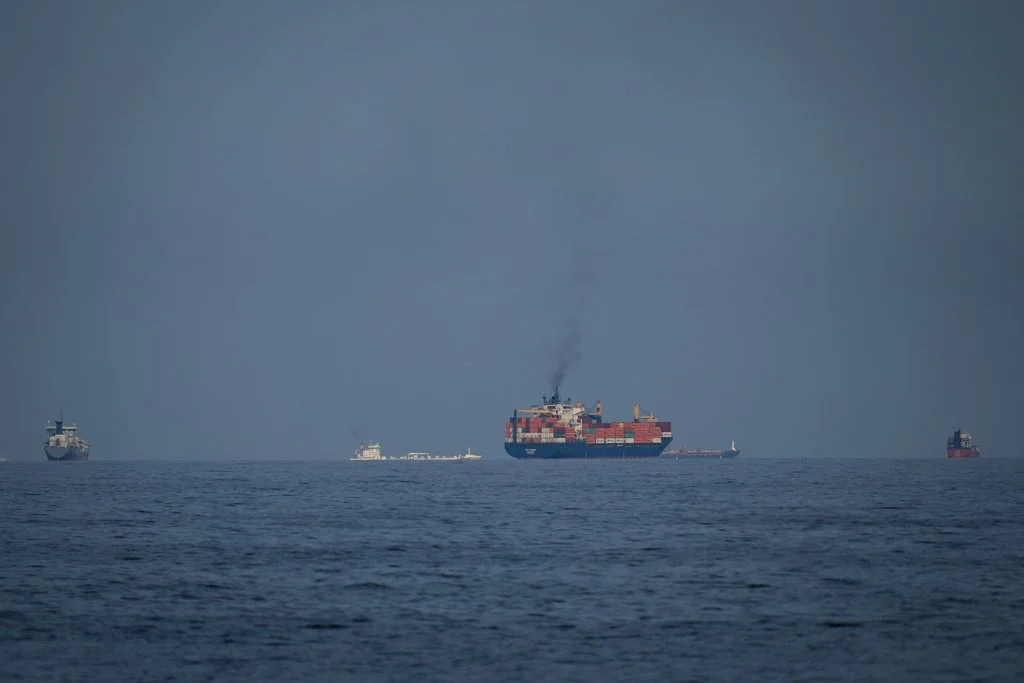
Oil tankers and cargo ships line up in the Strait of Hormuz as seen from Khor Fakkan, United Arab Emirates, Wednesday, March 11, 2026. (AP Photo/Altaf Qadri)
While the physical logistics of the AI industry are being put in danger by geography and high global tensions, the financial foundations of the industry are proving equally unstable and dangerous. It is now not only a question of whether companies can get the hardware but also whether they can actually turn a profit once it arrives. Beyond the physical supply chain, the tech industry is facing a crisis of credibility. There is growing evidence that many AI startups have significantly overestimated their near-term revenue potential to maintain the image required for high-valuation funding rounds. While 90% of CEOs believe AI agents will deliver returns this year, currently only 20% of organizations have actually seen a measurable revenue increase from AI. This spending-to-revenue gap has reached a breaking point, with Big Tech capex projected to hit $700 billion in 2026 while the actual measurable value of these technologies is still seemingly in the trial period.
For Venture Capitalists, this could be reminiscent of the dot-com bubble of 2000, where the stock market peaked due to massive amounts of funding given to internet-based companies despite them lacking viable business models, leading to a massive subsequent crash. Much like the late-90s boom, which was built on ideas rather than sustainable business models, the 2026 AI crash is exposing companies that slapped AI on their products without a viable path to profitability. If a crash does occur, VCs will likely retreat to quality business models with real cash flow, possibly leaving many startups without funding.
The frontloading trap has seemingly worsened the already brittle physical supply chain and inflated financial valuation crisis in the tech industry. As the WTO’s growth projections continue to tumble and Middle Eastern tensions rise, with the Strait of Hormuz still closed, the tech sector’s isolation is no longer a strategic choice.
If the industry is to avoid a total repeat of the 2000 dot-com collapse, the focus must shift away from inflating revenue mirages to building sustainable, local resilience. In this era of high geopolitical tensions, the winners may not be the companies with the most stockpiled chips or the highest valuations, but those that are first to turn AI from a multi-billion-dollar test run into a functional, profitable reality on par with the massive amounts of resources being poured into it. Until then, the global economy, reliant on the tech industry, remains at risk.