
Op-Ed: Iranian Intellectual Property in the US Tech Industry Might be the Next National Security Panic
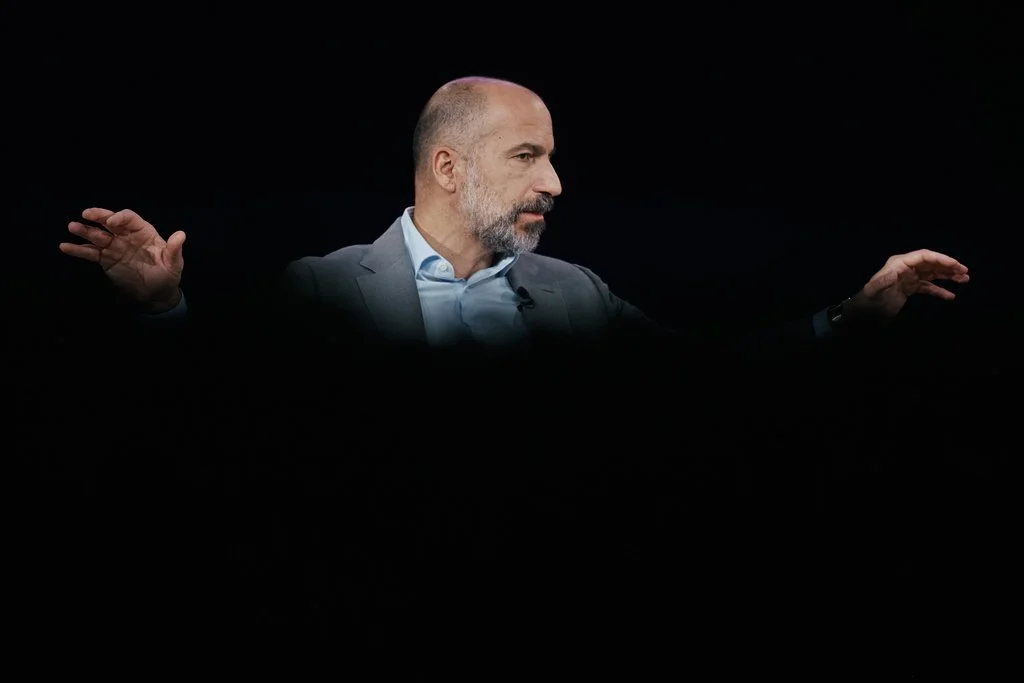
CEO of Uber, Dara Khosrowshahi speaks during the Concordia Annual Summit in New York, Tuesday, Sept. 23, 2025. (AP Photo/Andres Kudacki)
Uber CEO, Dara Khosrowshahi, announces the company’s plans for numerous app improvements in a software update rollout on September 26, 2019. (Lea Suzuki/San Francisco Chronicle via AP)
Before Oracle and a group of US investors purchased the majority equity of TikTok in January 2026 as a mission to reclaim American security, US intelligence brought forth accusations suspecting the app’s Chinese parent company, ByteDance, of harvesting American user data and exporting it to its home country’s government. The possibility of a crossover between American app users and Chinese spies facilitating illicit data transfers prompted Congress to question Singaporean TikTok CEO Shou Zi Chew on his and the app’s ties to China.
Although the CIA never uncovered evidence of TikTok operations employees cooperating with Chinese intel to turn over user information, rumors that Chew and his company were acting as moles led to several empty threats of a nationwide TikTok ban, only once fulfilled and reversed in less than 24 hours.
TikTok proves a prosperous tool for the American economy, producing $14.7 billion in revenue for small and medium-sized businesses and $24.2 billion in the US’s GDP in 2023 by platforming users with non-entrepreneurial backgrounds to gain outreach and facilitate personalized online markets. Therefore, securing the app under domestic supervision was crucial to quell any suspicions of foreign surveillance of American cyber activity.
This move reflected the federal government’s response to 9/11 by reinforcing cyber protection, which escalated airport security checkpoints and increased government surveillance of civilian technology after the terrorist attack left Americans scared that ISIS had embedded itself in sensitive American affairs.
Nevertheless, the data scare may rise again, this time shifting targets to Iranian-Americans due to tensions in the Middle East re-intensifying and positioning their home country’s civilian population as a direct target of bombs.
Iranians were divided in reaction when the US and Israel bombed Supreme Leader Ayatollah Ali Khamenei on Feb. 28, with some celebrating the head of a repressive regime dying, while others grieved his leadership, particularly his persistence in cutting foreign policy ties with Israel and anti-Westernism.
Secretary of War Pete Hegseth delivered a press conference report on March 5 stating that a United States submarine torpedoed an Iranian naval ship, sinking its facilities in the Indian Ocean, “the first sinking of an enemy ship by a torpedo since World War II.” By setting the tone for orchestrating a heavy offensive onslaught, the US Army employed a war mechanism last used in a war that produced an estimated total of 60 - 75 million casualties.
Additionally, repeated targets of Iran's leadership have heightened tensions in the war, with the US and Britain staging a coup to oust Prime Minister Mohammad Mosaddegh in 1953 and killing Major General of the Islamic Revolutionary Guard Corps Qasem Soleimani in 2020 by a drone strike, sparking outrage that American exceptionalism has allowed their foreign policy projects of targeting heads of state to escape accountability in international courts.
Coordinated attacks on extremists with the promise to weaken regime influence and its nuclear confidence, offset by increased noncombatant injuries, lend credence to suspected indiscriminate bombing and ulterior motives to destroy the population, an accusation the international arena has flung at the Israeli government since Oct. 7.
With both the US and Israel bombing Iran, specifically a school that resulted in more than 175 deaths, mainly consisting of primary schoolgirls, the punishment of civilian institutions could ripple a loyalty shift among Iranians who don’t want their technological patents and contributions to the machinery they help develop to be used to kill civilians, where the target is children in attendance to learn.
Historically, Iran and Israel maintained close diplomatic ties, formed by Iran recognizing Israel’s statehood and Israel supplying Iran’s secret police, SAVAK, with arms, and the Islamic Republic to defend against Iraqi invaders in the Iran-Iraq War.
However, the US replaced Iran as a key ally in weapons and intelligence dealings after former Islamic Republic leader Ruhollah Khomeini deemed cooperation with Israel antithetical to the regime’s foundational values.
After the 1979 Revolution, the country began heavily investing in STEM education, positing the comprehensive curriculum, as its innovative nature can expedite primitive labor processes and reconstruct bomb-ridden areas where infrastructure has remained decimated due to previous nuclear offenses.
The Iranian government funds scientific and technological research in the biology and nanotechnology fields, ranking fifth among countries with the most STEM graduates in 2016, and in 2024, it instituted the Organization for the Development of International Scientific and Technological Cooperation as a diplomatic effort to connect Iranian scientists with global scientists to boost and refine research.
Funding also extends to missile programs and creating and growing a population of nuclear scientists, with the emphasized aim to conduct measured responses to dissuade enemies from engaging in nuclear war, or else aggressors can expect retaliation.
While Iran fosters a progressively educated population, it can’t hog all the glory, as the regime’s tendency to suppress human rights caused Iranians to seek American citizenship for an overall better quality of life.
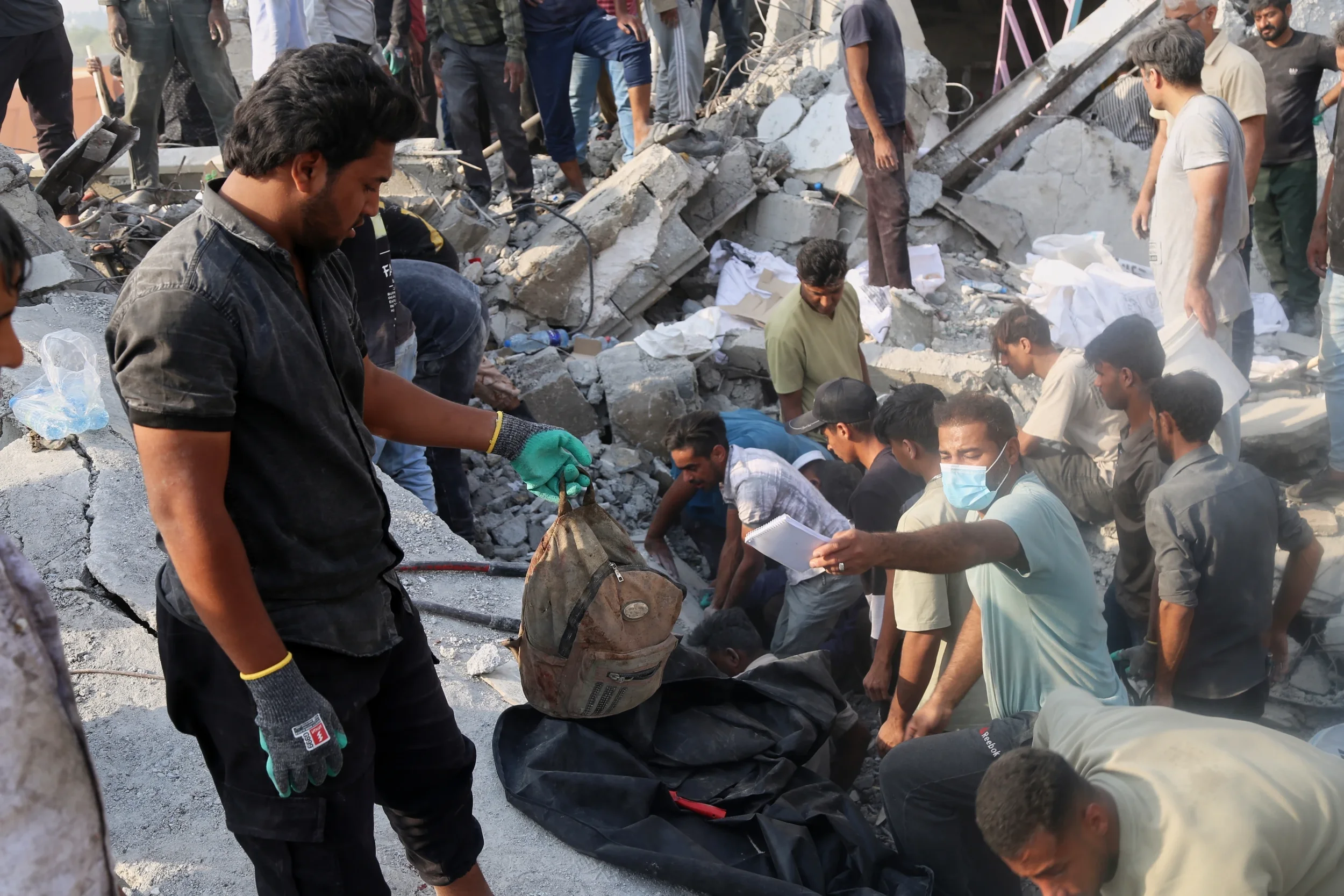
A man holds a children’s backpack as rescue workers and residents search through the rubble in the aftermath of a strike on a girls’ elementary school in Minab, Iran, Saturday, Feb. 28, 2026. (Abbas Zakeri/Mehr News Agency via AP)
A significant number of Iranians are fleeing refugee camps and the harsh legal system of the Islamic Republic of Iran in pursuit of a more successful employment market and increased exposure to fundamental freedoms. The Islamic regime, protested by Muslims and non-Muslims alike on the un-Islamic basis of forced religious conscription, has religiously persecuted non-hijabi women and caused unemployment for the working class. The sociopolitical repression and less prosperous career market of the regime have stirred a refugee crisis, with most escaping to Canada, Turkey, and the US.
As a result, Iranian-Americans have had a growing and persistent presence in Silicon Valley, the nation's venture capital hotbed, with approximately 50,000 living in the region and gaining the title of the “Persian Mafia." Their impact is central to America's greatest export, technology, as a growing legacy of Iranian-American entrepreneurs and innovators, such as eBay founder Pierre Omidyar, who created an accessible marketplace for regular citizens to monetize their assets and sell them at preferential prices, and Dropbox co-founder Arash Ferdowsi, who centralized data storage that could be synced across and accessed from all personal devices.
But Americans might respond by boycotting Iranian-American-led tech companies for fear that their information could be exploited and sold to the regime for surveillance and blackmail advantages. Consider Uber CEO Dara Khosrowshahi. Because of Uber’s location-reliance in connecting drivers to riders to reach destinations, this may heighten customer paranoia in imagining that their whereabouts may be sold.
Conspiracies of this sort escalate, such as people imagining Iranian intel using Uber’s tracking services to target top US officials and organize an ambush, echoing the assassination of Archduke Franz Ferdinand, as the Duke’s motorcade was stalked and targeted by the Black Hand, who carried out the hit and ignited World War I.
Wartime hysteria can escalate to incredible predictions where rumors might change the sentiment around Iranian-Americans by marking an entire identity as an innate national threat in the process.
With Iranian-Americans concentrating substantial influence in America’s tech spheres and having access to critical internet-capable information, their identity implicitly calls into question where their loyalty lies. By their heritage, there is a cultural expectation to assess their American patriotism during war.