

Canadian Prime Minister Mark Carney, centre, arrives at the Canada-EU Summit with President of the European Council, Antonio Costa, left, and President of the European Commission, Ursula von der Leyen, in Montreal, Friday, Oct. 30, 2026. (AP Photo/The Canadian Press/Christopher Katsarov)
In Washington, a different kind of bet is paying off. American defense startups aren’t just raising record sums. They’re winning contracts that turn prototypes into production lines. The difference between the two capitals comes down to one thing. The United States doesn’t just fund defense companies; it buys from them. Until Ottawa learns to do the same, Canada’s growing defense budget will continue building other countries’ industries instead of its own.
The numbers are hard to argue with. Defense tech startups raised $14.6 billion in the first five months of 2026, already more than the full-year record $9.6 billion set in 2025. American companies have captured most of that money.
What stands out is who is writing the checks. Established defense contractors have joined a record $4.1 billion in startup funding rounds this year, and Lockheed Martin expanded its venture fund from $400 million to $1 billion. Companies that could have treated these startups as future threats are backing them instead. That says something about the health of America’s defense industrial base. The titans of the defense sector and the newcomers are increasingly building together.
Investors can live with risk, but not uncertainty, and they put money into American defense startups because a customer at the end of the line consistently signs contracts.
No company shows this better than Anduril. Founded in 2017, it landed its first contract, a $12.5 million deal with the Marine Corps, about a year later. By Pentagon standards, that was a small bet, but it gave such a young company something investors value more than any pitch deck. It proved the government would buy.
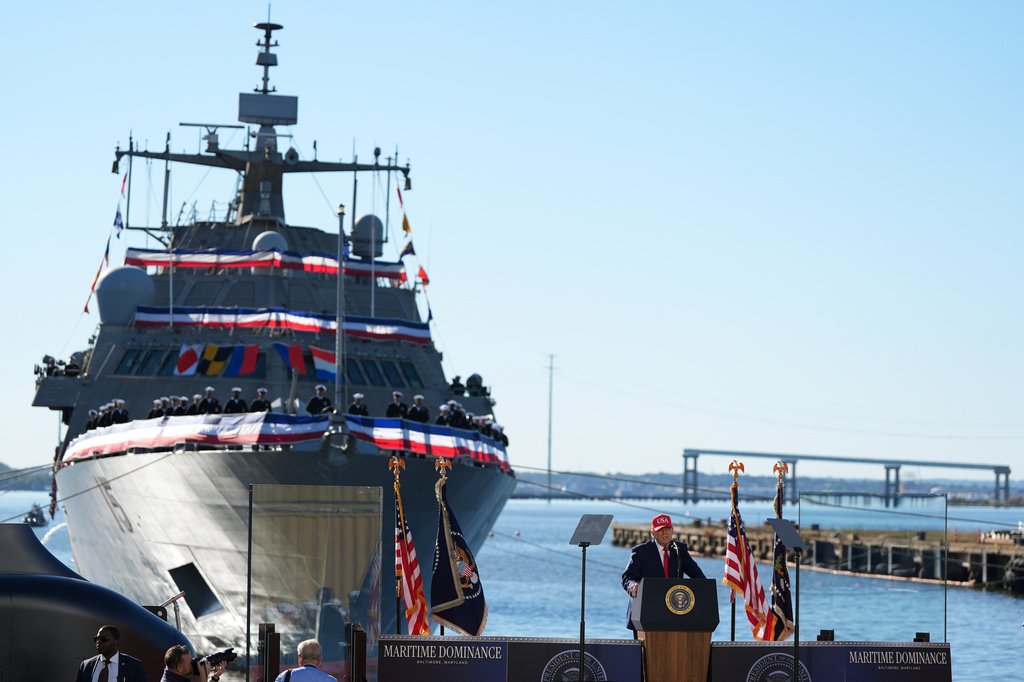
President Donald Trump speaks at an event for Anduril Industries, Inc., at Sparrows Point Shipyard, Tuesday, Oct. 6, 2026, in Sparrows Point, Md. (AP Photo/Stephanie Scarbrough)
The contracts kept getting larger. In March, the Army signed a 10-year agreement with Anduril up to $20 billion, folding more than 120 separate procurement actions into one deal. In June, the Air Force awarded it a production contract for its Fury autonomous fighter drones. In October, Anduril secured a $1.8 billion Army software contract. The company brought in about $2.2 billion in revenue last year and roughly $4.3 billion this year, and investors followed the momentum with a $5 billion round in May.
The lesson isn’t that the Pentagon picked a winner. It’s that the Pentagon built a market. In May, it signed framework agreements with Anduril, Leidos and several smaller firms to produce more than 10,000 low-cost cruise missiles within three years, deliberately creating competition instead of relying on one supplier. Golden Dome’s program office is now pushing to bring commercial technology into America’s missile defense shield, too. The government takes an early chance on new companies, the companies deliver, and private capital follows the contracts. Demand first, then money right after. That cycle is America’s real advantage.
To be fair to Ottawa, Canada isn’t completely sitting this out. It is placing chips on nearly every square of the table.
Since Russia’s full-scale invasion in 2022, Canada has committed more than 25.5 billion in aid to Ukraine, including $8.5 billion in military assistance. In February, it became the first non-European country to join the EU’s SAFE defense procurement program, which lets Canadian companies compete for European contracts on the same terms as European firms. That same month, Carney unveiled Canada’s first-ever Defense Industrial Strategy, which aims to give Canadian firms 70 percent of federal defense contracts and add 125,000 defense jobs over the next decade. The strategy also created a Defense Investment Agency to speed up procurement. And Ottawa has tasked the Business Development Bank of Canada with putting $6 billion into defense and dual-use startups.
That’s real money and real ambition, and the reasoning makes sense. Canada has long spent about 75 percent of its defense dollars in the United States, and with Washington seemingly less predictable than it used to be, diversifying is a reasonable instinct.
The problem isn’t how much Canada is spending; it is where the money lands. A large share goes to partners abroad, through Ukraine aid and European programs, while the money meant for Canadian startups mostly arrives as state-backed investment rather than contracts. That’s the reverse of the American model. Washington funds its startups by becoming their customer, while Ottawa is trying to fund its way into the industry.
If Anduril shows how the model works in America, Helsing shows it works anywhere a government is willing to buy.
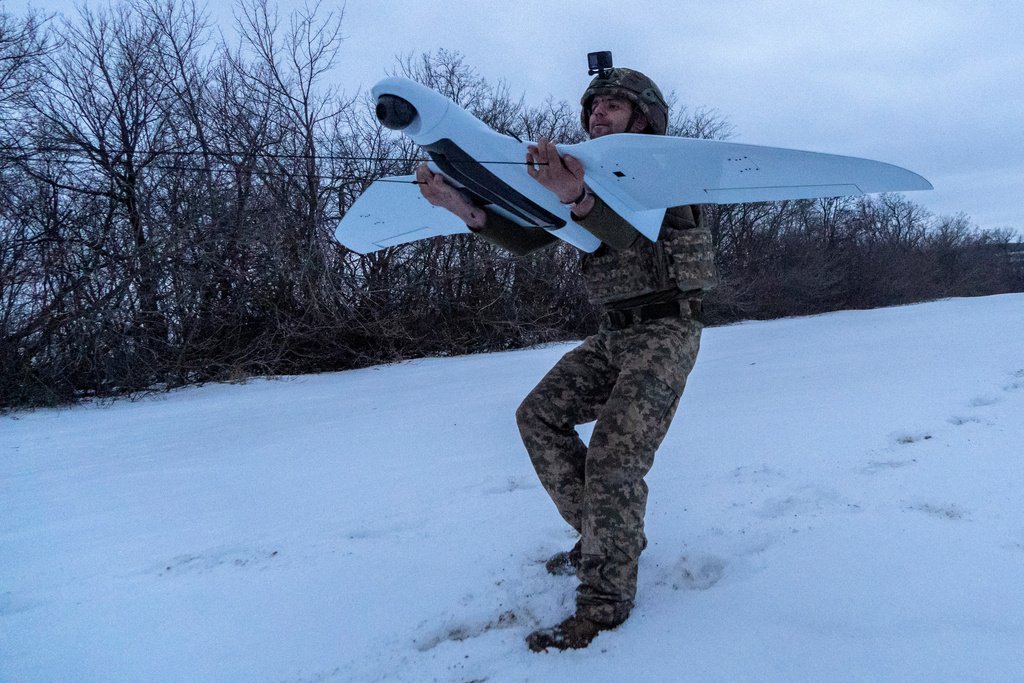
A Ukrainian soldier of the 48th separate brigade launches a reconnaissance drone in Kharkiv region, Ukraine, Wednesday, March 4, 2026. (AP Photo/Andrii Marienko)
The Munich-based startup has been working in Ukraine since 2022. Its first big order, 4,000 HF-1 strike drones, was financed by the German government for Ukraine’s forces. Then the orders kept coming. Helsing announced 6,000 more of its newer HX-2 drones and opened a factory in southern Germany to produce over 1,000 a month. A software company became one of the world’s largest strike drone makers in about two years, not because investors willed it into existence, but because a customer at war needed what it made.
The story hasn’t been perfect. Bloomberg reported in January that Ukraine stopped reordering the HX-2 after problems in the field, which Helsing disputes. But even that proves the point. Companies get better by putting products in front of real users and hearing what breaks. Grants and fund allocations can’t give you feedback; only orders can.
There’s a difference worth noticing, though: Anduril scaled on steady contracts from its own government. Helsing scaled largely on demand created by someone else’s war. Both prove demand builds defense companies, but only one is a model a country can reliably plan around.
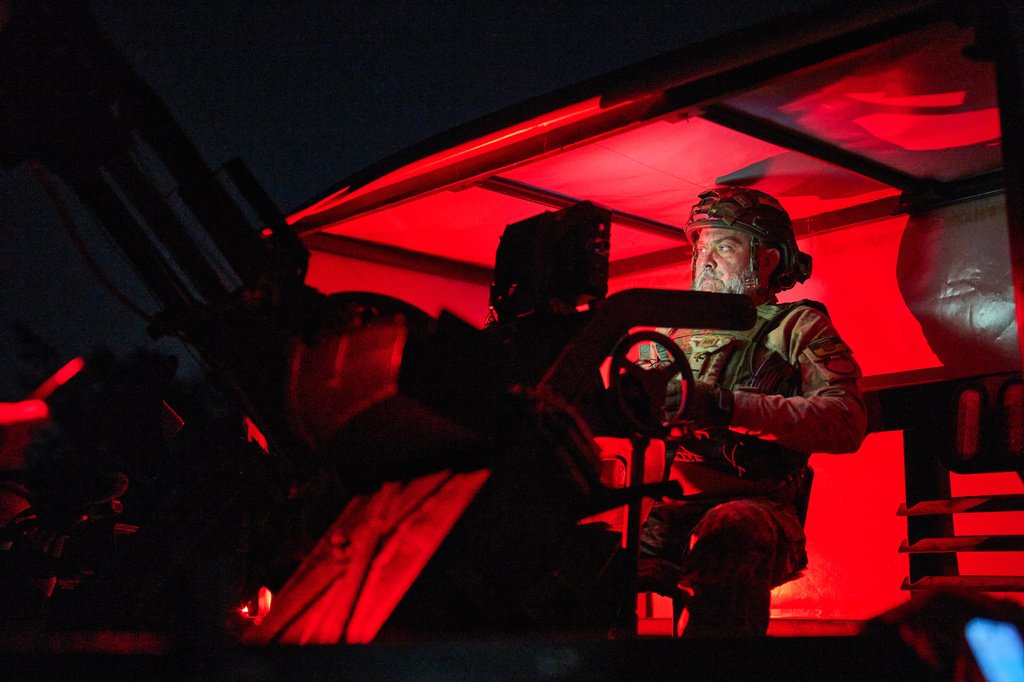
A Ukrainian air defense soldier gets ready to repel Russia’s drone attack in Kyiv, Ukraine, Saturday evening, Sept. 19, 2026. (AP Photo/Efrem Lukatsky)
Here’s where it gets uncomfortable for Ottawa. When Helsing went looking for money, Canadian capital was there. CPP Investments, the fund that manages Canadian pension funds, backed Helsing’s $1.8 billion round this summer. Canadian money helped build a European defense champion, one built on orders Canada itself never placed with its own startups.
Canada doesn’t lack companies that want in. A June survey by BDC found that 374 of 642 Canadian small and medium-sized businesses are actively looking to enter defense. There are bright spots, too. Ottawa-based Dominion Dynamics closed a $139 million round in June, the largest Series A ever for a Canadian Defence company.
But ask founders what’s holding them back, and the answer is rarely a lack of grants. Canadian defense startups say funding and procurement aren’t moving fast enough, and some are still waiting on government money they applied for months ago. Investors, meanwhile, are holding back until Ottawa’s promises turn into predictable contracts. As one Canadian venture investor put it, their industry “lives on hype cycles,” and hype does not last long without orders behind it.
The deeper problem is structural. Canadian venture capital has historically backed software, and deep tech companies, which include most defense startups, have had a harder time raising money there. The United States solved that problem years ago, and not by outfunding everyone. It did so by giving investors a reason to believe. When the Marine Corps handed Anduril a $12.5 million contract in its second year, it sent a signal that no pitch deck could, and the capital that followed turned a startup into a company now worth billions. That's why government demand matters even more in Canada. Where private investors are cautious, a signed contract is what tells them a company is worth the risk.
Canada’s answer so far has been to fill the gap with its own capital. But a state-backed fund can’t create demand. It can keep a start-up alive long enough to wait for a customer, but if that customer never arrives, the money just delays the problem. Washington understood this. Its venture boom didn’t start with government funds; it started with government orders, and private money did the rest. Even in Canada, American investors are already paying attention. Bessemer Venture Partners, a US firm, is among Dominion Dynamics’s backers. Capital from either side of the border will flow when the contracts do.
The American model isn’t flawless, and Canadians have good reasons to be wary of copying it wholesale. Golden Dome, the missile defense shield that’s pulling in commercial technology, now faces a difficult 2027 funding cliff. Much of the venture money is concentrated in a few giants. Anduril’s $5 billion round alone accounted for nearly a third of global defense tech funding last quarter. And after a year of tariffs and threats from Washington, Ottawa has every reason to want partners it can count on. Carney has called Canada’s defense reliance on the US a dependency he wants to change.
All fair, but diversifying who you buy from doesn’t replace being a buyer yourself. Europe can offer Canada partners and markets. It can’t give Canadian startups the steady domestic orders that turned Anduril from a 2017 startup into a company with multibillion-dollar contracts.
Canada already has the tools. Its new Defense Investment Agency was built to speed up procurement. It should start acting like the Marines did in 2018: small and fast contracts that give young companies a real customer and give investors a reason to follow. Canada can also redirect money it’s already spending. Its Ukraine aid this year included 383 armored vehicles from Canadian manufacturer Roshel, and through SAFE, Montreal’s Marconi Technologies won the first European contract awarded to a Canadian firm. Those are the right instincts. Setting aside a share of Ukrainian aid and SAFE work for Canadian startups would turn Canada’s generosity abroad into demand at home.
None of this means that Canada should compete with the United States, because frankly they can’t. However, it means that Canada should match it. The two countries already defend the continent together through NORAD, and Canadian firms are positioning to support Golden Dome’s sensor and satellite networks. When Americans invest in American defense tech, and Canadians invest in Canadian defense tech, North America gets two strong industries that can plug into one another, instead of one country building and the other buying off the shelf. A capable Canadian industry is a better partner, not a rival.
Washington and Ottawa aren’t betting against each other. They are at the same table, facing the same threats from China to Moscow to the Arctic. Washington has already learned how to turn its bets into results. Ottawa doesn’t need any more chips. It needs to start playing its hand.