
Integration or Exclusion - Italy’s Foreign Student ap and School Ban on Burqas and Niqabs
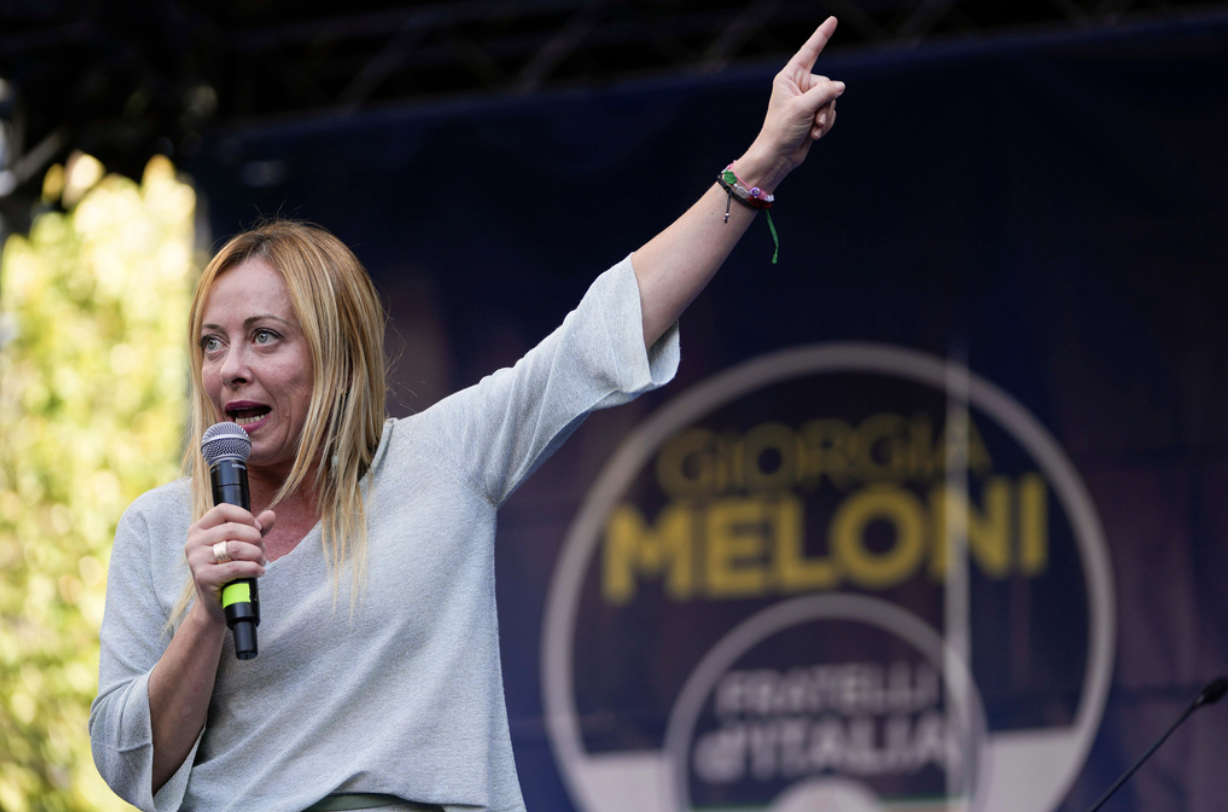
Right-wing party Brothers of Italy leader Giorgia Meloni addresses a rally as she starts her political campaign ahead of the Sept. 25 general elections, in Ancona, Italy, Tuesday, Aug. 23, 2022. AP Photo/Domenico Stinellis
Should classrooms be the solution to managing immigration? With the upcoming election in sight, Meloni and the Brothers of Italy are facing pressure from the right-wing parties of their governing coalition to enforce strict regulations that promote conservatism and immigration control policies. Piero Ignazi, a professor of political science at the University of Bologna, says that this policy represents the “Italianess” of her right-wing parties. Shown by the approval of the decree, her government supports the policy’s objectives in preserving Italy’s cultural composition while simultaneously adjusting to foreigners. Yet, the student-cap and the ban on a religious practice have caused debate over whether Meloni’s policy could contribute to the alienation of non-Italian speakers and if it is religiously discriminatory towards Muslims.
With the upcoming general elections in mind, Meloni is focusing on attracting electors from right-wing parties by promoting policies that support the “Italia-first” populist political philosophy. She believes the policy’s redistribution of non-Italian speakers will assist in their integration into society while still preserving Italy’s cultural identity. The Italian Education Minister remarked that the policy will prevent the formation of “ghetto classes.” Following the decree’s approval, this policy will be taken into effect in the 2027-2028 school cycle.
Critics assert Meloni’s policy does not support immigration integration and instead blatantly excludes those who are different. The Todde Administration, represented by Ilaria Portas, Sardinia's regional councilor for culture and public education, calls Meloni’s policies “discriminatory propaganda.” Further emphasizing this position, Portas said, "integration is not measured by numerical quotas, but by the quality of educational and cultural processes.”
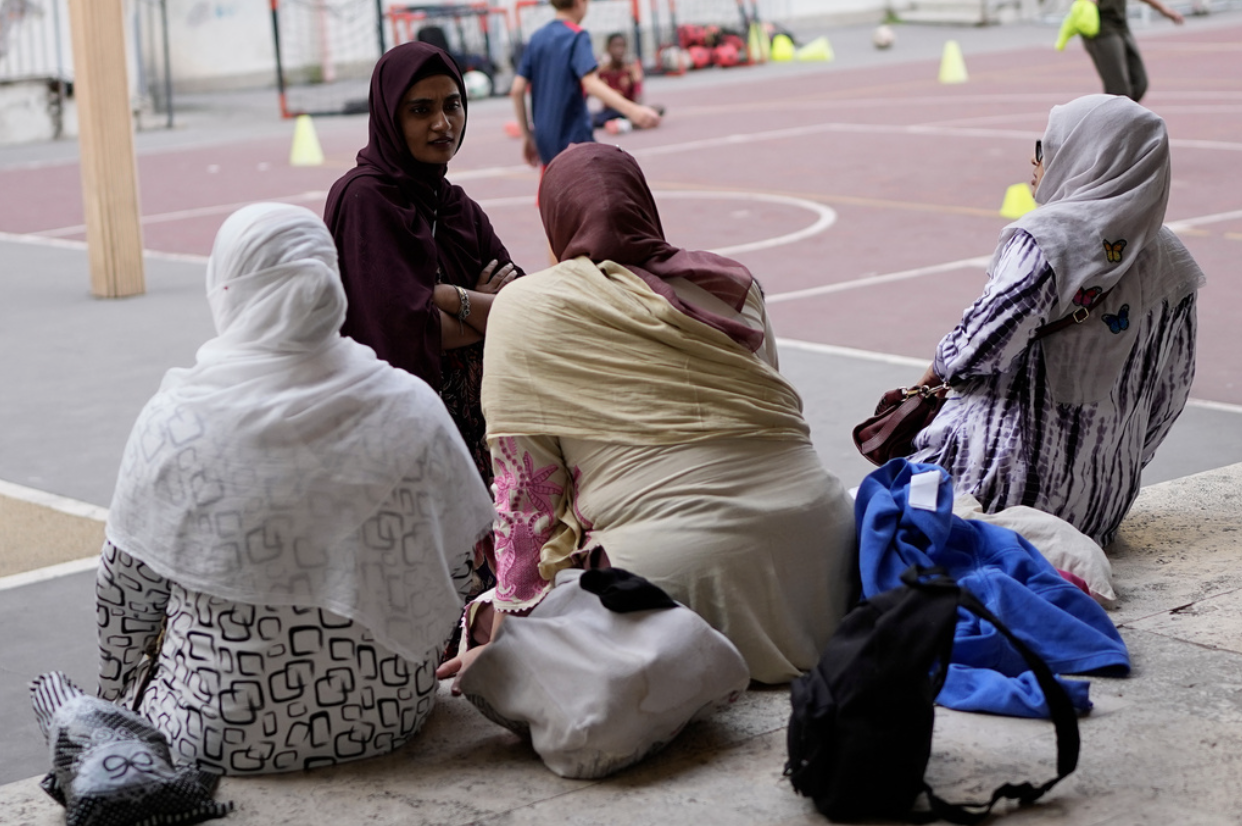
Jannatur Nayeem, 33, an Italian citizen of Bangladeshi origin, top left, chats with other mothers as they wait for a sports lesson to end at a school in downtown Rome, Thursday, Sept. 24, 2026. (AP Photo/Alessandra Tarantino)
Burqas and niqabs are expressions of fatih in the Islam community, where women and girls cover themselves from head to toe with a piece of cloth. This practice is recognized in Italy, and Meloni;s ban on burqas prohibits the garment in school settings. In pursuit of gender equality, Meloni in her recent speech stated, “...in Italy no one, in the name of a real or supposed tradition, can decide that a young woman must hide herself.” Yet, those who choose to wear religious attire, especially outside of their home country, may do so as an expression of personal autonomy. Despite the population’s majority representing Christianity, Italy is a secular state, with 28.6% of this population practicing other religions. In addition, this policy only targets a minority of the Muslim community, in which fewer than 500 to 600 female students in Italy wear full-face coverings. Mulayka Laura Enriello, a high school teacher in Milan, believes this policy creates a “false problem.” It generalizes the Muslim community based on a small minority of garment wearers and could create the public perception that this community has practices that promote gender inequality. According to Enriello, “this is an attempt to present a unified model of society, a society that is white supremacist and if something is different it is caricatured by the specious use of the burqa.”
Instead of creating a cosmetic change to manage immigrants, commentators believe Italy’s policies should focus on providing resources to both foreign students and their teachers. Explained by Portas, there should be “structural resources, training for teachers and administrators, specialized educators, and the essential presence of linguistic and cultural mediators...” Education unions have called for measures to increase school funding in order for these extra resources to be achieved. Moreover, InfoMigrants reports the dropout rate for non-Italian students is three times higher than that of native students. Taking this into account, critics argue that Italy should consider qualitative initiatives that actively acknowledge the disadvantages foreign students face when learning in an unfamiliar environment. These alternative solutions presented by Portas and the education unions reflect an ongoing debate across Europe over national integration and the accommodation of increasingly multicultural populations. As Europe continues to balance immigration and national identity, how this issue is handled will ultimately shape what belonging looks like for future generations to come.