
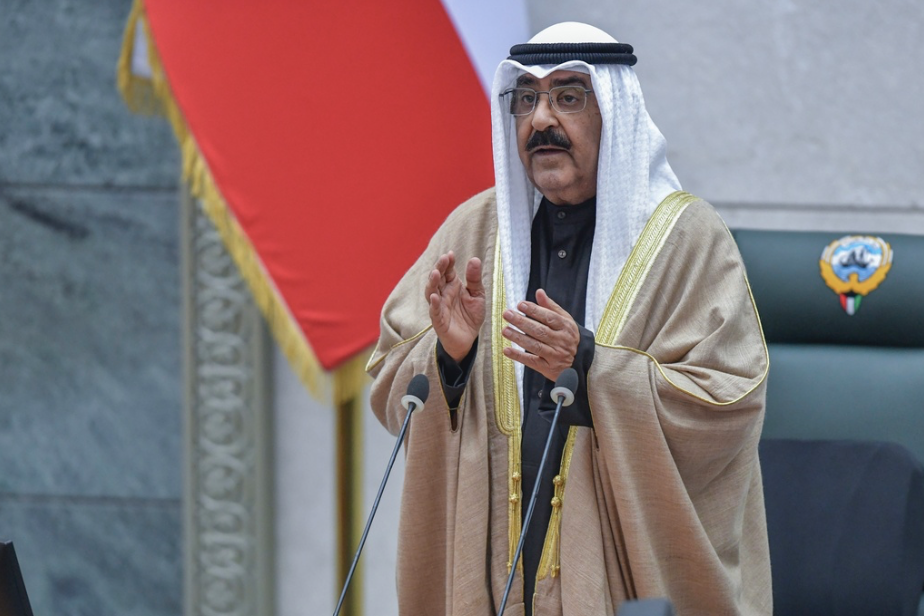
Kuwait’s Emir Sheikh Mishal Al-Amhad Al-Jaber Al-Sabah at his oath ceremony Dec. 20, 2023, after succeeding former Emir Sheikh Nawaf Al Ahmad Al Sabah (AP Photo/Jaber Abdulkhaleg)
On Oct. 4, Kuwaiti Emir Sheikh Mishal Al-Amhad Al-Jaber Al-Sabah issued six decrees revoking the citizenship of 415 former Kuwaitis. This development is part of the emir’s broader denaturalization campaign, cited as Kuwait’s pivot away from democracy.
In a country where noncitizens are the majority, with 3.29 million noncitizens compared to 1.53 million Kuwaiti citizens, the long-standing strict nationality laws have enabled mass denaturalization campaigns and resulted in approximately 184,000 stateless people. These nationality regulations predate Kuwait’s independence from Great Britain in 1961 and originate from the country’s 1959 Nationality Law, which excluded the nomadic Bidoon population, who were deemed “illegal residents,” from citizenship. The law set key limitations that prevail today and serve as the government’s justification for the denaturalization of Kuwaitis, with the principal restrictions being: women cannot automatically transmit their nationality to their children; dual citizenship is illegal; and if a male loses their citizenship, so do their children. An amendment enacted in 2024 outlawed the naturalization of non-Kuwaiti women who marry Kuwaiti men, becoming a precedent for the citizenship revocation of women.
After years of a government troubled with deadlock, the emir suspended parliament in May 2024. Prior to the suspension, Interior Minister Sheikh Fahad Al-Yousef accused parliament members of preventing attempts to address citizenship issues. The emir, regarding his decision, declared that he “will not allow democracy to be exploited to destroy the State.” Through this political maneuver of suspending parliament, the emir consolidated his authority to carry out his denaturalization campaign without parliamentary resistance. Since September 2024, more than 42,000 Kuwaitis have had their nationalities rescinded.
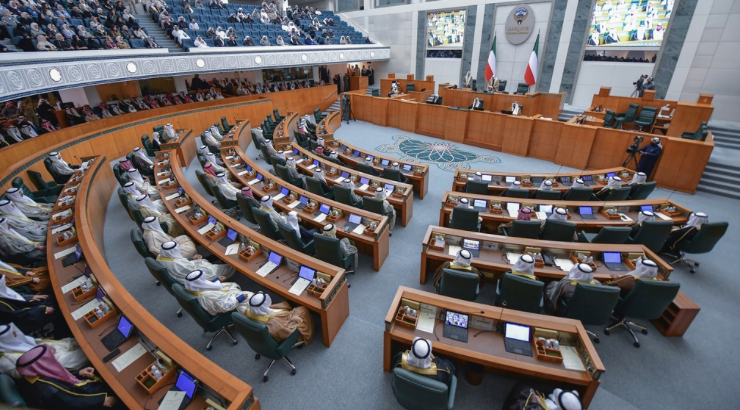
Kuwait’s elected parliament Dec. 20, 20223 (AP Photo/ Jaber Abdulkhaleg)
Kuwait’s claim of targeting criminals and addressing fraud through the citizenship revocation initiative may itself be fraudulent, as oftentimes, denaturalization cases lack legal oversight and transparency. Among the 415 denaturalized citizens is billionaire Mahmoud Haji Haider Abdullah, who became a Kuwaiti national after previously holding Iranian citizenship. The majority of those who had their citizenship revoked had gained it through dependency or marriage.
Kuwait’s emir has described the campaign as an attempt to "restore Kuwait to its rightful people, clean and free of impurities" and achieve "national purification."
For many years, Kuwait has long been regarded as a democratic outlier among the Middle East’s monarchies, but with the emir’s centralizing of authority, nativist initiatives, and denaturalization campaign, many believe that Kuwait’s democratic status is up for debate.