
UN Committee Urges General Assembly Action on Mexico Disappearances Crisis

A girl points at posters bearing the faces of missing persons in Guadalajara, Mexico. Wednesday, Feb. 25, 2026. (AP Photo/Marco Ugarte)
On April 4, the United Nations Committee on Enforced Disappearances (CED) requested that the UN Secretary-General refer Mexico’s ongoing disappearance crisis to the General Assembly for consideration of response measures. The request marks a rare invocation of Article 34 of the International Convention for the Protection of All Persons from Enforced Disappearance, a mechanism used when there are “well-founded indications” of systematic violations rising to the level of crimes against humanity.
The committee stated that enforced disappearances in Mexico “have been and continue to be committed as crimes against humanity,” citing over a decade of monitoring since 2012. According to official figures, at least 132,828 people are currently missing, while authorities and citizen search groups have identified approximately 4,500 clandestine graves containing more than 6,200 bodies and thousands of additional human remains. The committee emphasized that the scale and pattern of these cases, rather than the existence of a centralized state policy, are sufficient under international law to meet the threshold for crimes against humanity.
CED officials noted that while many disappearances are carried out by criminal groups, there is substantiated evidence of “direct participation or acquiescence by public officials” in numerous cases. The committee also pointed to systemic shortcomings in investigations, including the failure to identify broader patterns or chains of command, contributing to impunity rates estimated at nearly 98%.
The decision to invoke Article 34 reflects growing concern that Mexico’s institutional response has not kept pace with the magnitude of the crisis. The provision allows the committee to elevate the issue to the General Assembly to mobilize international attention, technical cooperation, and resources to address enforced disappearances, including forensic capacity, search operations, and protection for victims’ families. The committee stressed that the procedure is preventive in nature, aimed at facilitating cooperation rather than assigning individual criminal responsibility.
Mexico’s government rejected the committee’s findings, with President Claudia Sheinbaum arguing that the report focuses on past administrations and does not reflect recent reforms or current policies. She stated that disappearances linked to the state are “a thing of the past,” attributing the majority of cases to organized crime and emphasizing her administration’s cooperation with victims’ groups and ongoing efforts to address the issue.
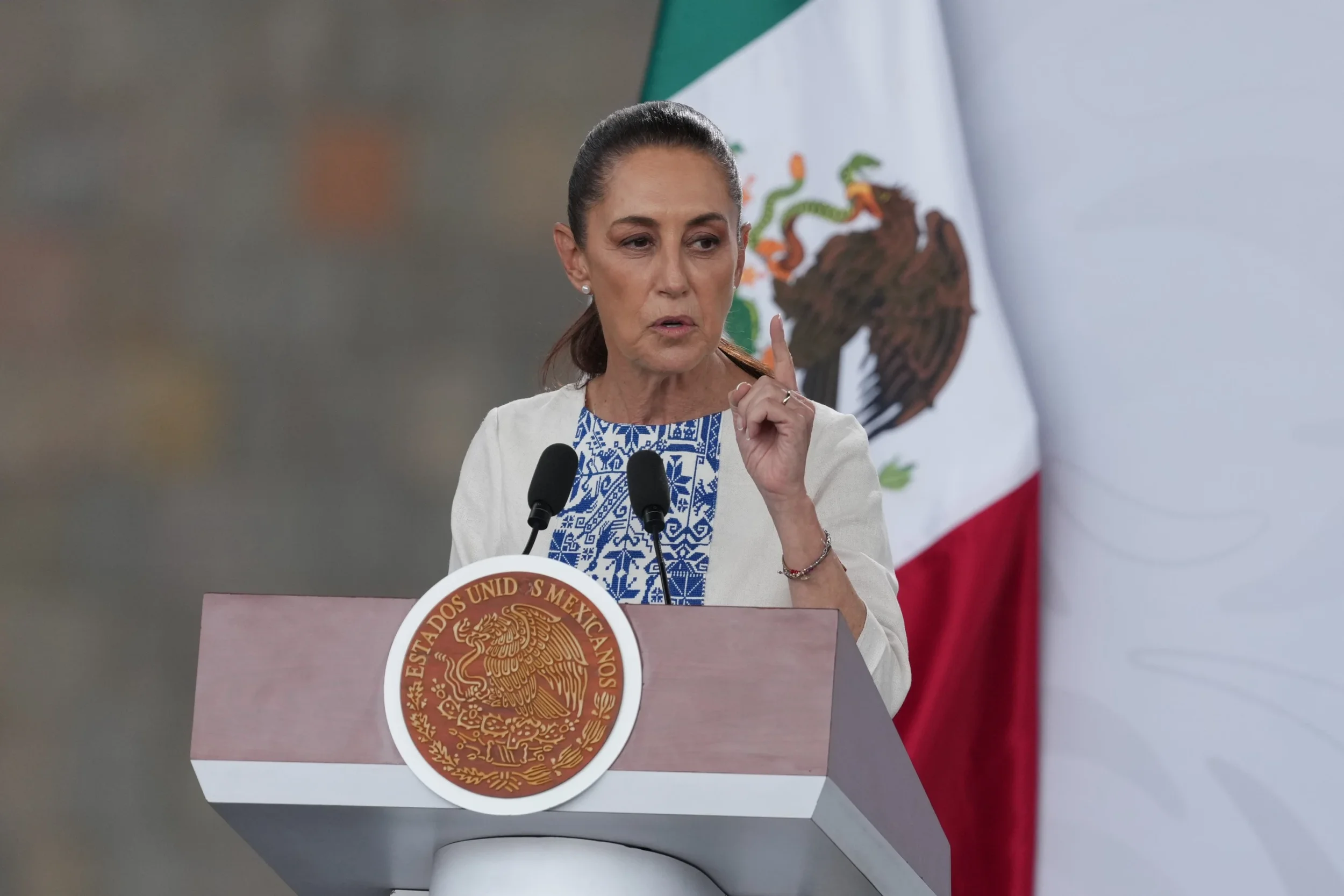
Mexican president Claudia Sheinbaum speaks during a meeting with business leaders on Monday, May 4, 2026, in Mexico City. (AP Photo/Fernando Llano)
Government officials also criticized the methodology behind the report, arguing that it relied on limited regional data and failed to account for legislative reforms passed in 2025 aimed at strengthening legal and institutional responses to disappearances. In contrast, legal experts and human rights advocates contend that the committee’s findings are based on years of accumulated evidence from multiple sources, including civil society organizations, victim collectives, and prior UN investigations.
International human rights organizations, including the International Federation for Human Rights, welcomed the decision and called on the Mexican government to engage constructively with the findings. Advocacy groups argue that enforced disappearances in Mexico are widespread and systematic, often occurring with the support or tolerance of local officials, particularly in contexts shaped by corruption and organized crime networks. They also warn that current investigative practices, which treat cases individually rather than as part of a broader pattern, have significantly limited accountability and delayed justice for victims.