
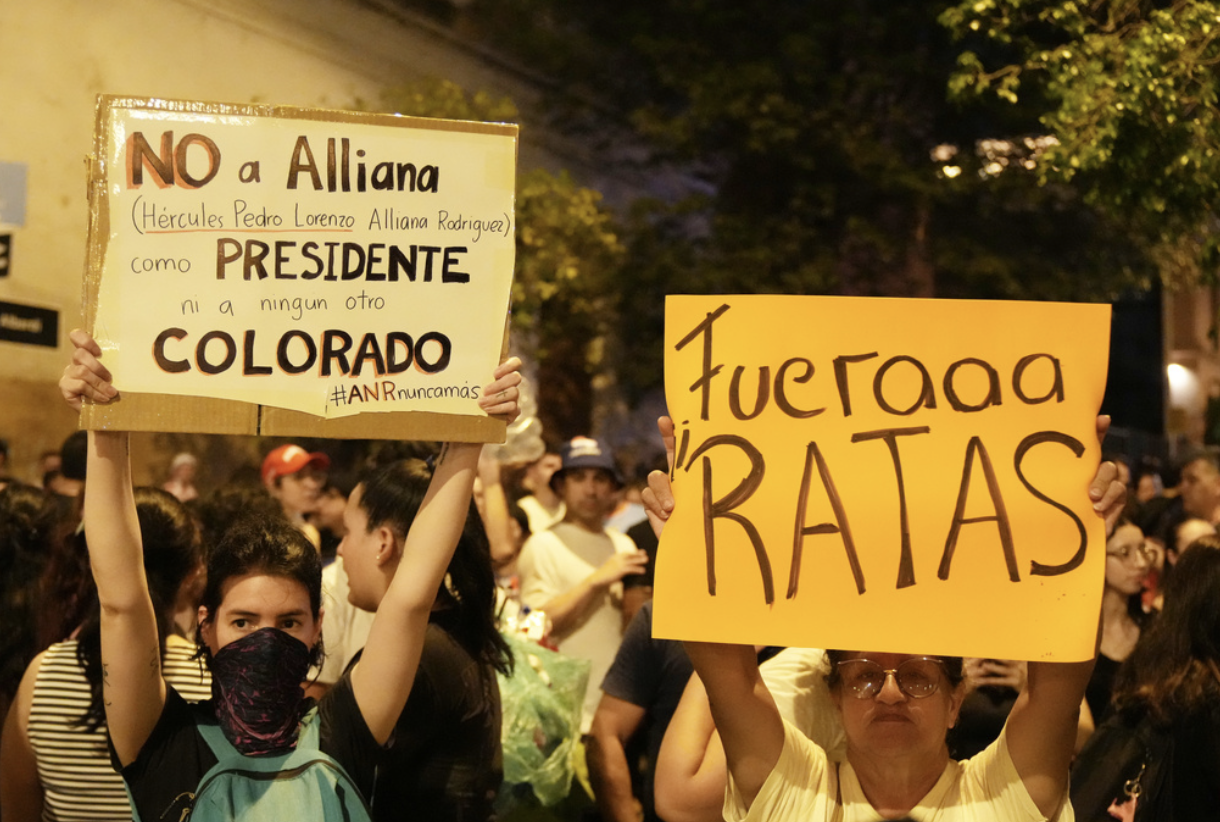
Protesters hold signs outside Congress after the Senate removed President Santiago Pena over accusations linked to the collapse of Ueno Bank, Friday, Nov. 6, 2026. (AP Photo/Jorge Saenz)
On Nov. 6, 2026, Paraguayan President Santiago Peña was impeached just minutes after his removal from office and subsequently placed under house arrest, following allegations of misconduct linked to the collapse of Ueno Bank. The bank's failure initially froze accounts belonging to approximately 2.9 million customers, disrupting everyday transactions and leaving many unable to access their savings. However, authorities have since begun reimbursing depositors through a government-backed guarantee program, providing relief to some affected customers while others continue to face uncertainty. The scandal has also raised serious questions about Peña's connections to the bank, including his former stake in Euno Holding, a company tied to the bank’s controlling stakeholder and his appointment of a former Ueno executive to lead Paraguay's central bank. While the immediate consequences of the collapse are economic, its implications extend far beyond the banking sector. The crisis not only highlights the disproportionate impact of financial instability on vulnerable populations but also threatens to undermine public confidence in the institutions responsible for protecting their financial security.
Ueno Bank emerged in 2021 following Grupo Vázquez's acquisition of an existing Paraguayan financial institution and received its full banking license in 2023. The bank expanded rapidly, reporting approximately three million customers by October 2026. It also held approximately $800 million in public funds, including roughly $380 million from Paraguay's state pension and health fund. However, its rapid expansion raised concerns about financial oversight, particularly after regulators identified excessive lending to companies connected to its controlling shareholder, Grupo Vázquez. Investigators found that some of these loans were inadequately documented and that the bank had improperly classified certain expenses as assets, overstating its financial position. On Nov. 2, Paraguay's central bank initiated a formal resolution process after determining that Ueno's solvency ratio had fallen below half the legally required minimum, exposing serious weaknesses in the bank's financial condition.
For Pedro Volpe, a 50-year-old writer and lawyer in Paraguay, the Ueno Bank crisis meant suddenly losing access to his savings just one day after receiving his paycheck. Although he had money in his account, he was unable to access it to pay bills or cover everyday expenses. His experience reflects the challenges faced by millions of Paraguayans who relied on the bank for daily financial transactions. However, the disruption created additional obstacles for customers without access to alternative financial institutions. When Paraguay's central bank began issuing guaranteed repayments, eligibility initially required customers to have an existing account at another bank, leaving those without alternative accounts facing greater difficulties recovering their money. The crisis also disrupted businesses across the country, with some reporting sales declines of up to 80% as customers struggled to make payments. Approximately 32,000 pensioners received their benefits through Ueno, although Paraguay's Social Security Institute subsequently arranged for payments through other financial institutions. These consequences demonstrate how the banking crisis exposed inequalities in financial access, particularly for individuals who depended on Ueno as their primary banking institution.
A 2022 study published in the Journal of Financial Services Research found that experiencing a systemic banking crisis reduced the likelihood of expressing confidence in banks by 5.2 percentage points. Drawing on survey responses from more than 66,000 individuals across 52 countries collected between 2010 and 2014, the study examined respondents' confidence in banks in relation to their exposure to banking crises dating back to 1970. The findings suggest that the effects of financial instability on public trust can persist long after the immediate crisis has ended, particularly among individuals who experienced disruptions during adulthood. Although the study did not examine Paraguay's current crisis, its findings raise concerns about how the events surrounding Ueno Bank could influence Paraguayans' willingness to rely on financial institutions in the future.
A separate 2015 study published in European Societies examined political trust across 25 European countries following the 2007–08 financial crisis. The study found that political trust declined in countries where the economic consequences were particularly severe. While these findings concern European political institutions rather than Paraguay, they suggest that financial instability can also weaken confidence in government institutions. In Paraguay, allegations that former President Santiago Peña maintained financial ties to Ueno while appointing a former bank executive to lead the central bank raise questions about the independence of financial oversight. If citizens perceive regulators as unable or unwilling to enforce banking requirements independently, the crisis could weaken confidence not only in banks but also in the government's ability to protect depositors.
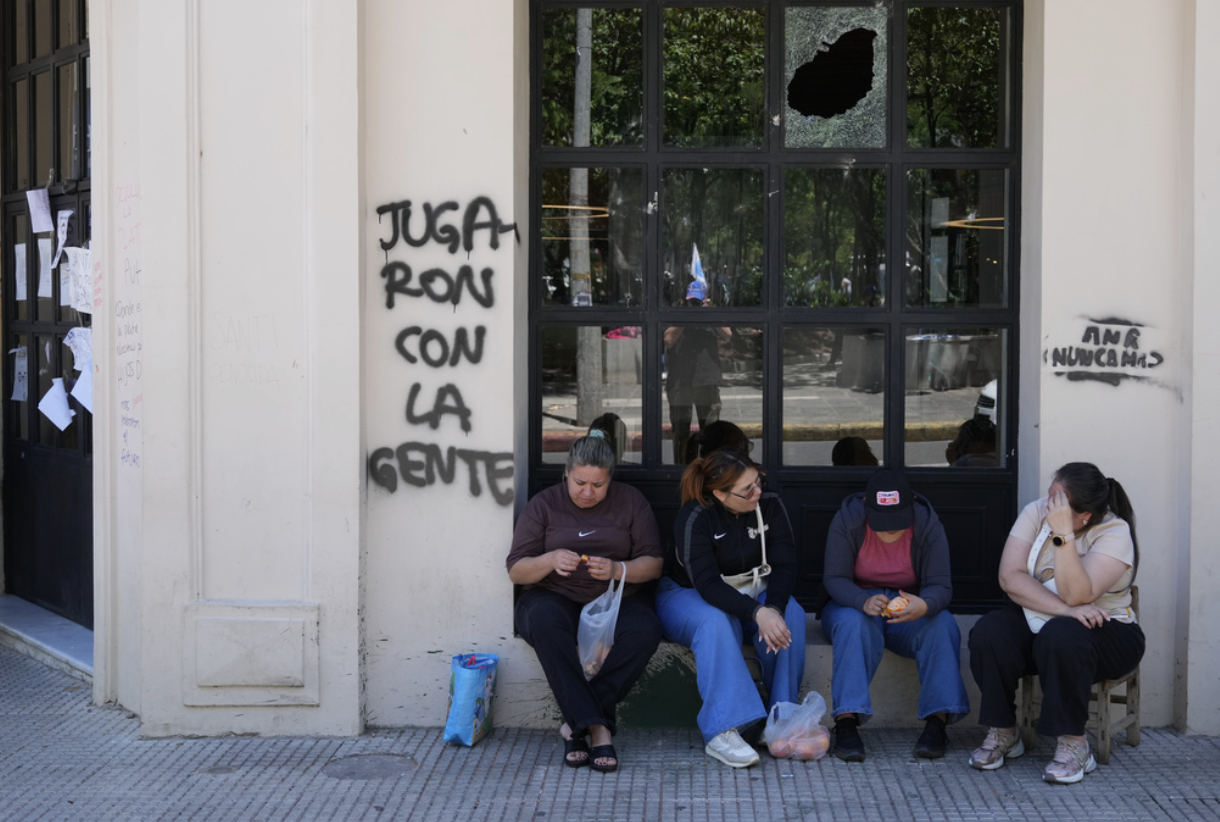
Protesters hold signs outside Congress after the Senate removed President Santiago Pena over accusations linked to the collapse of Ueno Bank, Friday, Nov. 6, 2026. (AP Photo/Jorge Saenz)
Peña held approximately $1 million in shares in Ueno Holding, a company connected to the bank's controlling shareholder, Grupo Vázquez. Although Peña said he sold his shares in March 2025, more than a year before the banking crisis, his financial ties to the institution have continued to attract scrutiny. Peña also appointed Carlos Carvallo, Ueno's former chief executive, to lead Paraguay's central bank in 2023, shortly before the bank received its banking license. Prosecutors have since accused Peña on suspicion of breach of trust, influence peddling and using public office for personal gain. He denies wrongdoing and the investigation remains ongoing. These connections raise concerns about potential conflicts of interest and whether the bank was subject to independent regulatory scrutiny. By Nov. 11, Paraguay's central bank had distributed funds to financial institutions for guaranteed repayments covering approximately 1.8 million eligible depositors, providing financial relief to many affected customers. However, the repayment process does not resolve the broader questions surrounding the government's oversight of Ueno. Restoring confidence will require authorities to demonstrate that financial regulations are enforced independently and that decisions involving public funds are subject to appropriate accountability.
While Paraguay has begun addressing the immediate financial consequences of the Ueno Bank crisis, restoring access to savings should only be the beginning of its response. The government must also confront the political and regulatory failures that may have allowed the bank's financial problems to develop. Simply reimbursing depositors without fully investigating the allegations surrounding Peña would leave some of the most important questions unanswered. An independent investigation into the central bank's oversight, greater transparency surrounding the allocation of public funds, and accountability for any officials found responsible are essential to preventing similar crises in the future. Paraguay cannot expect citizens to place their trust in financial institutions if those responsible for regulating them are not held to the same standards of accountability. The real test will be whether authorities are willing to investigate not only the bank's financial failures, but also the political decisions that may have allowed them to go unchecked.