
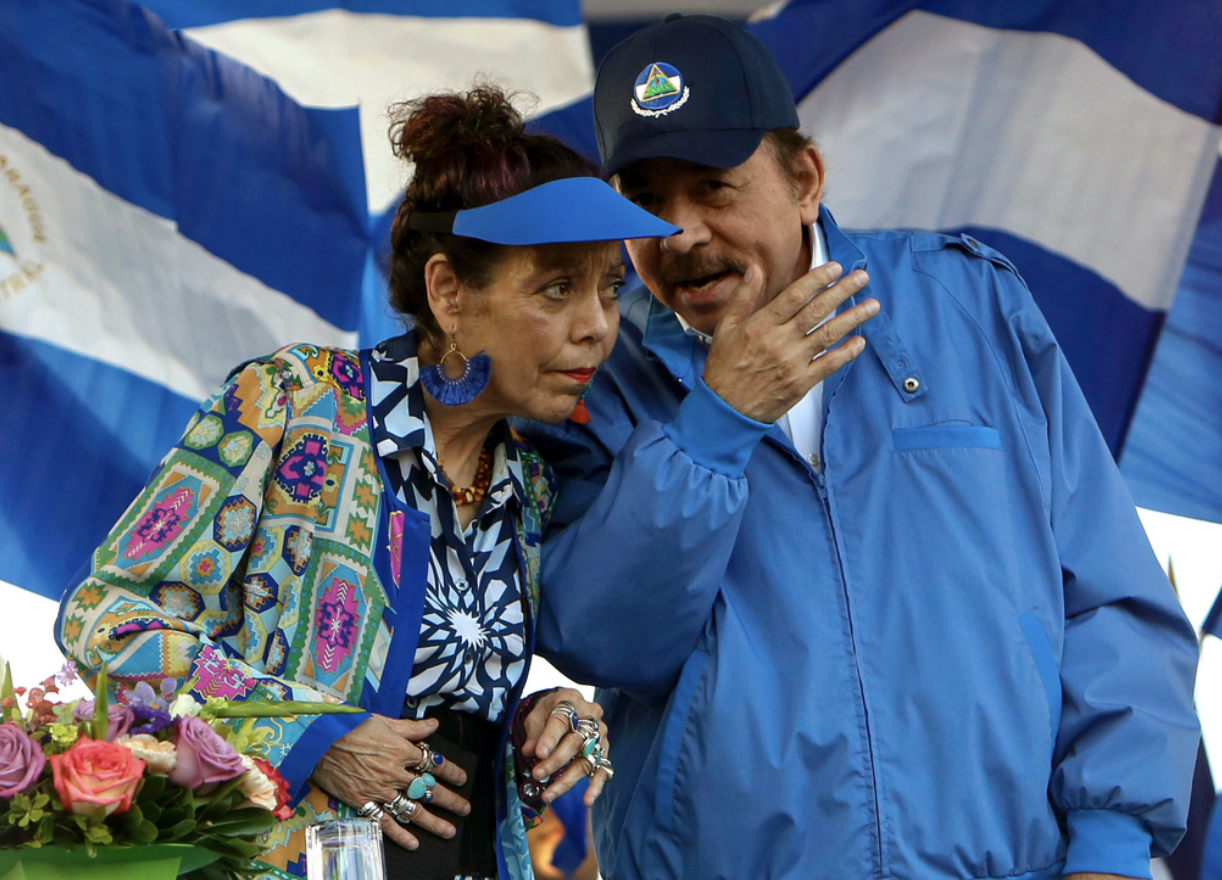
FILE - Nicaragua's President Daniel Ortega and his wife and Vice President Rosario Murillo lead a rally in Managua, Sept. 5, 2018. (AP Photo/Alfredo Zuniga, File)
A United Nations group of human rights experts recently reported reasonable grounds to believe that crimes against humanity have been committed under the government of co-Presidents Daniel Ortega and Rosario Murillo. The Nicaraguan government has rejected the investigation into these human rights abuses and characterizes it as politically motivated. The U.N. experts have urged countries to expand sanctions against the individuals and institutions named in the reports.
The Group of Human Rights Experts on Nicaragua (GHREN), created by the U.N. Human Rights Council in 2022, reported that the alleged abuses range from extrajudicial executions, unjust detentions and wrongful imprisonment to torture, sexual abuse, deprivation of nationality and disappearances of political opponents. These abuses have been cited as forms of political violence and oppression of dissent. All branches of government have implemented a legal framework that restricts freedoms and mobility to discourage opposition movements against the co-presidents and their government.
The national police, along with supporters of the government, have frequently coordinated with one another in order to violently suppress protest movements, media and human rights organizations operating within the country. In 2018, police and pro-government supporters used brutal violence to suppress protests that occurred between April and September, resulting in hundreds of deaths, torture of detainees and sexual violence that the government continues to refuse to investigate.
As part of the government's efforts to suppress the opposition movement, the executive branch, in tandem with the legislative, judicial and electoral branches, established legal proceedings that would strip dissidents of their nationality. This forced NGO workers, activists, journalists and many students to flee the country to avoid wrongful imprisonment and extrajudicial violence. In February 2023, over 300 Nicaraguans living at home and abroad were labeled as “traitors to the homeland” and had their citizenship revoked, along with their assets confiscated to repay the state.
In 2021, the suppression of political dissent became rapidly more extreme as Ortega imprisoned over 46 political opponents who challenged him, declaring himself the winner of the 2021 Nicaraguan presidential election. This victory caused widespread dissent among Nicaraguans, who viewed his win and presidency as illegitimate. In 2024, international condemnation of the government’s actions grew when an Argentine judge called for the international arrest of Ortega and Murillo.
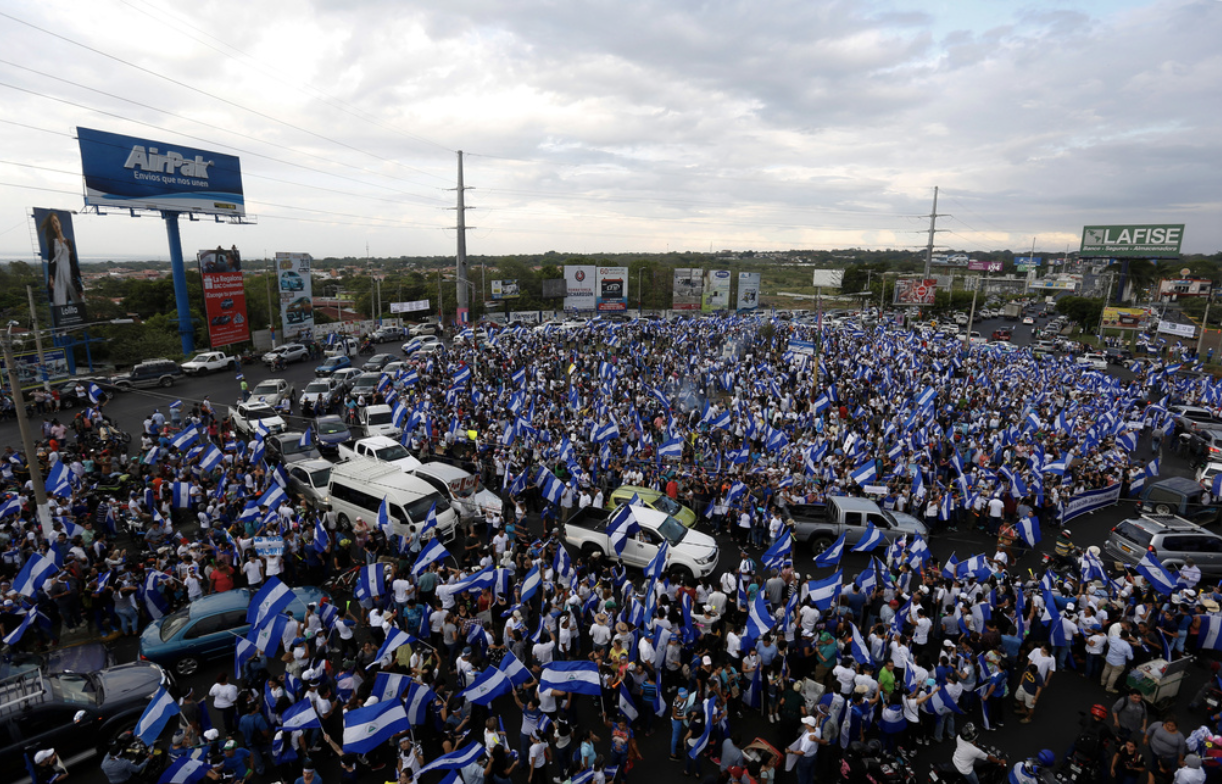
FILE - Nicaragua's President Daniel Ortega and his wife and Vice President Rosario Murillo lead a rally in Managua, Sept. 5, 2018. (AP Photo/Alfredo Zuniga, File)
In September 2026, the U.N. experts labeled the co-presidents as dictators who have systematically ingrained political violence and extrajudicial practices into Nicaraguan politics. Two months earlier, in July 2026, Ortega announced that Nicaragua would not hold elections anytime soon, thereby continuing his 20-year presidency. On Sept. 1, Nicaragua’s Congress voted to extend Ortega and Murillo’s rule by five years and canceled the elections set for 2027. To expand their dictatorship, the co-presidents have essentially full control over the national police, courts, and prisons. Additionally, under the newly implemented constitution, the co-presidents retain strong control over the legislative and judicial branches, further cementing their dictatorship into Nicaragua’s future.
In response to these reports, the Nicaraguan government has accused these international organizations of working for the U.S. or other enemies that aim to cause instability and undermine Nicaragua’s power.
U.N.experts have found reasonable grounds that the co-presidents have broken international treaties on human rights, committing multiple crimes against humanity. GHREN has urged that a formal case be brought before the International Court of Justice. Despite this evidence, Nicaragua is not a party to the International Criminal Court, which limits the U.N.’s ability to hold Ortega, Murillo, and the Nicaraguan government accountable for crimes against humanity and abhorrent human rights violations.