
Yemen’s Internal Conflict Exacerbates Food Crisis
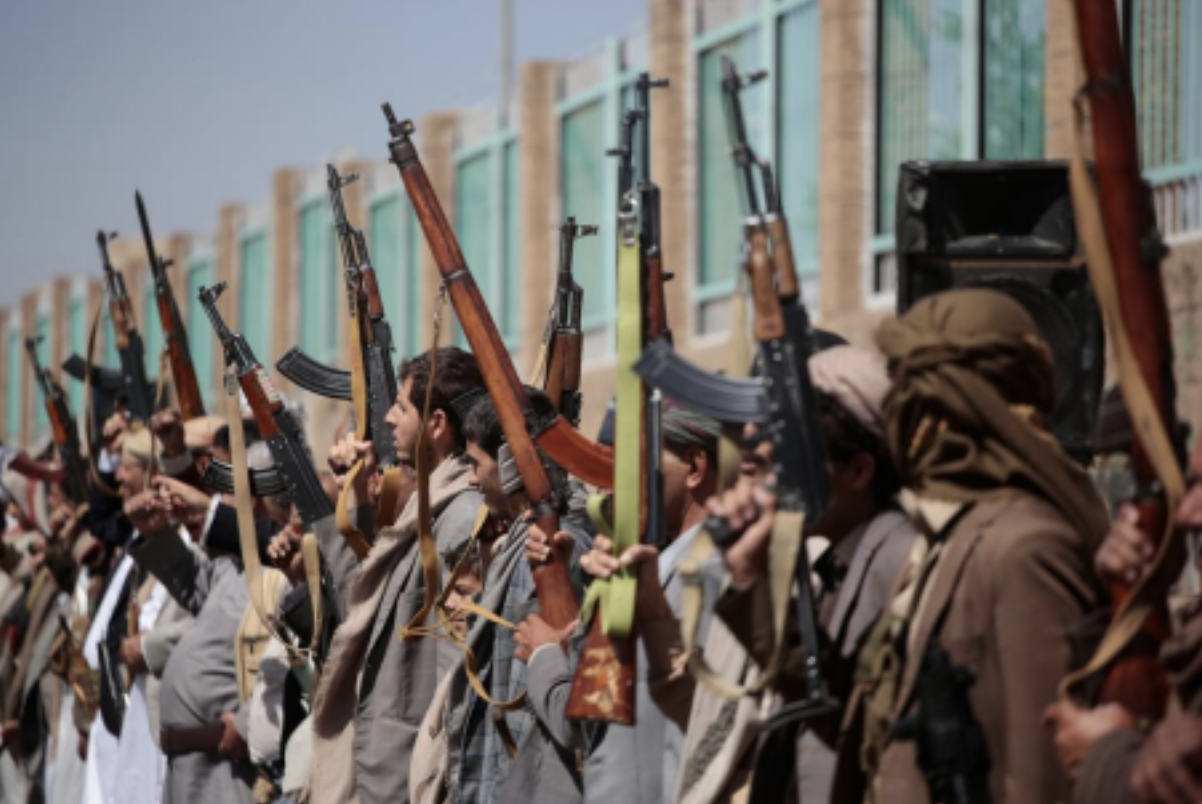
Houthi supporters carry their rifles while attending an armed tribal rally in Sanaa, Yemen, Wednesday, Oct. 7, 2026. (AP Photo/Osamah Abdulrahman)
Dating back to the Yemeni civil war outbreak in 2014, in which Saudi-led military coalitions blockaded critical ports such as Hodeidah, cutting off food and fuel imports (from which Yemen relies for about 90 percent of its food), the country was sent into what would become a longstanding food crisis. Over the past decade, Yemen has been among the world’s “top hunger hotspots”, where today, more than 18 million people experience food insecurity. However, a recent resurgence in militant activity within the country has exacerbated already dangerously high levels of shortage.
In early September 2026, Iran-backed Houthi rebels expanded across Yemen’s Red Sea Coast, in an expedition to take control of territory across the country’s Southwest region. Affected areas include Mokha, a port city in Western Taiz province; the Hays and Al Khawkhah districts; and most critically, the Permin (Mayun) Island, a strategic island in the Bab al-Mandeb Strait. In response, Rashad al-Alimi, chief of the Saudi Arabia-backed Presidential Leadership Council, has initiated militant countermeasures to regain lost territory.
A major implication of this erupted conflict has been mass displacement of civilian populations in Yemen, with more than 200,000 individuals displaced since the escalation in September. In conjunction with major donor funding withdrawals in early 2025, which have resulted in compromised services by humanitarian aid organizations, Yemen’s food crisis has been pushed beyond its national borders.
Inside the country, local traders have experienced disruptions in oil supplies, along with limited wheat and flour stocks, which have surged the prices of these products. As a result, nearly three out of four households in accessible areas cannot meet their basic needs; families reportedly face constant instability in eating three meals a day, usually two, and sometimes even one. Many families have fled the country in a desperate search for external support beyond the nation’s unreliable resources to escape such unsustainable conditions.
Ruqqaya Saeed, a 25-year-old mother of eight children, describes “leaving everything” as she fled Zaghar, in the Maqbanah area west of Taiz, where the Houthi offensive began. Fleeing in search of shelter from active conflict zones, she was in turn met with inhospitable realities at a nearby refugee camp. She reports the camp not having enough food supplied by aid organizations to support her family, nor enough blankets, nor medical services to attend to the rampant spread of dysentery, an intestinal infection spread by contaminated water and poor sanitation. With increasing numbers of Yemeni displacements, humanitarian aid organizations such as the WFP (World Food Program) are strained for resources, struggling to keep up with overwhelming camp influxes due to pre-existing budget deficits, along with the closure of several crucial trade routes.
Following the escalation in September, the WFP has been working to address food insecurity in Lahaj and Taiz, two of Yemen’s biggest “displacement hotspots”, effectively providing more than 70,000 people with hot meals and other food-related assistance. Due to a lack of external funding, the WFP has already had to pull from its stocks allocated to addressing the general conflict in Yemen to cover food-related insecurity, introducing a cannibalistic cycle with the potential to drive humanitarian organizations further into debt. Additionally, the organization has reported increasing difficulty in moving food into frontline areas, as fighting has cut off access to crucially impacted zones. As a result, the WFP and partners have lost access to approximately 350,000 individuals whom they used to assist.
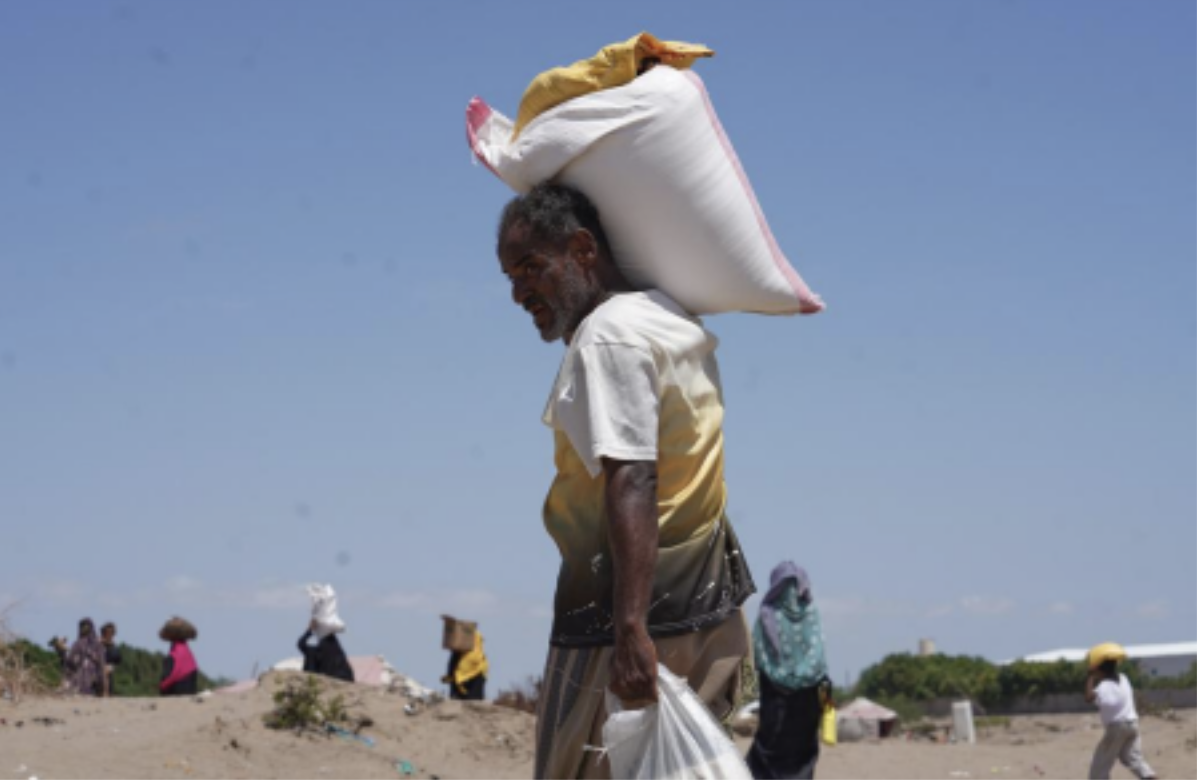
A displaced Yemeni man carries aid supplies at the Al-Salam camp in Dar Saad district, Aden, Yemen, Tuesday, Oct. 6, 2026. (AP Photo/Abdulnasser Alseddik)
With no reports signaling the conflict’s dissipation, displacement and food security conditions are predicted to worsen in the near future. The IPC (Integrated Food Security Phase Classification) expects that 5.4 million individuals will remain in hunger crisis levels or worse from October through the end of this year, with little hope that projections will be below expected levels following the harvest at the beginning of October. Additionally, continual maritime pressures, including instability surrounding the Strait of Bab al-Mandeb, are expected to drive prices of transported resources higher, potentially expanding the food crisis across a much larger region. The Strait of Bab al-Mandeb is currently one of many experiencing “critical maritime choke points”, as others, such as the Strait of Hormuz, continue to face operational uncertainty as war in the Middle East persists. Increasing regions of maritime uncertainty have “rippling consequences”, according to WFP representatives, for global food systems that rely on these routes for means of resource transportation.