
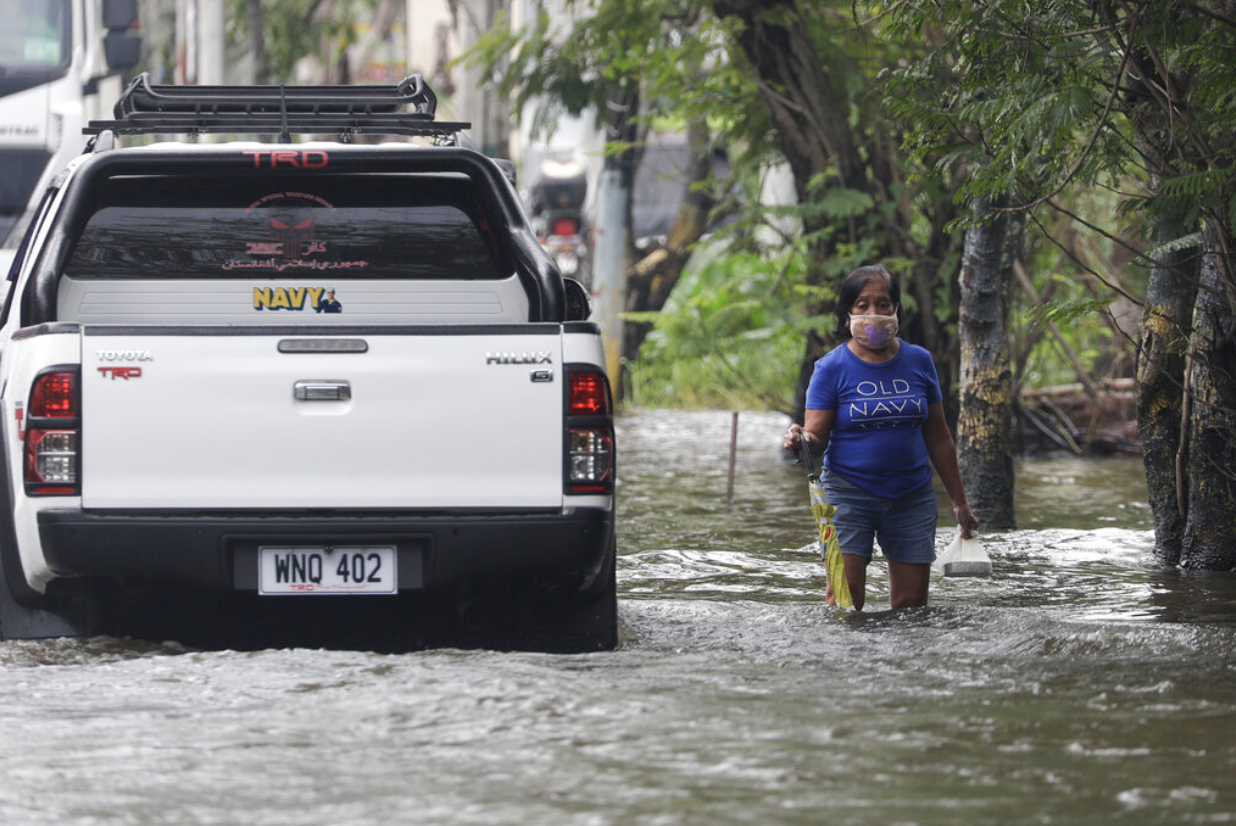
A woman walking in knee-deep waters on Oct. 26, 2020 in Pampanga. (Aaron Favila/Associated Press)
In 2022, 90 families were relocated from Pulo Island in the Philippines as part of a flood control project. The relocation has left them facing chronic flooding.
Flooding has a direct impact on residents' daily lives. Infrastructure, education and health care services are all affected by flooding. Infrastructure and policies must account for flood risks to help communities and people who reside there.
Relocation is intended to reduce exposure to specific environmental hazards, and is intended to protect communities from environmental hazards. United Nations guidance on planned relocation notes that relocation is to protect the life and health of citizens and should involve the input of the affected communities and account for their long-term living conditions. This is to ensure that residents have adequate housing, financial stability, access to essential services and are aware of relocation plans. These principles were set in place to provide regulations for planned relocation, especially when concerned with environmental risks like floods.
This case highlights a broader challenge for governments facing flooding and rising sea levels. Infrastructure projects must comply with policies that protect residents' access to housing, land and transportation.
“Philippine authorities in Pampanga have threatened the safety and livelihoods of Pulo Island residents by relocating them to a low-lying area as part of a flawed flood control project,” said Lian Buan, a researcher at Human Rights Watch. The case raises questions about how governments can regulate infrastructure projects to protect residents from environmental risks.
The Macabebe municipal government and the Philippine Department of Public Works and Highways dredged Pulo Island, a small island in the Pampanga River between 2020 and 2023. Residents were relocated to newer settlement areas. Engineers who were interviewed by Human Rights Watch state that the project was implemented to increase the river’s capacity to reduce flooding.
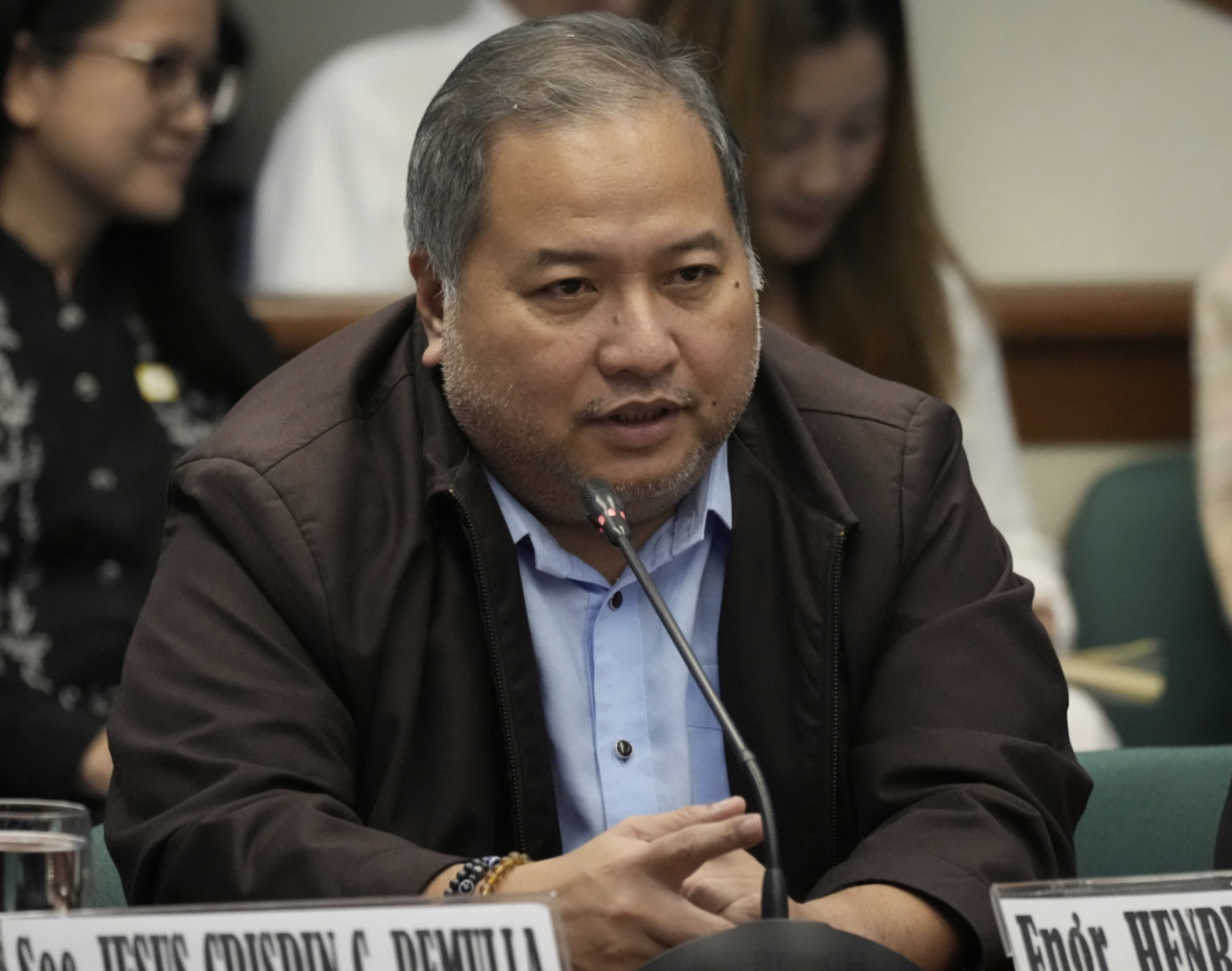
Former DPWH District engineer talking during the investigations on flood control projects at the Senate Blue Ribbon committee in Pasay City, Sept. 23, 2025. (Jim Gomez/Associated Press)
The removal of the island was described as “long overdue” because it had been proposed earlier in the project. Then-Mayor Balgan requested the dredging under a 2017 policy directing local governments to “immediately commence the removal of illegal structures in all danger areas.” The policy applied to areas along riverbanks and shorelines occupied for residential purposes that were considered dangerous.
Tomas Edison Olalia, an engineer with the Department of Public Works and Highways (DPWH), said, “This was an isolated case.” He added that the local government requested the project because the island was considered a danger zone.
However, the relocation site was formerly a fish pond that floods throughout the year. Human Rights Watch reported that the flooding restricted residents' ability to travel and work. During a visit in July 2026, the organization observed that floodwater reached knee-high levels during high tides. The main street was approximately 1.9 meters below the adjacent road.
The relocation, intended to protect residents, exposed them to chronic flooding and challenges. After interviewing 35 residents and nine authorities between July and August 2026, Human Rights Watch reported that families and citizens are uncertain about compensation and have struggled to maintain their households and livelihoods.
Families who previously relied on farming and fishing said they received little information about their relocation process or financial sustainability. Some residents reported that they were not informed with enough information of the site they were relocating to. “They did not present any other solutions. There were no options,” said a 48-year-old mother.
The government of the Philippines is actively trying to assure the flood affected families and assist them with resources. President Marcos Jr. has assured that the government “will continue to everything that [they] can so that [they] will mitigate the effects of this very strong rain and the flooding that follows it”
This case highlights the challenges that come with trying to balance flood-control infrastructure with the long term requirements of relocated communities. Although the government has assured the residents of their support and assistance, the process of relocation needs to be streamlined and made easier for the citizens. Assessing the long term outcomes of these projects, including residents’ access to safe housing and essential services is important in determining if relocation is the best alternative for residents.