
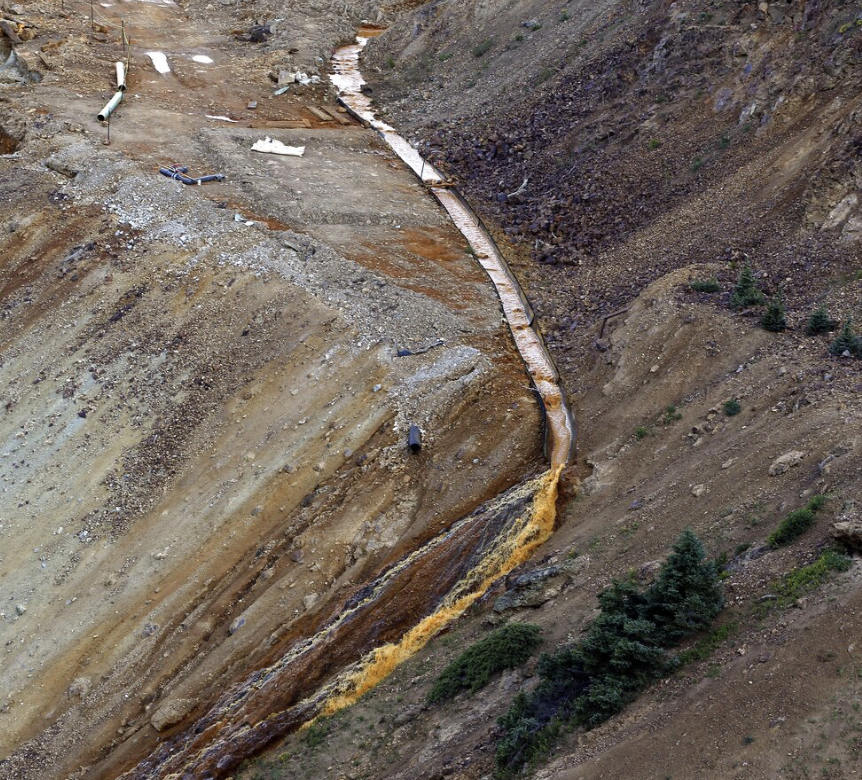
Wastewater flows from a trough into a steep ravine from the site of the blowout at the Gold King mine which triggered a major spill of toxic wastewater, outside Silverton, Colo., Thursday, Aug. 13, 2015. It will take years, if not decades, and many millions of dollars to clean up and manage the toxic wastewater from a this Colorado mine that unleashed a 100-mile-long torrent of heavy metals, affecting the livelihoods of residents in three states, according to some experts. (AP Photo/Brennan Linsley)
The Kabwe mine, also known as the “Broken Hill” mine, was a lead smelting and mining site in Kabwe, Zambia, that operated from 1906 to 1994. Peaking from 1925 to 1974, the mine was Africa’s largest lead producer. Over its 90 years in operation, the mine emitted large amounts of toxic lead pollution. Despite its closure in 1994, an estimated 6.4 million tons of uncovered waste and tailings remain, continuously exposing nearby communities to pollution, usually in the form of lead dust. Recent medical research indicates that as many as 200,000 people have been exposed.
Exposure to lead is extremely dangerous for humans, but especially so among certain compromised groups, such as children and pregnant women. Medical researchers have revealed that 95 percent of children living near the mines have elevated levels of lead in their bloodstreams. According to the World Health Organization, exposure to lead can cause damage to developing brains and nervous systems, impair learning and cognitive development, and cause irreversible health consequences. Severe amounts of exposure can even be fatal. A recent study found that one in 246 children tested was above the safety limit of 5 micrograms per decilitre of blood. The vast majority had levels above 45 micrograms per decilitre, which can cause brain, liver, and hearing damage. Eight were even over 150 micrograms per decilitre, at which point death is a likely outcome. In pregnant women, lead exposure has been observed to cause miscarriage, stillbirth, and premature birth.
The severe consequences of lead exposure have elicited growing concern amongst community members about how such adverse health implications will manifest in society and affect future generations. Local primary school teachers are a major group that has observed and expressed concern for the cognitive disruption in children who have been exposed to lead and other toxins. A source in Chowa, a township that once housed mines and smelters and therefore has markedly higher levels of pollution than other townships, reported, “I do notice a slowness in [children], and they take much longer to catch on to ideas.” Additionally, Barry Mulimba, a volunteer community facilitator who has seen many affected children, reported similar feelings of: “[sadness], especially for the children, because we consider the children our future leaders and if they do not get a good education, they will not be capable.”
In response to such dire concerns, a question emerges: Who is responsible for the mitigation measures needed to prevent further endangerment, and where does the line lie between assumed responsibility and measurable action? So far, the groups that present the most promising opportunities for large-scale change have been denounced for their lack of effort. The Zambian government, for example, has been characterized as a stagnant entity in moving mitigation efforts forward. It has licensed businesses to recklessly remove, transport, and process lead-bearing waste in pursuit of extracting minerals from the former mine’s waste. In late 2025, Zambia permitted the Chinese company Hua Yu Shen to take control of most of Kabwe’s lead waste to extract zinc.
Despite the ineffective and, in some cases, counterproductive mitigation strategies, small-scale organizations, such as NGOs and nonprofits, have taken matters into their own hands. Over the past decade, these organizations pursued efforts that have made significant, commendable progress within affected communities, even serving as a source of inspiration for larger-scale change. Beginning in 2015, Germany’s Terre des Hommes funded various environmental nongovernmental organizations, including Environment Africa and Pure Earth, which worked to replace lead-contaminated soil in the yards of more than 120 homes.
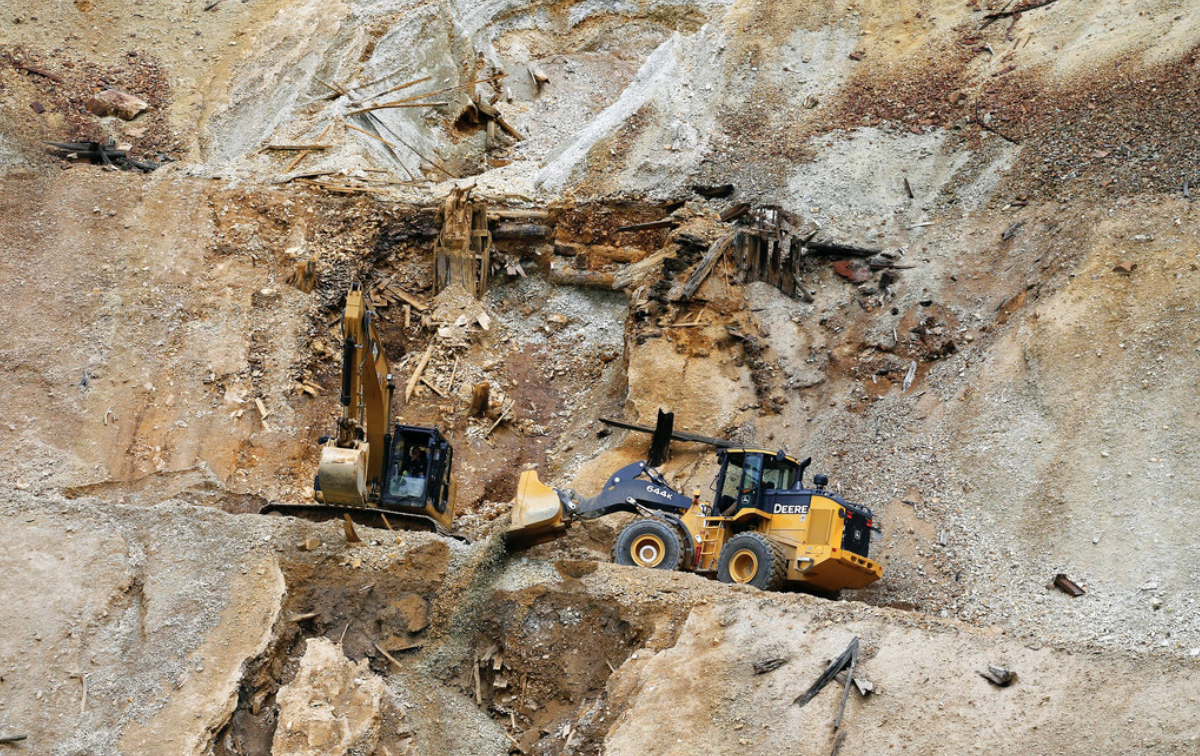
Environmental Protection Agency contractors repair damage at the site of the Gold King mine spill of toxic wastewater outside Silverton, Colo. The Gold King and other mines in the area are now part of a Superfund cleanup project. The U.S. Environmental Protection Agency announced Thursday, June 14, 2018, it plans to take a series of interim cleanup steps at some of the sites while it searches for a longer-term solution. (AP Photo/Brennan Linsley, File)
Additionally, in April 2026, the Institute for Human Rights and Development in Africa, in collaboration with Zambian civil society organizations and affected families, filed a complaint before the African Committee of Experts on the Rights and Welfare of the Child. The complaint alleged that Zambia had failed to meet expectations outlined under the African Children’s Charter. The involved parties asked the committee to require urgent measures to prevent future exposure by cleaning up contaminated areas, providing testing and treatment to affected communities, and ensuring greater national accountability.
As a result, World Bank-funded efforts, such as health measures and clean-up projects similar to those pioneered by NGOs, have taken place to address contamination. However, these measures fail to address the source of the contamination: open mining operations at toxic mine sites themselves. Therefore, communities that have undergone cleanup operations can be re-exposed to toxic waste as it continues to permeate without proper, definitive regulation.
For far too many years, promises of further, intensive intervention have fallen short. Wilford Chipeta, a Zambian citizen whose grandson suffers from lead poisoning, has expressed his doubts in the remediation system: “We were promised that drugs were coming [before], but nothing came. They always talk, but we get nothing.” Concerns like these from citizens who are promised restorative resources but repeatedly come up empty-handed are a direct call for national authorities to make serious policy, oversight, and diligence adjustments. These adjustments will require a reassessment of priorities, shifting focus to address the toxins’ root cause, along with actionable responses that proportionally address the direness of the situation.
As previously mentioned, this contamination stems from ongoing activity at the mines, which remain open for mineral extraction. Therefore, a potential first step for the Zambian government to enable mitigation efforts is to focus on shutting down these existing projects. This would involve suspending current mining operations and ensuring proper monitoring procedures to keep levels below dangerous thresholds. Continuous, time-sensitive interventions should accompany such suspension interventions, focusing on areas where children are most likely to reside, such as school and residential zones.
A second mitigation strategy the government could pursue is offering free medical services to impacted communities. Several human rights organizations have already mobilized on this effort, setting up pop-up clinics that offer blood lead testing. However, these clinics have reportedly experienced complications, specifically a lack of capacity to care for thousands of ill citizens. With government funding, these organizations could expand their breadth of services, upgrade equipment, and achieve support for a greater number of individuals.
Finally, to prevent harmful actions from recurring in the future, the government may focus on holding mining companies and mineral processors accountable for their actions. Enforcing this accountability could take several forms. For example, monetary interventions, such as fines for intrusive mining activities, could effectively disincentivize powerful corporations. However, interventions that disrupt market dynamics and undermine workers’ livelihoods can be rather contentious. Therefore, the government should approach these direct interventions carefully, ensuring that enacted policy effectively serves the communities it aims to help without completely undermining the parties it is reforming.
These solutions are not an exhaustive list of the necessary measures that can or should be taken for Kabwe to be recognized as, at the least, a habitable city. Caravanos, who is a senior science advisor to Pure Earth, says the solution to Kabwe’s toxic trouble is clear: “We have the knowledge – we just have to get the kids away from the exposure. Will Kabwe ever be a lead-free town? No, but it can be a lead-safe town.” In recent years, this pursuit of safety has been overshadowed by the drive for minerals to fuel the global energy transition, digital technologies, and industrial development. National priorities must be reprioritized to protect citizens, especially future generations who depend on a safe, healthy environment for their education and upbringing.
A 15-year-old girl from Kabwe spoke about the aspirations of children living with contamination. “Children in Kabwe also have dreams,” she said. Clearly, children are aware of the risks they are exposed to and the consequences they may face; yet, their fate is out of their hands, ultimately decided by larger decision-making powers. As local children wake up to the realities of their country and realize that their dreams may be compromised by the environmental factors around them, the need for reform has never been greater. Governments, corporations, and citizens must work together to ensure a safe, healthy environment for the future generations in whose hands they will ultimately leave the country.