
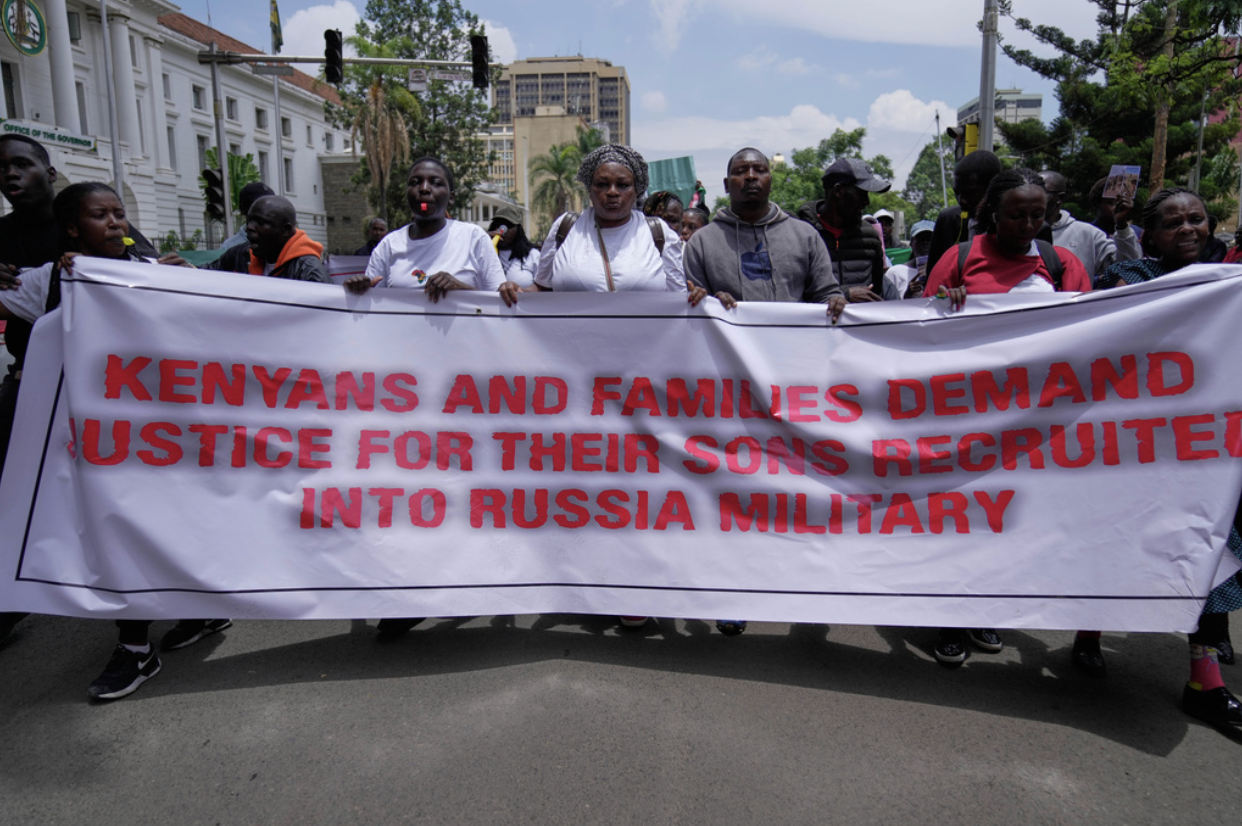
Family members of Kenyans who joined the Russian army in Ukraine hold placards and photos of their loved ones during a protest calling for their repatriation in Nairobi, Kenya, Thursday, March 5, 2026. (AP Photo/Brian Inganga)
Five Kenyan men are being held in a prisoner-of-war camp in Ukraine. Kenya’s government says they were tricked into Russia’s army and should be treated as victims of human trafficking, not as prisoners of war. It has asked Kyiv to consider treating them that way. Ukraine holds them as prisoners of war because they signed contracts with Russia’s army, according to a legal webinar description from Ukrainian lawyers and partner groups.
Both descriptions can be true, and that is the problem. A UN commission said this week that one man can be both a trafficking victim and a prisoner of war It found that Russian authorities trafficked people from 29 countries into the Russian army and that victims forced into the ranks retain prisoner-of-war protections if captured. A man can be tricked by a recruiter, put in uniform and sent to the front, then held by the country he was sent to fight without being treated as the victim the UN describes. Under the UN’s anti-trafficking protocol, victims are entitled to protection and assistance.
Nobody has clear responsibility for these victims. Russia, which the UN says trafficked them, has shown little interest in getting foreign recruits back. Ukraine, holding them, states release can come through an exchange. Their own government has to ask both Russia and Ukraine: Kenya has appealed to Kyiv and asked Moscow to help.
Whether the men consented is disputed. Amnesty interviewed 15 captured foreigners at two prisoner-of-war camps, with Ukraine’s permission. Three said they knowingly signed military contracts. Seven said they were promised civilian jobs. The other six, Amnesty wrote, “provided details of their recruitment experience which negate its voluntary nature.” The UN Commission documented threats of violence or death against men who refused to sign. It also found that 30 recruits who were promised in writing they would not be sent to fight were sent away: 17 have died and five are missing.
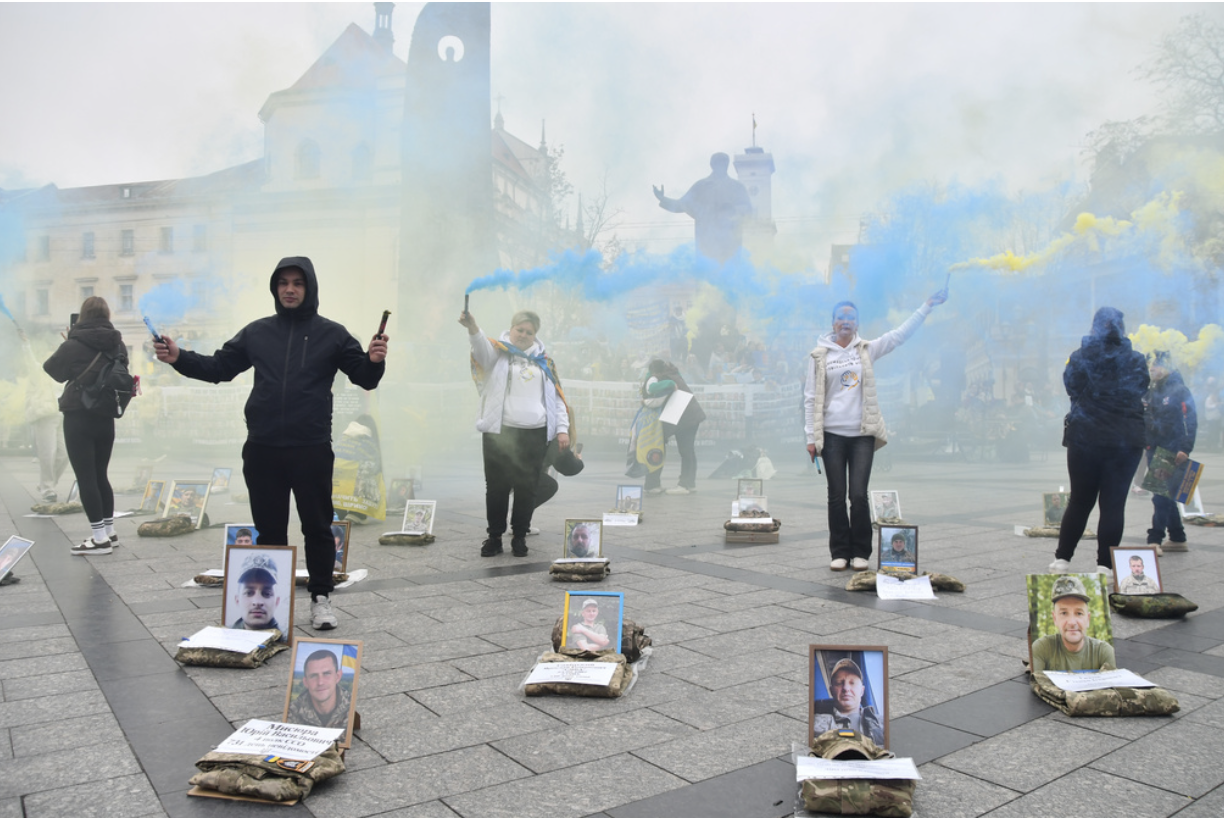
People attend a rally demanding to free Ukrainian prisoners of war who are held in captivity in Russia in Lviv, Ukraine, Saturday, Oct. 17, 2026. (AP Photo/Mykola Tys)
Others are more cautious. Alexis Deswaef, president of the International Federation for Human Rights, said “Many of these men knew in some capacity what they were signing up for,” while others were deceived or coerced. Ukraine holds at least 213 foreign prisoners, 27 of them African. Bohdan Okhrimenko of Ukraine’s prisoner-of-war coordination headquarters said there have been no requests from them, except concerning the North Koreans. Of the other foreigners who fought for Russia, he stated: “The Russians aren’t interested in them during the negotiation process.”
Going home carries risk for these prisoners too. Kazakhstan and Kenya have begun prosecuting returning fighters as well as recruiters, according to a report by the International Federation for Human Rights and Truth Hounds. It says Kazakhstan has treated the issue mainly as mercenarism, and that Cuba’s broad mercenary law could expose many of its recruits to prosecution.
Some cases are already in court. In November 20205, an Uzbek court sentenced a 24-year-old to three years for mercenarism. He told the court that an acquaintance offered him a truck-driving job and then brought him a contract. “Because I did not understand Russian, I signed the contract and other documents,” he said. He told the court he realized he had been tricked only when he got to the military training site. In South Africa, police are investigating 15 men under a law that bars citizens from fighting abroad. The returnees and families told Al Jazeera they fear prosecution.
Governments have mostly negotiated for their own citizens, one country at a time, rather than through a joint international effort. Kenya wants its five designated as victims, and President William Ruto raised the case with President Volodymyr Zelenskyy. Ghana’s foreign minister asked Zelenskyy in February to release two Ghanaians.
Amnesty urges home citizens to give consular assistance to nations held as prisoners of war and not to punish trafficking victims for acts resulting from exploitation. The UN report was submitted to the General Assembly’s Third Committee, according to Ukraine’s Foreign Ministry. Its statement urges affected countries to cooperate in dismantling recruitment networks and holding those responsible to account for the prisoners.