
Estonia Moves Main Brigade 80 Kilometers Closer to Russia as Officials Question NATO Deterrence
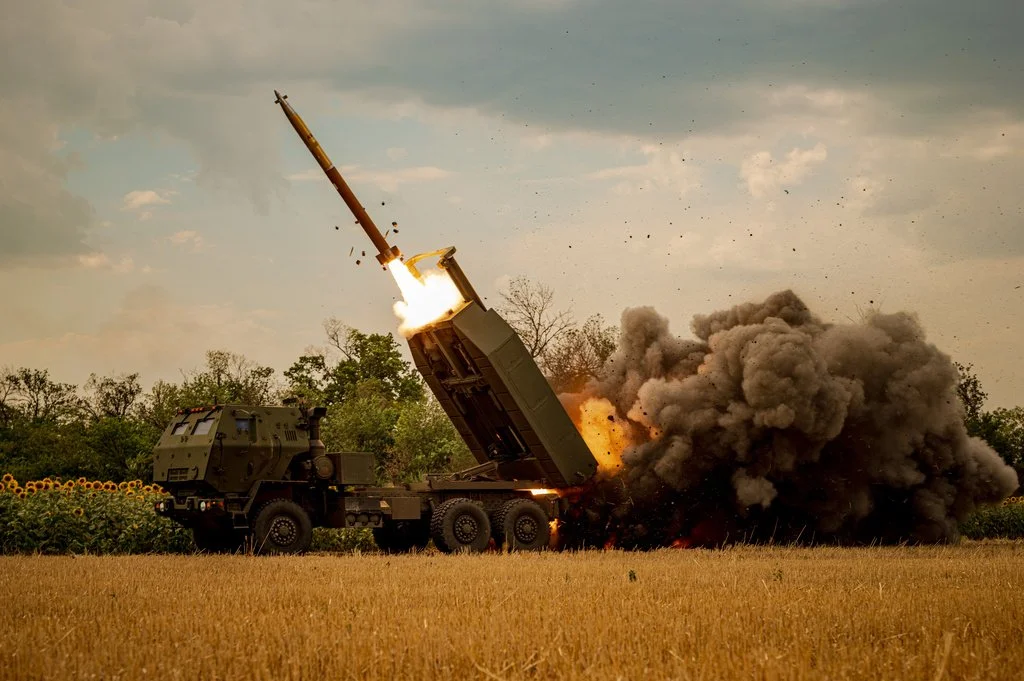
A Ukrainian HIMARS crew, attached to the 148th brigade, fires rockets at Russian positions, on the front line in eastern Ukraine, Saturday, Aug. 8, 2026. (AP Photo/Dan Bashakov)
A senior Estonian military intelligence official has warned that “deterrence is not working,” as the country prepares to move the headquarters and key units of its 1st Infantry Brigade from Estonia’s main military base in Tapa eastward to Johvi. The relocation will bring the brigade roughly 80 kilometers closer to Russia, reducing its distance from the border from about 130 kilometers to 50.
Colonel Tarmo Kundla, the commander of the First Brigade, said that Estonians “have to start from the border and win from the first battles.” Kundla noted that Estonia cannot afford to defend its territories from farther inland, and asserted that defensive positions ought to have been erected immediately.
The move is part of Estonia’s shift toward an “active defence” strategy outlined in its National Security Concept in May. Rather than give up territory while awaiting NATO reinforcements, Estonian forces intend to confront any Russian attack directly at the border.
The Ministry of Defence stated that credible deterrence means making the prospect of aggression unthinkable, with the broader aim of keeping both enemy forces and the destruction of war outside Estonian territory.
Stars and Stripes reported on Oct. 7 that the brigade’s headquarters would move to Johvi, about 30 miles from Russia. An unnamed Estonian defense official told the Financial Times that the country was “in the process of changing everything,” pointing to Russian plans to double its forces across the border. Estonia’s own defense plans, meanwhile, had remained largely unchanged for the past decade.
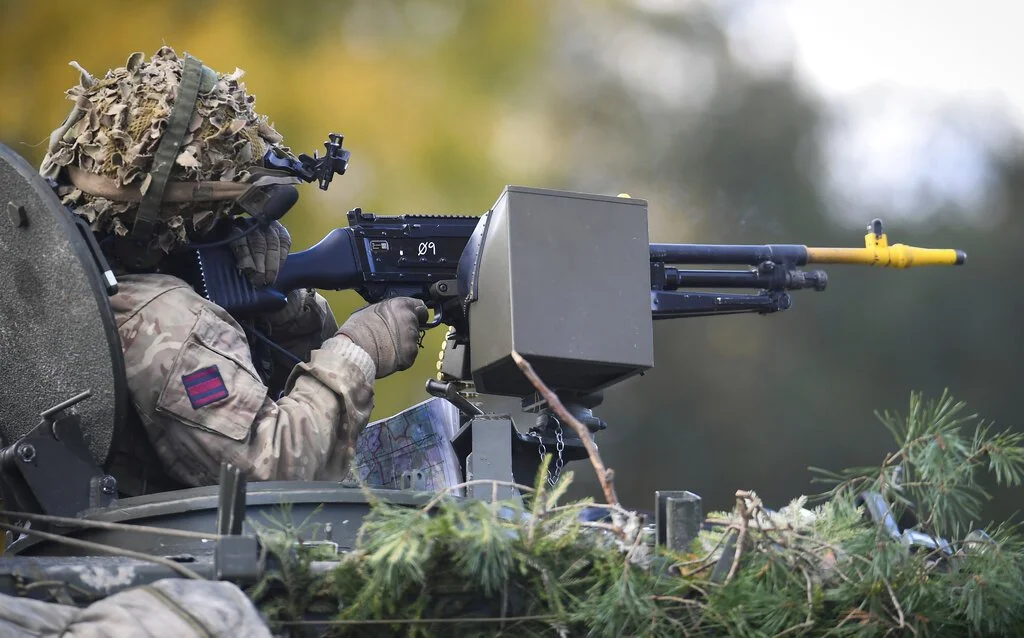
A soldier of UK contingents takes part in the Bold Hussar military exercise, at the Central Training Area near Tapa Army Base in Estonia, Wednesday, Oct. 12, 2022. Bold Hussar is a military practice exercise of the Estonian Defence Forces and NATO-allied units. About two thousand military personnel are participating in the maneuvers. (AP Photo/Sergei Stepanov)
Estonia is also constructing a military base in Narva, a predominantly Russian-speaking city located directly on the border. The facility will accommodate up to 1,000 troops, including around 200 permanently stationed personnel, with additional space for reinforcements in the event of a crisis.
The military buildup comes alongside a sharp increase in defense spending. Estonia’s 2026 defense budget stands at €2.4 billion, equivalent to 5.4 percent of GDP and a 42 percent increase from €1.7 billion in 2025, according to the Ministry of Defence. More than half of that funding is allocated to procurement.
Among the planned purchases are nine American HIMARS rocket launchers and nine South Korean Chunmoo systems, both capable of firing certain munitions at targets roughly 300 kilometers away. Estonia has already received some HIMARS launchers, with remaining systems and longer-range missiles expected to arrive throughout 2026 and 2027.
Still, the shift toward forward defense has raised questions about whether Estonia has the capabilities needed to make the strategy effective. The country relies on NATO for air policing and lacks a full independent fighter force. Estonian officials have also expressed concern that neither their country nor the alliance is currently equipped to reliably deter a limited Russian operation intended to test NATO’s commitment to Article 5.
Security analyst Rainer Saks told Estonian public broadcaster ERR that moving troops less than 100 kilometers closer to Russia offers limited strategic benefits without corresponding improvements in air defenses and drone capabilities. Kundla, however, has characterized the relocation as a natural consequence of Estonia’s earlier decision to defend its territory from the border.
Moscow has played down the significance of the repositioning. Kremlin spokesman Dmitry Peskov said Russian intelligence services already have the means to monitor military activity along the border.
The move also comes amid growing concern over drone incursions and suspected acts of sabotage across NATO’s eastern flank. While Estonian officials do not expect Russia to launch a full-scale war against NATO in the immediate future, they are preparing for the possibility of smaller operations designed to test the alliance’s response.
For Tallinn, the challenge is no longer simply whether NATO would come to Estonia’s defense, but whether its own forces can prevent a Russian advance before allied reinforcements arrive.
Estonian intelligence officials believe the next one to four years will be critical in determining whether the country’s new military posture can discourage Moscow from testing NATO’s resolve.