
North Korea’s Missile Tests and Escalating Security Tensions in East Asia
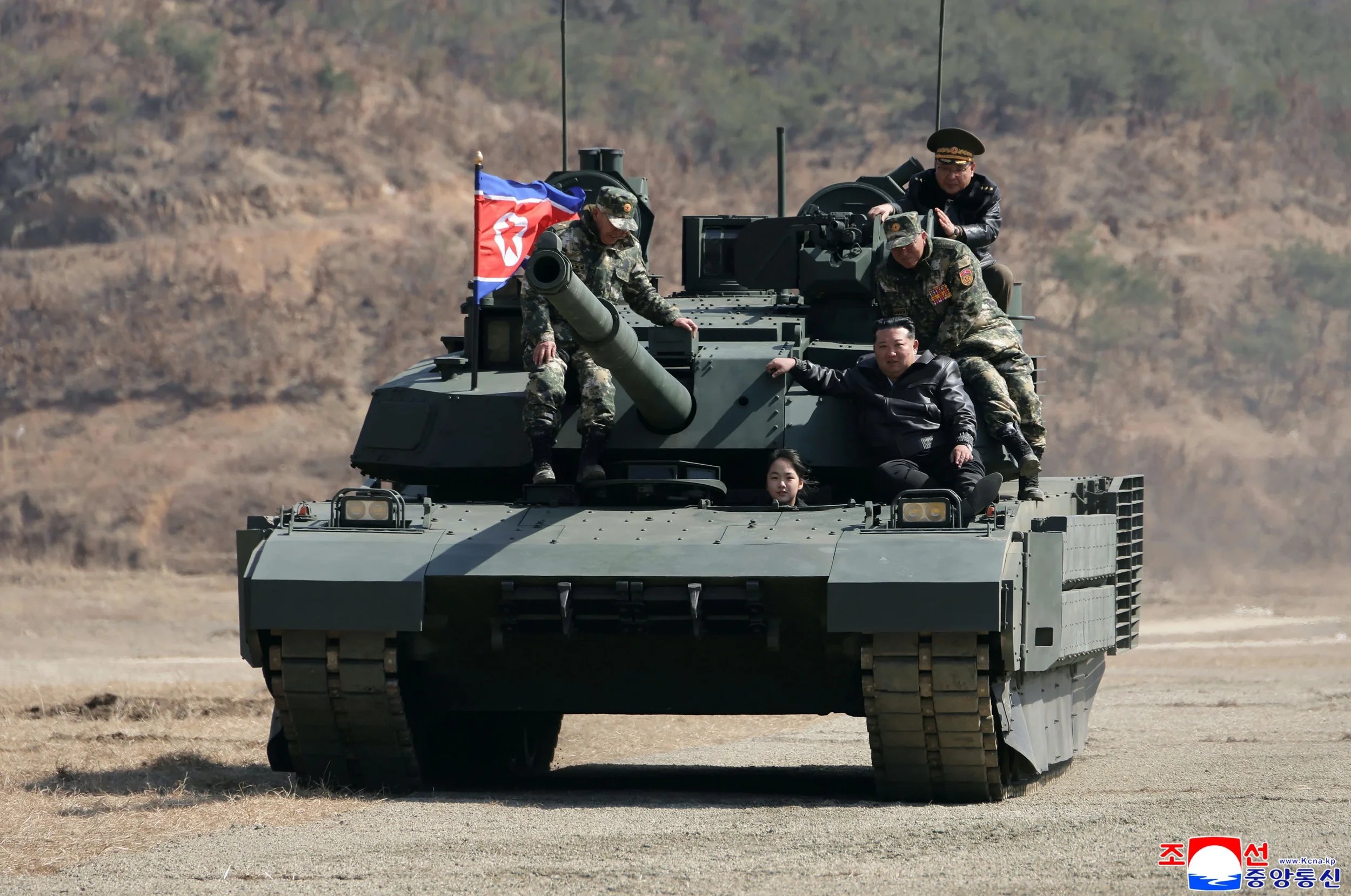
This photo provided by the North Korean government shows its leader Kim Jong Un, front right, his daughter, reportedly named Kim Ju Ae, and other soldiers on a tank at a military training base in North Korea, Thursday, March 19, 2026. Independent journalists were not given access to cover the event depicted in this image distributed by the North Korean government. The content of this image is as provided and cannot be independently verified. Korean language watermark on image as provided by source reads: "KCNA" which is the abbreviation for Korean Central News Agency. (Korean Central News Agency/Korea News Service via AP)
North Korea launched an unidentified projectile into the East Sea in March, according to South Korea’s Joint Chiefs of Staff, marking another escalation in regional tensions. The launch came less than two months after a previous ballistic missile test in late January, making it one of several provocations carried out this year.
The timing of the launch is widely seen as significant. It coincided with large-scale joint military exercises conducted by South Korea and the United States, which are designed to prepare for potential contingencies on the Korean Peninsula. North Korea has long criticized such exercises as hostile acts, and its weapons tests are often interpreted as a form of strategic signaling in response. Analysts suggest that the missile’s estimated range, approximately 2,000 to 2,500 kilometers, indicates that its primary target is not South Korea, but U.S. military assets in the region, including bases in Japan. This highlights how North Korea’s military strategy is increasingly focused on deterring external intervention rather than solely targeting the Korean Peninsula.
At the same time, North Korea continues to emphasize the development of its broader military capabilities. Recent reports indicate that the country is advancing its strategic weapons systems and working toward a more integrated and sophisticated command structure. These developments suggest that missile launches are not isolated events, but part of a longer-term effort to modernize its armed forces.
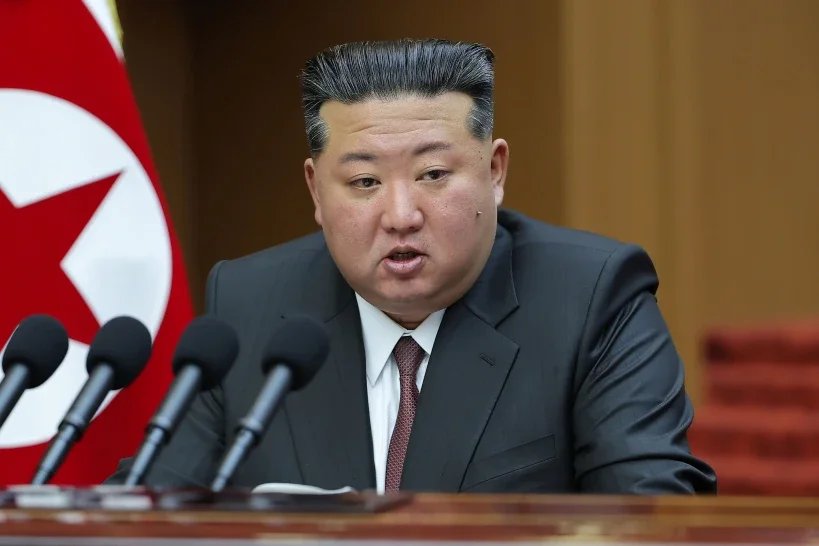
In this photo provided by the North Korean government, its leader Kim Jong Un delivers a speech during a session of the Supreme People’s Assembly at parliament in Pyongyang, North Korea Monday, March 23, 2026. Independent journalists were not given access to cover the event depicted in this image distributed by the North Korean government. The content of this image is as provided and cannot be independently verified. (Korean Central News Agency/Korea News Service via AP)
Naval expansion has also emerged as a key component of this strategy. North Korea has signaled plans to strengthen its maritime capabilities, including the development of larger warships and the deployment of advanced weapons systems. This shift points to a broader effort to diversify its military assets and enhance its overall deterrence capacity. Overall, these developments reflect a pattern of escalation in which military demonstrations, alliance-based exercises, and strategic signaling reinforce one another. Rather than isolated provocations, North Korea’s actions are part of a broader cycle that continues to shape the security dynamics of East Asia.
Ultimately, this pattern reflects a broader security dilemma in East Asia, where efforts to strengthen defense by one side are increasingly perceived as threats by another.